Famous Workbenches
Mary Mallonthe WorkbenchISTP
Ireland and New York, 1869–1938 · cook, immigrant, healthy carrier
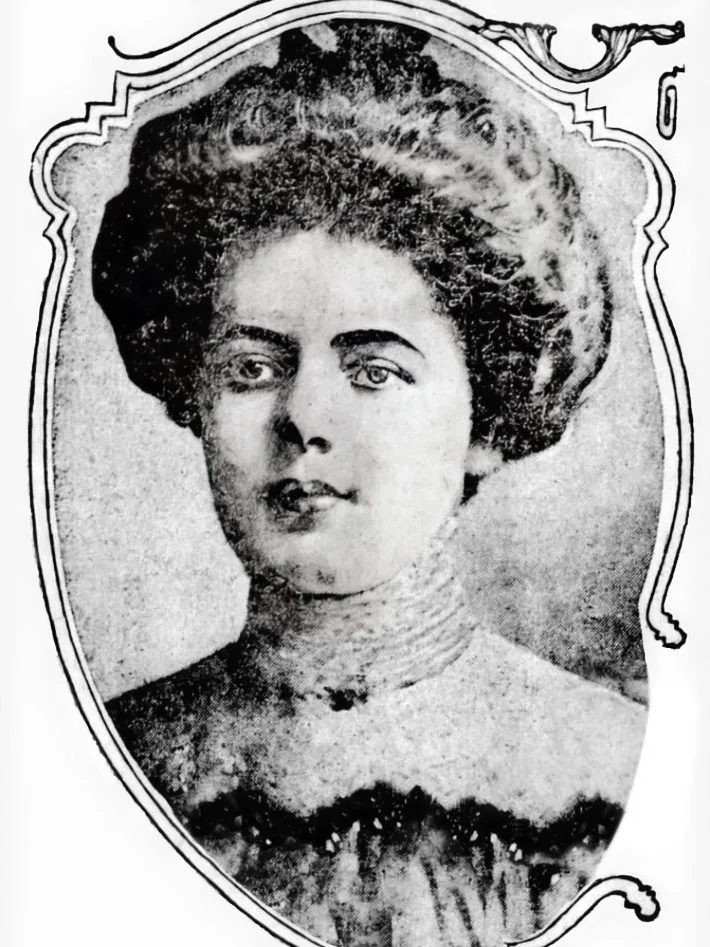
The story
Nothing the matter
In March 1907, a stranger came into the kitchen of a house on Park Avenue in New York and asked the cook for samples from her body. Mary Mallon was 37, and as far as she could tell she was perfectly well.
The stranger was George Soper, a sanitary engineer. He had traced typhoid fever through the households where she had cooked, and he believed she was carrying it. By his own account, written years later, she picked up a carving fork and drove him out. Whatever the details, her answer was no.
Born in Ireland in 1869, she had come to America as a poor immigrant and made cooking her craft. She went wherever the work was, and her body had never given her a reason for doubt.
She trusted what she could see and handle. That is a Workbench instinct, and it is right far more often than it is wrong. Her senses told her she was healthy, and she was. She was also a carrier, unharmed by a fever that passed through her cooking to others.
On 20 March 1907, the health department came back with police and took her by force to North Brother Island, in the East River. The doctors wanted to remove her gallbladder, where they believed the infection lived. Her refusal was as plain as any Workbench's: “No knife will be put on me. I've nothing the matter with my gallbladder.”
The newspapers called her Typhoid Mary. In June 1909, after more than two years on the island, she wrote six pages by hand to the editor of the New York American. It is the longest record of her own voice, and it sounds nothing like the wild woman with the fork. She was frightened, furious and clear.
“I have been in fact a peep show for everybody.”
A doctor named William H. Park had written about her in a medical journal. She asked how he would like to be called “Typhoid William Park.” She understood exactly what the name had done. It had turned a woman into a disease.
That summer she took her case to court and lost. In February 1910 a new health commissioner let her go, on one condition: she must never cook for a living again. She was 40, and the one craft she had was closed to her. She was found work as a laundress.
In 1915, typhoid broke out at the Sloane Hospital for Women in Manhattan. The cook in its kitchen was working under the name Mary Brown. It was Mary Mallon. Twenty-five people fell ill, and two of them died.
She never explained why she went back, and it is fairer not to guess. When she was cornered, she moved: a new house, then a new name. A quiet exit is a good tool. This time the danger went out through the door with her.
She was sent back to the island for good and died there on 11 November 1938, at 69. In all she spent about twenty-six years confined. Around fifty cases of typhoid and three deaths are usually counted against her.
Three deaths and twenty-six years both belong to her story. The city wrote down the first number. Her six pages are why anyone still remembers the second.
The Workbench pattern in her life
- Trusts her own senses first
- She felt well, so she refused the operation: there was nothing the matter with her, as far as she could feel.
- Lives through her craft
- Barred from cooking in 1910, she was back in a hospital kitchen under another name within five years.
- Moves quietly when cornered
- Pressed by the authorities, she changed households, and later she changed her name.
The Workbench: You solve it by handling it. Quiet, practical, allergic to a plan that outruns the facts.
Are you a Workbench too?
Free, no email needed. Find out which house is yours.
Take the free test
The book
The Workbench: A Story of Your People
Her story and fourteen more, from the court of fifteenth-century Korea to a canyon laboratory in New Mexico in 1946, grouped by the situations every Workbench runs into: friendship, work, money, love, power, identity and the body.
More famous Workbenches

Questions people ask
What personality type was Mary Mallon?
Her life fits the Workbench, one of the houses at Grand Personalities: someone who solves problems by handling them, quiet and practical, and allergic to a plan that outruns the facts. Closest four-letter code: ISTP.
How long was Mary Mallon kept on North Brother Island?
About twenty-six years in all: from March 1907 to February 1910, and again from 1915 until her death on 11 November 1938.
How many people did Mary Mallon infect?
Around fifty cases of typhoid and three deaths are usually attributed to her, including 25 cases and two deaths at the Sloane Hospital for Women in 1915. She felt well throughout.
Portrait: Unknown author, 1909 · Public domain · Source
