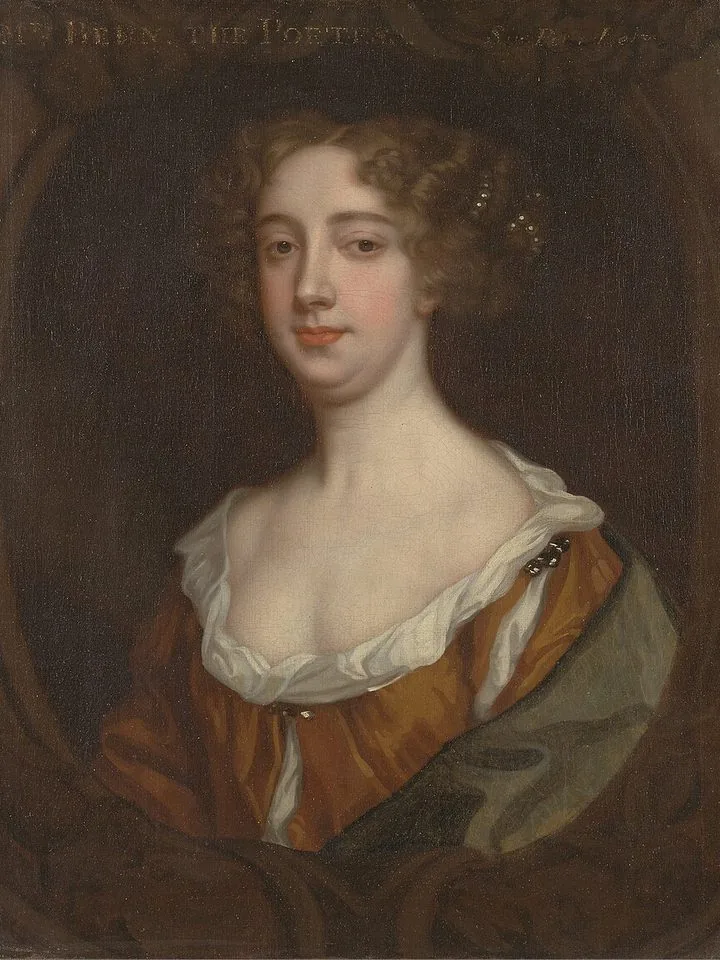
The story
Paid at the door
In the summer of 1666, Aphra Behn was in Antwerp, about 25 years old, spying for Charles II under the code name Astrea. She was also running out of money.
England was at war with the Dutch. Her task was to win over William Scot, an English exile, and persuade him to pass secrets to the crown. It was an argument conducted over weeks, in a foreign city, paid for from her own purse until London settled up.
London did not settle up. Within a month of arriving she had pawned her jewelry. Her letters home survive, and several of them ask to be paid. She begged Lord Arlington, the Secretary of State, for “a final answer of what I am to do,” so that she would not be left “disgraced and ruined” far from home. The pleas went largely unanswered.
In the end she borrowed £150 from a man named Edward Butler to get herself back to London. She could not repay it. Butler threatened her with prison, and a warrant was issued. Whether it was ever served, nobody knows.
Look at the shape of the trap. She had done the work on credit, trusting the institution to pay. It didn't, and the debt was hers. Arenas walk into this one often: the person most excited by the mission ends up holding its bill.
What she did next is why anyone remembers her. In September 1670, at about 29, her first play, The Forc'd Marriage, opened on the London stage. From then on she wrote for money, openly, for the rest of her life: plays, poems and prose fiction. She is often called the first Englishwoman to earn her living by her pen.
She kept her skills and changed the customer. The persuasion she had spent on an exile and a silent minister now went to the public, and the public paid at the door. She stayed a loyal Royalist all her life. She simply stopped working for the crown on credit.
Success brought a new fight. When her comedy The Luckey Chance was staged at Drury Lane in 1686, critics called it indecent. She answered in the preface to the printed play the next year, which named its author plainly as “Mrs. A. Behn.”
“All I ask, is the Priviledge for my Masculine Part the Poet in me, (if any such you will allow me) to tread in those successful Paths my Predecessors have so long thriv'd in.”
The pleading voice of Antwerp is gone. She spots the contradiction, that the men before her had written the same kind of comedy and prospered, and turns it into a demand. Notice the last word. She was asking for the right to thrive.
She died on 16 April 1689, at about 48, and was buried in Westminster Abbey. Two and a half centuries later, Virginia Woolf wrote that all women together ought to let flowers fall upon her tomb, “for it was she who earned them the right to speak their minds.”
Earned is the word. Nobody handed her that right. She worked out who would pay for her wit, and charged admission.
The Arena pattern in her life
- Wins people over with words
- Her job in Antwerp was to talk an English exile into spying for the crown.
- Forgets to get paid first
- She spied on credit for a crown that never settled up, and came home £150 in debt.
- Turns an insult into an argument
- Called indecent, she asked for the same privileges the male playwrights before her had “thriv'd” on.
The Arena: You argue to find out. Ten ideas an hour, and you were never attacking the person.
Are you an Arena too?
Free, no email needed. Find out which house is yours.
Take the free test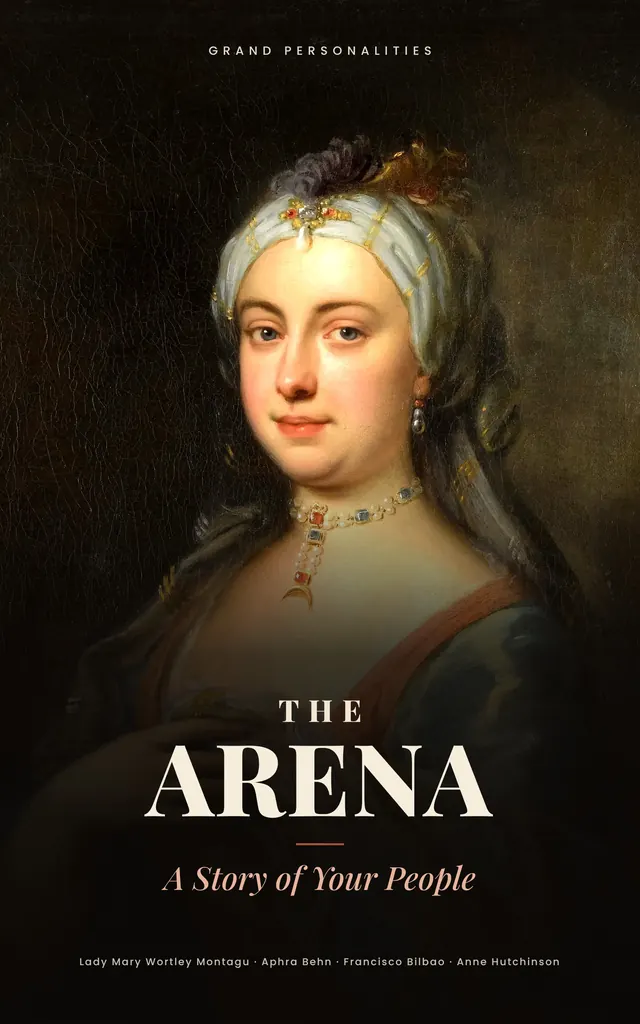
The book
The Arena: A Story of Your People
Her story and thirteen more, from an empress's household in Kyoto around the year 1000 to a tavern in Prague in 1911, grouped by the situations every Arena runs into: work, love, friendship, money, the body, purpose and power.
More famous Arenas
Questions people ask
What personality type was Aphra Behn?
Her life fits the Arena, one of the houses at Grand Personalities: someone who argues to find out, throws out ten ideas an hour, and was never attacking the person. Closest four-letter code: ENTP.
Was Aphra Behn a spy?
Yes. In 1666, during England's war with the Dutch, she worked in Antwerp as an English agent under the code name Astrea, and came home in debt when the crown failed to pay her.
Why is Aphra Behn important?
She is often called the first Englishwoman to earn her living by writing. From 1670 she wrote plays, poems and fiction for money, and Virginia Woolf said it was she who earned women “the right to speak their minds.”
Portrait: Peter Lely, about 1670 · Public domain · Source
