The story
A temple instead of a fee
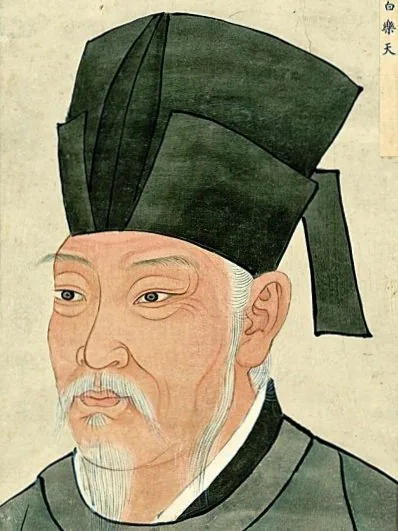
In 832, at 60, the poet Bai Juyi gave a fortune to a ruined temple outside Luoyang. Then he wrote an exact account of where the money had come from, and why he could not keep it.
Bai, also spelled Po Chü-i, was one of the best-loved poets of Tang China. His dearest friend was Yuan Zhen, a fellow poet and official he had known for nearly thirty years. The court posted them wherever it liked and sent each of them into exile in turn, so much of the friendship traveled by letter. One mid-autumn night, on duty at court, Bai wrote of the new moon's light and an old friend's heart two thousand li away.
In 831 Yuan died at his post in Wuchang, modern Wuhan. He had asked Bai to write his epitaph. Bai wrote it, and then the family's thanks arrived. He recorded it like a clerk taking stock.
“Slaves, carriages and horses, silks, silver saddles and jade belts, worth six or seven hundred thousand cash, as a fee of thanks for the text.”
The first item on the list was people. He put that in the record too.
Bai sent it all back. The family's agent brought it again, traveling more than once between Qin in the west and Bai's home at Luoyang, and each time Bai refused.
Vaults know this tug-of-war. The giver is hurt by the refusal and the refuser by the gift, and both sides mean well. Bai's reason was simple. Thinking of what they had been to each other all their lives, he wrote, the text could not be refused and the fee could not be accepted. In the original that is eight characters, four and four, balanced like the two sides of a ledger.
A friend's last request was a debt, and he paid it in full. Taking money for it would have turned thirty years into a transaction settled at the going rate.
So he found a third way. He gave the whole sum to restore the Xiangshan Temple at Longmen, which had fallen into ruin, and dated his record of it with an official's care. A fee would have closed the account. A temple kept it open.
He was no gray official counting coins. He called himself the Drunken Chanting Gentleman and left more than 2,800 poems. The firmness was a single line, drawn around the thing that mattered most.
He spent his last years at the temple and took the name Layman of Xiangshan. The grief came later, and on paper, the way it often does for Vaults. Years after Yuan's death he dreamed of him, and wrote that his friend lay beneath the Yellow Springs, the land of the dead, while he lodged on among the living with snow filling his head.
In 845 he finished the last edition of his collected works and placed copies in monasteries where he had lived, with more kept at home for his family, so that no single fire could take them. His poems reached Japan, where court writers quoted him for centuries.
He died in 846, at 74, and was buried at the temple his friend's fee had rebuilt. He never kept a coin of it.
The Vault pattern in his life
- Keeps an exact account
- He listed the refused fee item by item, down to the silver saddles and jade belts, and what it was worth.
- Honors the debt, refuses payment
- He wrote his friend's epitaph as asked, then sent the family's fortune back again and again.
- Feels it later, on paper
- Years after the funeral, he dreamed of Yuan and put the grief into a poem.
The Vault: You hold the record, finish what you started, and say almost none of it out loud.
Are you a Vault too?
Free, no email needed. Find out which house is yours.
Take the free test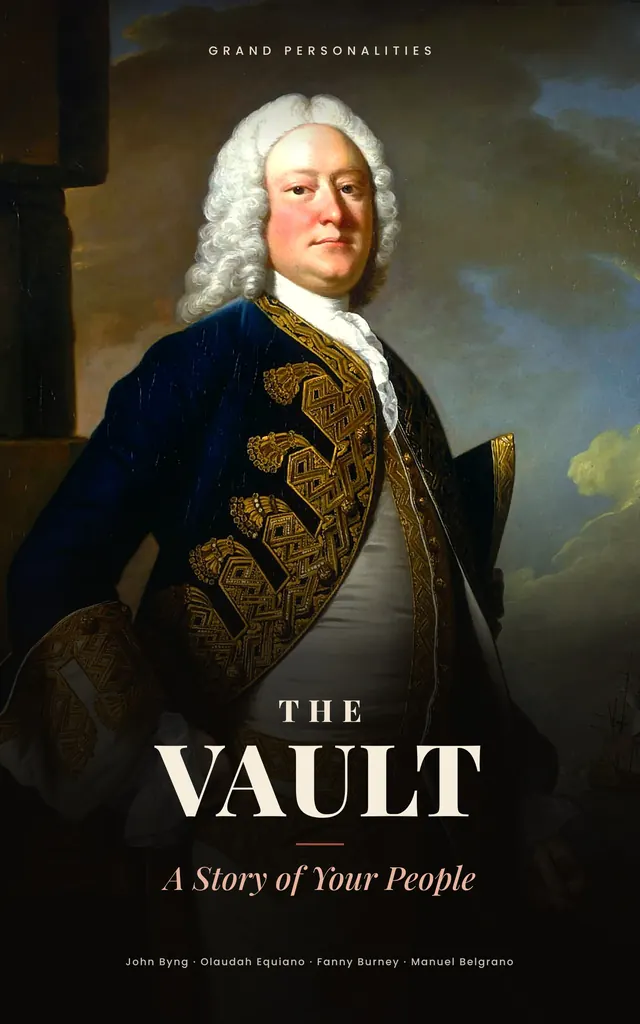
The book
The Vault: A Story of Your People
His story and fourteen more, from a palace library in Han dynasty China to a home in Franco's Madrid, grouped by the situations every Vault runs into: work, love, friendship, money, the body, purpose and power.
More famous Vaults

Questions people ask
What personality type was Bai Juyi?
His life fits the Vault, one of the houses at Grand Personalities: someone who holds the record, finishes what they started, and says almost none of it out loud. Closest four-letter code: ISTJ.
Who was Bai Juyi's best friend?
The poet and official Yuan Zhen, his friend for nearly thirty years. When Yuan died in 831, Bai wrote his epitaph and refused the fortune the family sent as a fee.
Why was Bai Juyi called the Layman of Xiangshan?
In 832 he gave the fee he had refused for Yuan Zhen's epitaph to restore the Xiangshan Temple at Longmen, outside Luoyang. He spent his last years there, took the name Layman of Xiangshan, and was buried there.
Portrait: Unknown author, Qing Dynasty · Public domain · Source
