The story
Standing for the reading
On 14 January 1697, a fast day for the whole province of Massachusetts, Samuel Sewall handed a slip of paper to his minister as he passed by in the South Church in Boston. Sewall was 44. When the Reverend Samuel Willard read it aloud to the congregation, he stood.
It was a bill, the ordinary note people put up to be read in church, usually asking for prayers. This one was a confession. It named “the late Commission of Oyer and Terminer at Salem”, and it took the guilt on himself.
Five years earlier, he had been one of that court's judges.
Sewall was a Boston merchant and magistrate, born in England and raised in Massachusetts. Since his early twenties he had kept a diary, and he would keep it for more than half a century. It lets anyone follow him through 1692 almost day by day.
That year, accusations of witchcraft spread through Salem Village and the towns around it. The colony set up a special court to try them, and Sewall sat on it. Like almost everyone he knew, he believed witchcraft was real. The court convicted, and between June and September nineteen people were hanged. Giles Corey, who refused to plead, was pressed to death. Twenty people died.
Sewall wrote it all down, and the doubt shows in his record before he could say it aloud. On 19 August, the day five were hanged, he noted that all of them said they were innocent, and beside it that a leading minister called it a righteous sentence. He set down both columns without choosing between them.
Vaults will know that habit. The ledger often sees what its keeper is not yet ready to say.
Then death came again and again to his own family, and he took the losses as blows from God. On Christmas Eve 1696, by his diary's account, his son recited a chapter of Matthew in Latin at home, and one verse brought the Salem tragedy to mind: “But if ye had known what this meaneth, I will have mercy, and not sacrifice, ye would not have condemned the guiltless.”
Three weeks later came the fast day and the slip of paper. He made no speech. He used the church's own procedure to confess that the court's procedure had failed.
“Desires to take the Blame and Shame of it, Asking pardon of Men.”
He stood while it was read and, by his own account, bowed when it was finished. He named no one but himself. Twelve of the jurors also asked forgiveness. The chief judge, William Stoughton, never apologized, and neither did any of the others. Among the judges, Sewall stood alone.
In most institutions, the people who make a terrible decision together stay silent together. The first to speak exposes everyone. Sewall spoke first, in front of his own congregation.
He kept the account open afterward. In 1700 he published The Selling of Joseph, an early pamphlet against slavery. By one account, every year he set aside a private day of fasting and prayer for his part in the trials. He kept it until he died in 1730, at 77, the only judge of Salem who ever stood up.
The Vault pattern in his life
- Keeps a faithful record
- His diary set the condemned's protests of innocence beside the verdict, years before he could say which was true.
- Uses the proper channel
- He confessed through the church's own procedure: a written bill, handed to the minister and read aloud.
- Owns his part in writing
- He named no one but himself and took the guilt on his own name, the only Salem judge who ever did.
The Vault: You hold the record, finish what you started, and say almost none of it out loud.
Are you a Vault too?
Free, no email needed. Find out which house is yours.
Take the free test
The book
The Vault: A Story of Your People
His story and fourteen more, from a palace library in Han dynasty China to a home in Franco's Madrid, grouped by the situations every Vault runs into: work, love, friendship, money, the body, purpose and power.
More famous Vaults


Questions people ask
What personality type was Samuel Sewall?
His life fits the Vault, one of the houses at Grand Personalities: someone who holds the record, finishes what they started, and says almost none of it out loud. Closest four-letter code: ISTJ.
Why did Samuel Sewall apologize for the Salem witch trials?
Years of deaths in his own family, and a verse from Matthew about condemning the guiltless, convinced him he shared the guilt for the twenty executions of 1692. On 14 January 1697 he had a written confession read aloud in his Boston church and stood while it was read.
Did any other Salem witch trials judges apologize?
No. Sewall was the only judge of the Salem court to confess publicly; the chief judge, William Stoughton, never did. Twelve of the trial jurors also asked forgiveness.
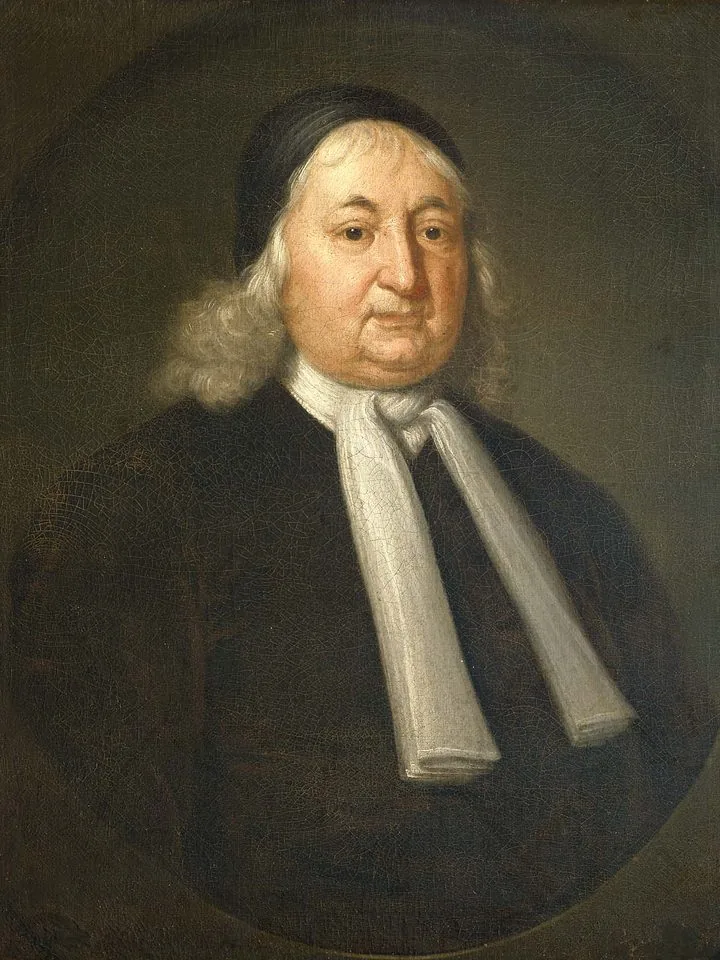
Portrait: John Smibert, 1729 · Public domain · Source
