
The story
The floor of the house
Bernard Palissy never wrote down the year. He was somewhere in his thirties or forties, in the town of Saintes in western France, and his kiln had eaten all his firewood. By his own account he had been feeding it day and night for six days, and the enamel inside still would not melt.
If the fire dropped now, the whole firing was lost. So he looked around for whatever would burn.
“The wood having failed me, I was forced to burn the props that held up the trellises of my garden; and those burnt, I was forced to burn the tables and the floor of the house.”
First the garden. Then the furniture. Then the floor under his family's feet.
He had been born around 1510 in south-western France and trained as a painter of glass. In 1539 he settled in Saintes and married. Around then, he wrote, someone showed him an enamelled cup of such beauty that he set out to learn how it was made. He had no recipe, only clay, a kiln and a long list of minerals to try. The search took him the better part of sixteen years.
That is the stage of a problem where no book has the answer and nobody you can ask has done it before. The only way forward is to try something, watch what happens and try again. Most people hate that stage. Many Workbenches secretly love it.
So the burning was not one wild night. It was the peak of years of trials, each one costing wood, materials and time. The trellis props were wood. The tables were wood. The floor was wood. The firing was what mattered.
Later retellings had him burn every stick of furniture he owned. His own account is plainer. He listed what went into the fire, in order, like an inventory. A man who could do that decades later had not been raving. He had been working.
His neighbors saw it differently. They mocked him, and word went round the town that he had gone mad. His family lived in that house through all of it, and not one word of theirs survives.
In the end he found his own kind of glaze: earthenware crowded with lizards, snakes, fish and ferns in color, as if lifted straight from the marshes. Even then, every firing was a new puzzle, because each color wanted a different heat. Anyone who works with earth, he concluded, stays an apprentice for life. For a Workbench that is no complaint. The problem never runs out.
Success came. He worked for Catherine de' Medici at the Tuileries in Paris, gave public lectures there and charged admission, and in 1580 published the book that tells the story of the burning.
He was also a Protestant, in a France at war over religion. In 1588, at about 78, he was arrested for his faith. He died in the Bastille around 1590, at about 80, without giving it up.
The man who would not let a kiln go cold would not let his faith go either.
The Workbench pattern in his life
- Learns by trial and error
- With no recipe for enamel, he spent the better part of sixteen years testing materials in his own kiln.
- Treats everything as material
- When the firewood ran out mid-firing, he burned the trellis props, then the tables, then the floor.
- Stays an apprentice for life
- Even after his success, he wrote that anyone who works with earth never stops learning.
The Workbench: You solve it by handling it. Quiet, practical, allergic to a plan that outruns the facts.
Are you a Workbench too?
Free, no email needed. Find out which house is yours.
Take the free test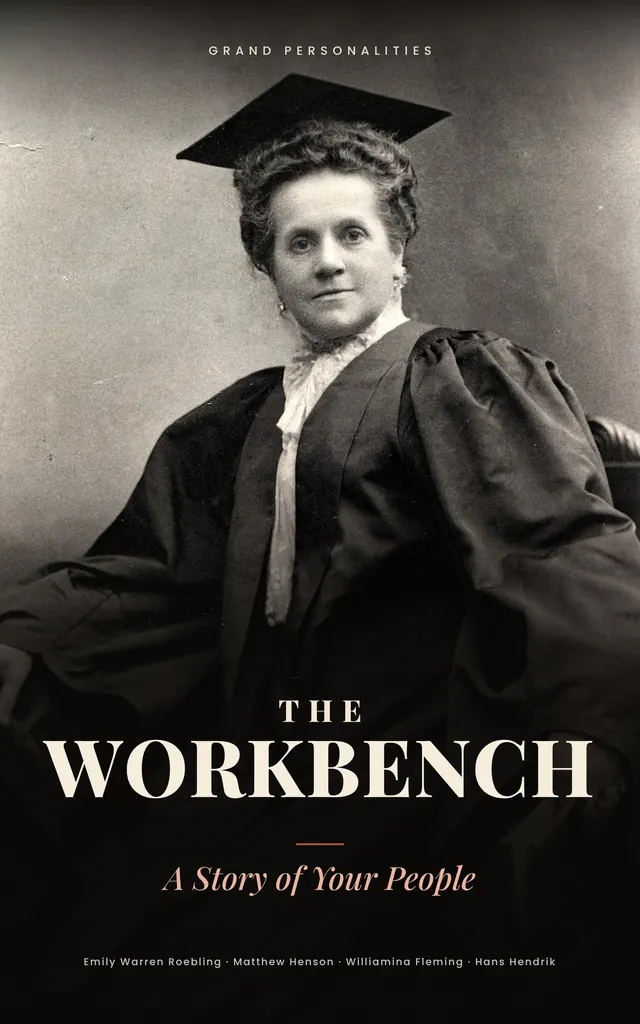
The book
The Workbench: A Story of Your People
His story and fourteen more, from the court of fifteenth-century Korea to a canyon laboratory in New Mexico in 1946, grouped by the situations every Workbench runs into: friendship, work, money, love, power, identity and the body.
More famous Workbenches

Questions people ask
What personality type was Bernard Palissy?
His life fits the Workbench, one of the houses at Grand Personalities: someone who solves problems by handling them, quiet and practical, and allergic to a plan that outruns the facts. Closest four-letter code: ISTP.
Why did Bernard Palissy burn his furniture?
He ran out of firewood in the middle of firing a batch of enamel, and letting the kiln cool would have ruined it. By his own account he burned his garden's trellis props, then his tables, then the floor of his house.
What is Bernard Palissy known for?
His glazed “rustic” earthenware, crowded with lifelike reptiles, fish and plants, and his writings on pottery and nature, above all the Discours admirables of 1580. He died in the Bastille, imprisoned as a Protestant.
Shown: the Workbench house art.