Famous Lighthouses
Big Bearthe LighthouseINFJ
Canadian Prairies, c. 1825–1888 · Plains Cree chief, negotiator, treaty holdout
The story
The rope about our necks
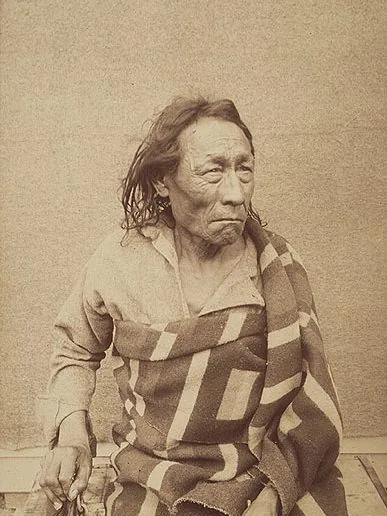
On 13 September 1876, a day after the treaty ceremonies had ended, Mistahimaskwa rode into Fort Pitt. The Plains Cree chief known in English as Big Bear was about 51, and the Queen's commissioner wanted to hear what he would say.
The treaty was Treaty 6, which asked the Cree to give up their lands across what are now Saskatchewan and Alberta. It came as the buffalo, on which the Plains Cree had always lived, were vanishing. The commissioner, Lieutenant Governor Alexander Morris, already had the agreement of many chiefs. Big Bear spoke Cree. Morris did not. Every word between them passed through an interpreter.
Big Bear said he would ask the governor to save him from what he dreaded most. Then he named it.
“It was not given to us to have the rope about our necks.”
What reached Morris was a man afraid of being hanged. Morris decided he was simply a coward.
By one account, the trouble lay in a single Cree phrase. Big Bear meant a rope of the kind that leads a horse: a people tied, led about and no longer free to go where they chose. The interpreter heard the rope of the gallows.
If that was his meaning, it was an exact forecast. Within a few years the buffalo were gone, his people were starving, and the treaty he had refused was the only way left to feed them.
This is the wound Lighthouses fear most. He had seen where things were heading and said so plainly, to the most powerful man present. His foresight went into the record as fear.
He told Morris he spoke for the Cree and Assiniboine still out hunting on the plains, and he did not sign. He was the first major chief on the Canadian prairies to refuse. For six years he held out while hunger closed in around his band.
On 8 December 1882, at about 57, he signed so that his people would be given food. He had not changed his mind. He had run out of ways to feed them.
He could lead, but he could not command every warrior who followed him. On 2 April 1885, in the uprising that spring, men of his band led by the war chief Wandering Spirit killed nine men at Frog Lake. Big Bear ran forward shouting, “Stop, stop!” Nobody listened.
He surrendered on 2 July 1885 and was convicted of treason-felony. He was sentenced to three years in Stony Mountain Penitentiary. To the officials who had heard a man fearing the rope in 1876, it looked like proof.
He was released early, in poor health, in 1887, and died on 17 January 1888, at about 62.
At every turn he saw what was coming and said so in his own words. Each time, someone else held the pen. The words he chose at Fort Pitt are still in the record, waiting to be read the way he meant them.
The Lighthouse pattern in his life
- Sees where things are heading
- In 1876 he spoke of a rope about his people's necks, years before hunger tied them to the treaty.
- Won't sign for absent people
- Speaking for the hunters still out on the plains, he refused the treaty for six years.
- Wounded by being misread
- His warning was heard as a fear of hanging, and the governor took him for a coward.
The Lighthouse: Quiet, certain, and already three moves into a future you can feel but can’t prove yet.
Are you a Lighthouse too?
Free, no email needed. Find out which house is yours.
Take the free test
The book
The Lighthouse: A Story of Your People
His story and fourteen more, from the court of a Han dynasty emperor to a government office in Ottawa, grouped by the situations every Lighthouse runs into: work, love, friendship, money, the body, purpose and power.
More famous Lighthouses

Questions people ask
What personality type was Big Bear?
His life fits the Lighthouse, one of the houses at Grand Personalities: someone quiet and certain, already three moves into a future he can feel but can't prove yet. Closest four-letter code: INFJ.
Why did Big Bear refuse to sign Treaty 6?
When he reached Fort Pitt in September 1876, he said he spoke for the Cree and Assiniboine still hunting on the plains, and he feared the treaty would take away his people's freedom. He held out until 8 December 1882, when his band was starving.
Was Big Bear responsible for the Frog Lake Massacre?
Warriors from his band killed nine men at Frog Lake on 2 April 1885 while Big Bear shouted for them to stop; he later said the young men would not listen. He was still convicted of treason-felony and sent to Stony Mountain Penitentiary.
Portrait: O.B. Buell, 1885 · Public domain · Source
