
The story
What the crown weighed
In September 1926, Florence Mills opened in Blackbirds at the London Pavilion. She was 30, and within weeks the show was the craze of the town.
London had met her once before. In 1923 she had come over in Dover Street to Dixie, and parts of the press were openly hostile to a Black company. The evening was cut in two. An English cast played the first half. Mills and her company got the second.
Think about what that asks of a performer. You walk on after the interval, into a house that has been told you are not quite welcome, and your job is to make them glad they stayed. It is the job Bonfires are built for, and still a hard one. Three years later she was back, at the top of the bill.
She had been born Florence Winfrey in Washington, D.C., on 25 January 1896, to parents who had been born into slavery. Within one lifetime their daughter was the toast of London. Her billing called her the Queen of Happiness. She sang, she danced, she was funny, and a whole theater leaned toward her.
The crown was useful. It sold tickets and opened doors. It was also a box. A queen of happiness is not supposed to have opinions about prejudice, or to be tired, or to be ill. She had all three.
One choice had already set her apart. Offered a place in the Ziegfeld Follies, the most famous revue in America, she turned it down. She wanted to build an all-Black revue with the producer Lew Leslie, believing it would do more for her people than one turn in a white show. That choice led to Blackbirds.
She used the platform. She called her work a crusade, and said every white person pleased by her performance was a friend won for her race. Away from the stage she visited children's hospitals and gave money to people sleeping rough on the Thames Embankment. That was not the side of her the billing sold.
A company of your own cannot run without you. Every night the most talked-about show in London was waiting for her, and there was only one Florence Mills. Blackbirds passed its 250th performance in April 1927. Somewhere along the way she fell ill, and played on.
Exhausted by late summer, she went to Germany to rest, then sailed home. In October she went into hospital in New York for an operation she had put off too long. She died on 1 November 1927, at 31.
“I don't want anyone to cry when I die. I just want to make people happy, always.”
Harlem gave her the biggest funeral it had ever seen, and a story grew that blackbirds flew over the procession. Duke Ellington wrote Black Beauty for her. Fats Waller recorded Bye Bye Florence on the day she died. In England, Constant Lambert wrote his Elegiac Blues.
She never made a record, so the voice that filled the London Pavilion is gone. Her choices remain: the company over the famous stage, the serious word in public, the kindness off the bill.
She was billed as the Queen of Happiness, and she was. She simply never let the audience see what the crown weighed.
The Bonfire pattern in her life
- Wins over a cold room
- In 1923 she played the second half of a split bill to a wary London, and came back a star.
- Chooses her own company
- She turned down the Ziegfeld Follies to build an all-Black revue with Lew Leslie.
- Keeps her pain off stage
- Billed as the Queen of Happiness, she kept playing Blackbirds while she was ill.
The Bonfire: You raise the temperature of a room on purpose. Present tense, full volume, real warmth.
Are you a Bonfire too?
Free, no email needed. Find out which house is yours.
Take the free test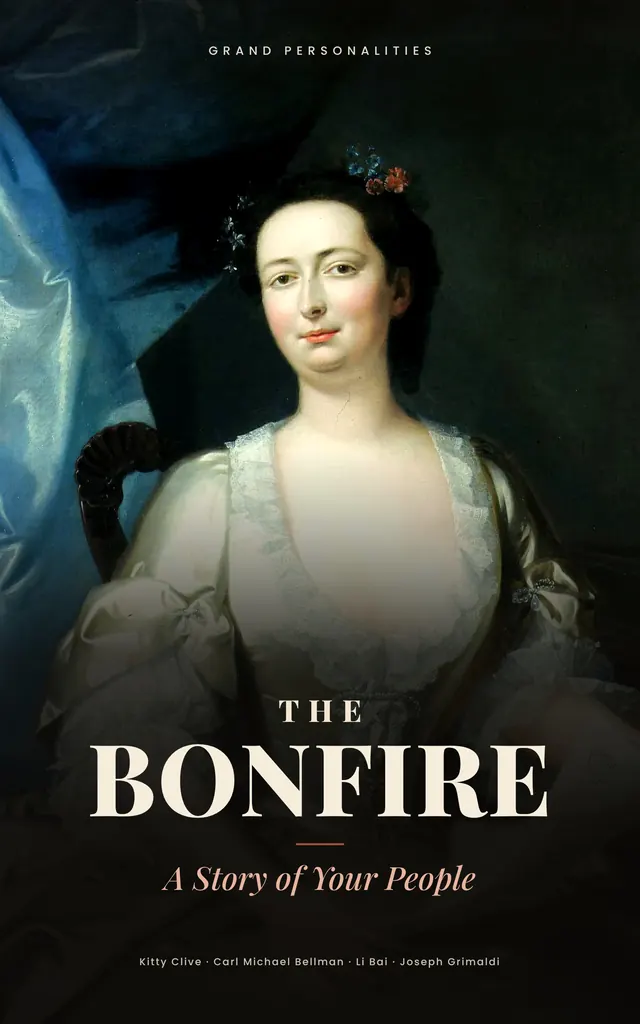
The book
The Bonfire: A Story of Your People
Her story and fourteen more, from Tang China and Elizabethan London to Tehran, Havana and the Montreal waterfront, grouped by the situations every Bonfire runs into: work, love, friendship, money, the body, purpose and power.
More famous Bonfires
Questions people ask
What personality type was Florence Mills?
Her life fits the Bonfire, one of the houses at Grand Personalities: someone who raises the temperature of a room on purpose, in the present tense, at full volume and with real warmth. Closest four-letter code: ESFP.
Why did Florence Mills turn down the Ziegfeld Follies?
She wanted to build an all-Black revue of her own with the producer Lew Leslie, believing it would do more for her people than a single role in a white show. That choice led to Blackbirds, her London triumph.
How did Florence Mills die?
Worn out by her long London run in Blackbirds and already ill, she went into hospital in New York for a delayed operation and died on 1 November 1927, at 31.
Shown: the Bonfire house art.