Famous Harbors
Gulbadan Begumthe HarborESFJ
Kabul and Mughal India, c. 1523–1603 · princess, historian, pilgrim
The story
She wrote down the women
In the late 1580s, at the Mughal court, an order reached Gulbadan Begum from her nephew, the emperor Akbar. She was in her sixties. He asked her to write down whatever she knew of the doings of his grandfather and his father, the emperors Babur and Humayun.
Akbar wanted material for the great official history of his reign. His aunt was one of the few people left who remembered the early years. She was born in Kabul around 1523, a daughter of Babur, while her family's power was still being won and lost. Her brother Humayun spent years as a king in exile, and the family went with him.
She was not a court historian. She had spent her life inside the family: its households, its journeys, its weddings and its mourning. Harbors do that kind of noticing for decades and are almost never asked to write it down.
So the first thing she did was apologize.
“I, this lowly one, was eight years old, so it may well be that I do not remember much.”
Then she remembered everything.
Akbar had asked about two emperors. Gulbadan wrote about their families. Her Humayun-nama is full of what official chronicles leave out: wives and aunts, feasts and gifts, who sat where, who traveled with whom, who was kind to whom. A court historian would call that detail. To a Harbor, it is the whole of life. Who came. Who was welcomed. Who was remembered.
Her most famous scene took place in Sind in 1541, when she was about eighteen. Humayun, then a king in exile, wanted to marry a young woman named Hamida Banu. Hamida said no. She would marry, she said, but a man whose collar her hand could reach, and not one so far above her that she could not even reach his hem. By Gulbadan's account she held out for some forty days. She went on to become Akbar's mother.
We know about that refusal because Gulbadan wrote it down. A young woman saying no to a king is exactly what official history forgets. Hamida stayed her friend for the next sixty years.
What she left out was herself. In 1575 she set out from court on the pilgrimage to Mecca. She stayed in Arabia nearly four years, and on the way home her ship was wrecked at Aden. She was back at court in 1582. Her book says nothing about any of it. Its pages record who was given which gift at a wedding. Of her own shipwreck there is not a line.
In February 1603, at about 80, she lay dying. Hamida, by then an old woman too, came to her bedside and called her by the pet name she had used for decades: “Jiu!” Gulbadan opened her eyes and quoted a line of verse.
“I die, may you live!” Then she died. Even her last words were a wish for someone else. When her body was carried out, Akbar himself helped carry the bier for some distance.
Akbar had asked her for two emperors. She handed him the whole household, and kept back only her own story.
The Harbor pattern in her life
- Notices who was there
- Asked for the doings of kings, she recorded the wives, aunts, feasts and gifts.
- Makes sure others are remembered
- Her book is why a young woman's refusal of a king survived.
- Leaves herself out
- She survived a shipwreck on her pilgrimage and never wrote a word about it.
The Harbor: You host, you organize, you notice who got left out — and you rarely get asked how you are.
Are you a Harbor too?
Free, no email needed. Find out which house is yours.
Take the free test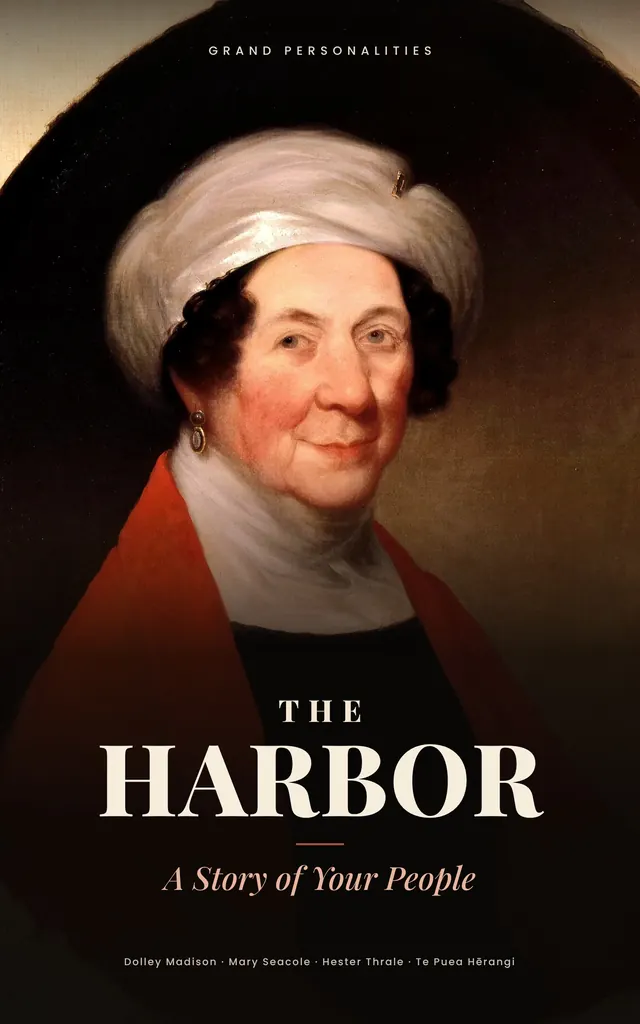
The book
The Harbor: A Story of Your People
Her story and fourteen more, from fourteenth-century Italy to twentieth-century New Zealand, from Jeju to Liverpool to Manila, grouped by the situations every Harbor runs into: work, love, friendship, money, the body, power and purpose.
More famous Harbors

Questions people ask
What personality type was Gulbadan Begum?
Her life fits the Harbor, one of the houses at Grand Personalities: someone who hosts, organizes and notices who got left out, and rarely gets asked how she is. Closest four-letter code: ESFJ.
What did Gulbadan Begum write?
The Humayun-nama, an account of the lives of her father Babur and her brother Humayun, written at Emperor Akbar's request. It is full of the family life, weddings and women that official histories left out.
Did Gulbadan Begum go on hajj?
Yes. She left Akbar's court in 1575, spent nearly four years in Arabia and returned in 1582, delayed by a shipwreck at Aden. She left no account of the journey.
No free-to-use portrait of Gulbadan Begum is available. Shown: the Harbor house art.