Famous Harbors
Mary Musgrovethe HarborESFJ
Georgia, c. 1700–c. 1765 · interpreter, trader, Muscogee diplomat

The story
The bill for twenty years
In August 1749, in Savannah, the colony of Georgia readied its militia and arrested a woman of about 49. Sixteen years earlier, the colony had been founded through her words.
Mary Musgrove was born around 1700 at Coweta, a town of the Muscogee, or Creek, people. Her Muscogee name was Coosaponakeesa, and she belonged to the Wind Clan. Creek kinship ran through the mother's line, which made her, in Creek eyes, fully one of them.
As a young woman she married an English trader, John Musgrove, and by 1732 they ran a trading post on the Savannah River near Yamacraw Bluff. She spoke both languages and understood both worlds. People came to her post to trade, and to talk.
In 1733 James Oglethorpe arrived to found Georgia. The local Yamacraw leader, Tomochichi, could not understand him. Mary could understand both, and for the next ten years she was Oglethorpe's chief interpreter. Savannah's peaceful start rested on her.
It is the kind of power Harbors hold most often and are paid for least, because from outside it looks like simple helpfulness. She kept the Creeks and the English talking on a dangerous frontier with Spanish Florida. She hosted Creek visitors, raised warriors when the English asked, and by her own reckoning spent much of her own fortune doing it. She also owned enslaved people; the frontier trade she lived by rested partly on slavery.
When Oglethorpe left for England in 1743, he gave her £100, a ring, and a promise of £100 a year that was never kept.
In 1747 she sent the bill. She asked the English commander, Lieutenant Colonel Alexander Heron, to compensate her for years of service. Heron backed her, and wrote to London about her worth. That same year her kinsman Malatchi, a leading man of Coweta, gave her three sea islands: St Catherines, Sapelo and Ossabaw.
“the singular service she has done the country”
Savannah saw it differently. In the summer of 1749 more than two hundred Creeks came to town with Malatchi to back her claim. To a small colonial town, it looked like an invasion. A hostile witness wrote that she had said she “was Empress of the Upper and Lower Creeks.” The magistrates had her arrested.
Twenty years of unpaid hosting rarely comes out as a polite invoice. It comes out all at once, with the family attached, and the people who benefited all along see only an attack. Her claim was also about land, and about whose country this was. Colonial law was never going to weigh a Muscogee woman's title the way it weighed an Englishman's.
The Creeks went home angry, and for a while the alliance she had built looked close to breaking. So she did what she had always done. She spent the next year in the Creek towns, mending what Savannah had broken, carrying words between two peoples again.
The land took longer. In 1760 a new governor, Henry Ellis, settled it: she gave up her other claims and received St Catherines Island and £2,100. She died there some time after 1763.
Georgia began with her interpreting. It took the colony twenty-seven years to pay for the words.
The Harbor pattern in her life
- Keeps the door open
- For years her trading post was where Creeks and English came to trade and talk.
- Helps two sides understand each other
- From 1733 she was Oglethorpe's chief interpreter with the Creek nation.
- Waits too long to ask
- She gave for over a decade before sending the bill, and the colony called it a threat.
The Harbor: You host, you organize, you notice who got left out — and you rarely get asked how you are.
Are you a Harbor too?
Free, no email needed. Find out which house is yours.
Take the free test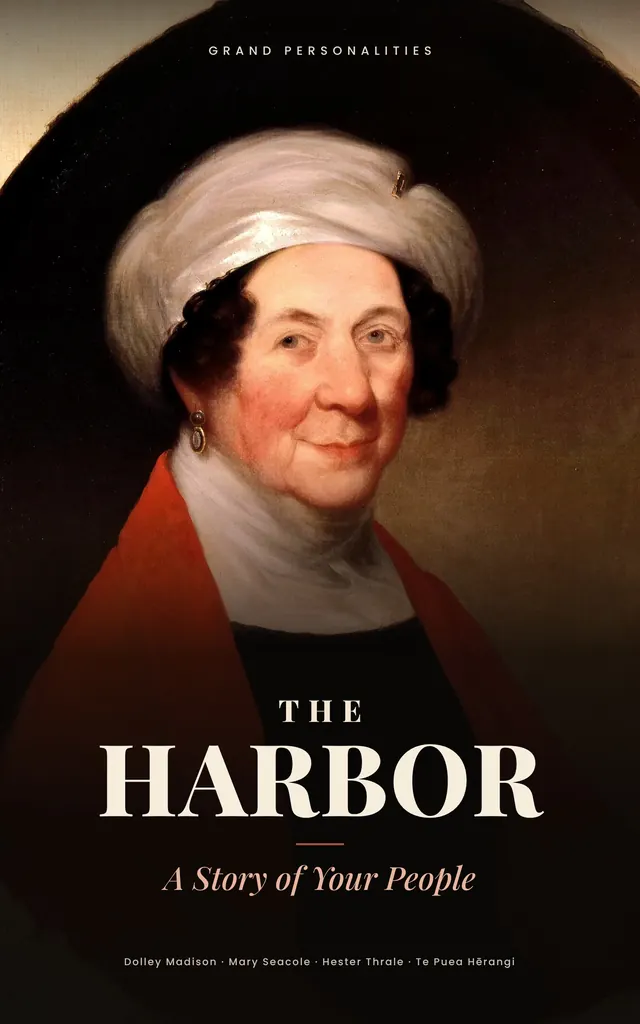
The book
The Harbor: A Story of Your People
Her story and fourteen more, from fourteenth-century Italy to twentieth-century New Zealand, from Jeju to Liverpool to Manila, grouped by the situations every Harbor runs into: work, love, friendship, money, the body, power and purpose.
More famous Harbors

Questions people ask
What personality type was Mary Musgrove?
Her life fits the Harbor, one of the houses at Grand Personalities: someone who hosts, organizes and notices who got left out, and rarely gets asked how she is. Closest four-letter code: ESFJ.
What did Mary Musgrove do for Georgia?
She was James Oglethorpe's chief interpreter from 1733 to 1743, linking the new colony with the Creek nation and helping Savannah's founding stay peaceful.
What happened to Mary Musgrove's land claims?
After years of dispute, Governor Henry Ellis settled them in 1760: she received St Catherines Island and £2,100 and gave up her claims to Ossabaw, Sapelo and land near Savannah.
No free-to-use portrait of Mary Musgrove is available. Shown: the Harbor house art.