The story
Sweating over the abacus
In the summer of 1893, Higuchi Ichiyō, a 21-year-old writer in Tokyo, talked it over with her mother and her sister, and the three of them decided to stop living by her pen and go into trade.
It was a strange choice for a writer, and she did not make it from strength. Her father had died in 1889, and the family's money went with him. What was left was three women and whatever Ichiyō could earn by writing stories.
In company she was shy and reserved. Her diary was another matter: fierce, funny, proud and exact. Auroras often live with that gap between a modest manner and a blazing page.
By 1893 she was writing to pay the bills, and her diary shows what she thought it was doing to the work. Writing, she decided, was not something to do for the sake of one's rice bowl. A writer should take up the brush only as her thoughts ran and her heart led.
“I will leave this road of writing for my rice, and start something called trade, sweating over the beads of the abacus.”
She did not set out to write something more popular, or look for a rich patron. She changed the arrangement and kept the standard. If her writing could not be honest and paid at once, it would not be paid.
The family moved to Ryūsenji-chō, a back street beside the Yoshiwara, the walled pleasure quarter of the city, and opened a little shop selling household goods and cheap sweets. Ichiyō went out and bought the stock. Her sister Kuniko minded the counter.
Then the plain arithmetic of a tiny shop set in. The takings were pennies, and the pennies never came right. She had left writing to escape the indignities of working to order, and found that trade had its own, smaller and meaner.
In May 1894, less than a year after they opened, the family closed the shop and moved away to Hongō. Before long she was writing for money again.
If the story stopped there it would be a sad one. In January 1895 she began publishing Takekurabe, a story of children growing up in the streets around the Yoshiwara, the same streets she had watched from behind her counter.
The failed shop had given her a street, and the street gave her the story. She went back to writing for money, but money did not choose what she wrote. Auroras often find their real subject on the detour they took to protect the work.
The stories that made her name came quickly after that, and she had very little time. She died of tuberculosis on 23 November 1896, aged 24.
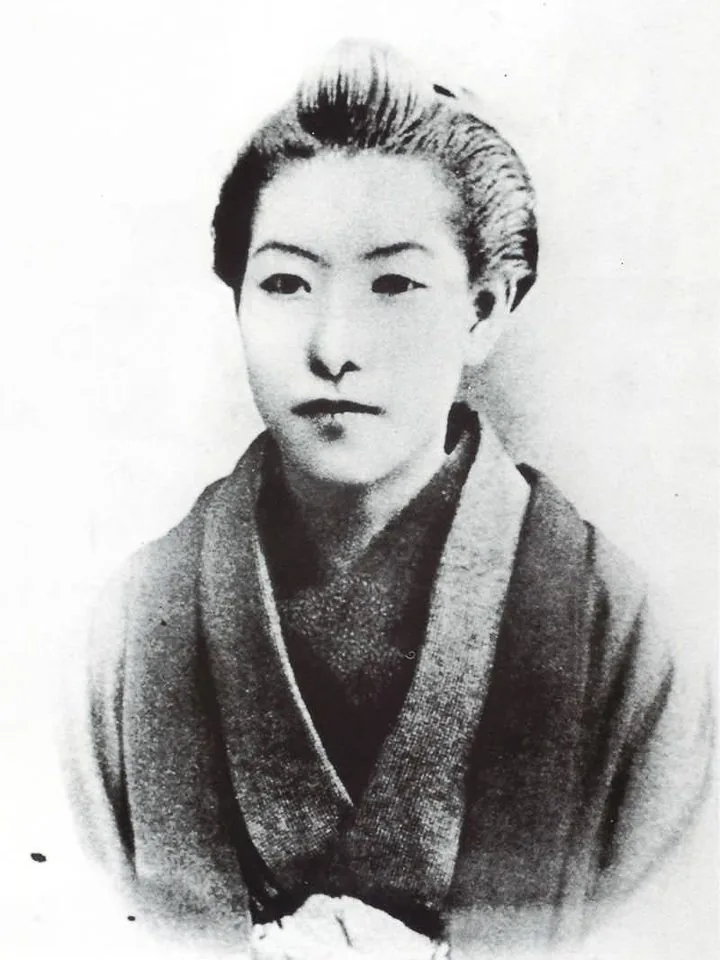
In 2004 her portrait went onto Japan's five-thousand-yen note. The woman who decided writing was no way to earn her rice ended up on the nation's money.
The Aurora pattern in her life
- Quiet manner, blazing private page
- Shy and reserved in company, she kept a diary that was fierce, funny, proud and exact.
- Keeps the code, changes the arrangement
- Rather than write to order, she took her writing off the market and opened a sweets shop.
- Turns experience into finished work
- The street beside the Yoshiwara where her shop failed became the setting of Takekurabe.
The Aurora: You feel the whole room and keep most of it. What you make of it comes out later, whole.
Are you an Aurora too?
Free, no email needed. Find out which house is yours.
Take the free test
The book
The Aurora: A Story of Your People
Her story and thirteen more, from third-century China and Bengal to Bordeaux, a mountain hermitage in Japan and a sanatorium in the Swiss snow, grouped by the situations every Aurora runs into: work, love, friendship, money, the body, purpose and power.
More famous Auroras

Questions people ask
What personality type was Higuchi Ichiyō?
Her life fits the Aurora, one of the houses at Grand Personalities: someone who feels the whole room and keeps most of it, and whose answer comes out later, whole. Closest four-letter code: INFP.
Why is Higuchi Ichiyō on the 5,000 yen note?
She is honored as one of the founding writers of modern Japanese fiction, and her portrait appeared on the ¥5,000 note from 2004. Her best-known stories came in a burst of little more than a year before her death at 24.
What is Takekurabe about?
Takekurabe, often translated as “Child's Play” or “Growing Up”, follows a group of children on the edge of adulthood in the streets beside Tokyo's Yoshiwara quarter. Ichiyō knew those streets from the year she kept a shop there.
Portrait: Unknown author, before 1896 · Public domain · Source
