Famous Wildfires
Jørgen Jørgensenthe WildfireENFP
Denmark, Iceland and Tasmania, 1780–1841 · adventurer, Protector of Iceland, convict
The story
A blow to be spoken of
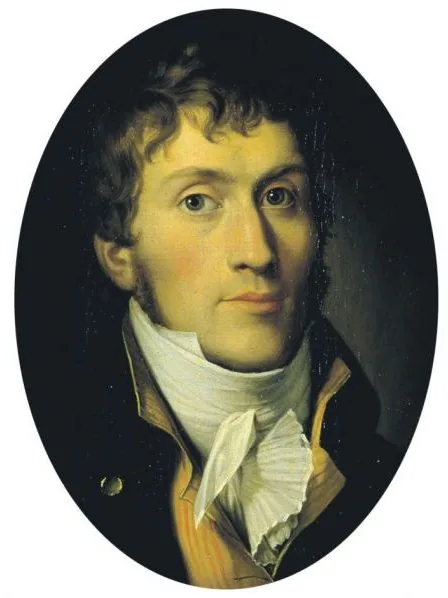
On Sunday 25 June 1809, Jørgen Jørgensen crossed the field outside the governor's house in Reykjavík with a few English sailors and arrested the governor of Iceland. He was 29.
It was hardly an army. Count Trampe, the Danish governor, was led away, and by the next day a young Dane with no title or office was issuing proclamations to the Icelanders.
He was born in Copenhagen in 1780, the son of the royal watchmaker. He went to sea young, served on British ships, and by 1808 was commanding a Danish privateer. Denmark and Britain were at war, and when his ship was taken he became a prisoner in England on parole, held by nothing but his word.
His word did not hold him long. In 1809 he sailed to Iceland on an English trading voyage. Iceland belonged to Denmark, it was hungry, and its governor would not let the islanders trade with the English.
Wildfires will recognize the next part. He saw the version in which everything changed at once, and moved before anyone could talk him out of it.
He named himself Protector of Iceland and promised to bring back the Althing, the island's old assembly, once Icelanders could govern themselves. By one account he gave the country a flag, blue with three white stockfish. He raised an army, said to number eight men, and built a fort.
It was a state built out of its outward signs. Underneath there was no treasury, no navy and, above all, no support from the Icelanders, who watched and waited.
Later he was frank about why. He had been determined, he wrote, “to strike some blow to be spoken of.”
Most Wildfires put their speed, charm and instinct for the big gesture to work for something outside themselves: a classroom, a crowd, the wounded. Jørgensen had the engine and almost nothing to point it at. A blow to be spoken of was the whole plan.
On 22 August 1809 the captain of a British warship, HMS Talbot, put the Danish government back. The protectorate had lasted eight weeks. Icelanders still tell the story with a smile. They call him hundadagakonungur, the Dog-Days King, ruler of the hottest weeks of summer, the ones that never last.
“…talents were of the highest order: but for his character, moral and religious, it was always of the lowest order.”
After that his life kept starting over. Under the English spelling Jorgen Jorgenson, he gambled, and admitted to “the malignant influence of other passions besides play.” He was in and out of Newgate prison, and in 1825 he was transported. In April 1826 he landed in Van Diemen's Land, now Tasmania, as a convict.
There his nerve found new work. He explored the island and became a convict constable. In 1830 he took part in the Black Line, the colonial campaign against the Palawa, Tasmania's Aboriginal people. Nerve has no conscience of its own. It goes wherever it is pointed.
He died in Hobart on 20 January 1841, aged 60. The novelist Marcus Clarke called him “one of the most interesting human comets recorded in history.” Nerve had taken him a country in a day. With nothing behind it, it could not hold one for a season.
The Wildfire pattern in his life
- Moves before anyone can object
- With a handful of sailors and no authority, he arrested the governor of Iceland.
- Builds the dream from its signs
- Within weeks he had a title, a flag by one account, an army of eight and a fort.
- Keeps starting over
- Protector, prisoner, gambler, explorer, constable: he reinvented himself again and again.
The Wildfire: Fast, warm, everywhere at once. You start the thing and someone else usually files it.
Are you a Wildfire too?
Free, no email needed. Find out which house is yours.
Take the free test
The book
The Wildfire: A Story of Your People
His story and fourteen more, from a brewery in medieval Norfolk to a beach in New Guinea, grouped by the situations every Wildfire runs into: power, work, love, friendship, money, the body and purpose.
More famous Wildfires
Questions people ask
What personality type was Jørgen Jørgensen?
His life fits the Wildfire, one of the houses at Grand Personalities: someone fast, warm and everywhere at once, who starts the thing and usually leaves someone else to file it. Closest four-letter code: ENFP.
Was Jørgen Jørgensen the King of Iceland?
Not officially. In June 1809 he arrested the Danish governor and ruled for about eight weeks with the title Protector; Icelanders nicknamed him the Dog-Days King, and in English he is often called the King of Iceland.
What happened to Jørgen Jørgensen after Iceland?
He was taken back to England, fell into gambling and debt, spent time in Newgate prison and was transported to Van Diemen's Land (Tasmania), arriving in 1826. There he worked as an explorer and convict constable, and he died in Hobart in 1841.
Portrait: Christoffer Wilhelm Eckersberg, from 1808 until 1809 · Public domain · Source
