Famous Wildfires
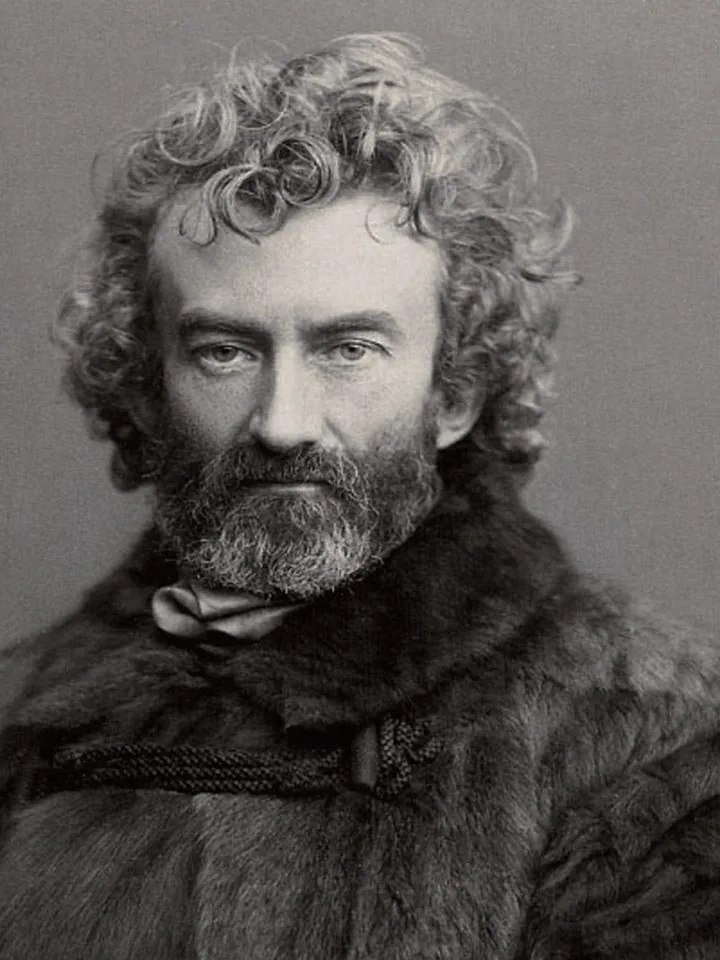
Nicholas Miklouho-Maclaythe WildfireENFP
Russia, New Guinea and Sydney, 1846–1888 · scientist, explorer, campaigner
The story
The man who kept coming back
In September 1871, at 25, Nicholas Miklouho-Maclay was put ashore on the coast of Astrolabe Bay, in north-east New Guinea, by a Russian warship that would soon sail on without him.
He had two servants with him and no plan to leave soon. He meant to learn how the people of that coast lived by living beside them. He built a hut on a small point of land called Garagassi, and he stayed about fifteen months.
He was born Nikolai Miklukho-Maklai in Russia on 17 July 1846 and trained as a scientist. What he most wanted to understand was people, and he believed the only way to understand a place was to go and stand in it. Wildfires will know that impulse.
Plenty of travelers of his century arrived armed and certain. He arrived curious. By his own account, when he first walked to the nearest village, he left his revolver at home. He did not forget his notebook and pencil.
Think about that choice on a beach where three foreigners lived among villages that did not yet know what they were. A revolver says: I am ready for you to be dangerous. A notebook says: I am ready for you to be interesting. Wildfires tend to reach for the notebook by instinct.
Visitors came and went. One man kept coming back. His name was Tui, from the village of Gorendu, and for a time he was the only neighbor who did. Nobody wrote down why. Curiosity, perhaps, or courage. Whatever it was, Tui made the first friendship on that coast possible simply by returning.
The looking went both ways. Maclay studied his neighbors, and his neighbors stood in his hut and studied his kettle and his folding chair.
He learned the language of the nearby village of Bongu, getting words wrong in front of the very people he had come to study. Tui helped teach him, and went between him and the other villages, explaining the stranger to them and them to the stranger. The study had turned around. They were teaching him.
The villagers gave him a name of their own, tamo rus, the man from Russia. It was the kind of name you give a neighbor.
Years later Leo Tolstoy wrote to him about what those months had shown.
“…man is man everywhere, that is, a kind, sociable being with whom communication can and should be established through kindness and truth, not guns and spirits.”
From 1878 he lived in Sydney. He founded a marine laboratory at Watsons Bay and wrote to the newspapers against blackbirding, the labor trade in Pacific Islanders, and against European powers taking over New Guinea. Once a cause had faces, he could not leave it alone. In 1884 he married Margaret Clark. Money was always short, and his health paid for the traveling.
He died in St Petersburg in April 1888, aged 41. In 2013 a monument to him went up near Bongu.
A friendship across that much distance needs courage at both ends. One end was a stranger who came unarmed. The other was a neighbor who kept coming back.
The Wildfire pattern in his life
- Goes and stands in it
- He had himself put ashore on an unfamiliar coast to learn its people by living beside them.
- Meets strangers open-handed
- By his own account, he left his revolver at home and took a notebook and pencil.
- Takes up his friends' cause
- In Sydney he wrote to the papers against blackbirding and the takeover of New Guinea.
The Wildfire: Fast, warm, everywhere at once. You start the thing and someone else usually files it.
Are you a Wildfire too?
Free, no email needed. Find out which house is yours.
Take the free test
The book
The Wildfire: A Story of Your People
His story and fourteen more, from a brewery in medieval Norfolk to a beach in New Guinea, grouped by the situations every Wildfire runs into: power, work, love, friendship, money, the body and purpose.
More famous Wildfires
Questions people ask
What personality type was Nicholas Miklouho-Maclay?
His life fits the Wildfire, one of the houses at Grand Personalities: someone fast, warm and everywhere at once, who starts the thing and usually leaves someone else to file it. Closest four-letter code: ENFP.
Why is Miklouho-Maclay famous?
He was a Russian scientist who in September 1871 settled among the people of Astrolabe Bay in New Guinea and lived beside them for about fifteen months. He used his anatomical work to argue that all human races are one species, and later campaigned against the Pacific labor trade.
What did Miklouho-Maclay do in Australia?
He settled in Sydney in 1878, founded a marine biological station at Watsons Bay, and wrote to Australian newspapers against blackbirding and the colonial takeover of New Guinea. He married Margaret Clark there in 1884.
Portrait: Unknown author, 1887 · Public domain · Source
