Famous Arenas
Lady Mary Wortley Montaguthe ArenaENTP
England, 1689–1762 · letter writer, traveler, inoculation campaigner
The story
Signed, a Turkey merchant
In April 1721, with smallpox sweeping through London, Lady Mary Wortley Montagu, 31, had her three-year-old daughter given the disease on purpose.
The surgeon, Charles Maitland, scratched matter from a smallpox sore into the little girl's skin, so that she would have a mild case and never catch it again. Nobody in England was known to have done this before. If the child died, it would be his name on it, and by one account he asked for witnesses.
Lady Mary knew exactly what she was betting against. Smallpox had killed her brother in 1713. In 1715, at 26, it nearly killed her too, and left her face scarred.
In 1716 her husband was made ambassador to the Ottoman Empire. On 1 April 1717, at 27, she wrote from Adrianople to her friend Sarah Chiswell about something she had watched there. Old women scratched smallpox matter into children's skin. The children ran a short fever and were safe for life. The disease that killed so many at home, she wrote, was “entirely harmless” here.
Then came the sentence Arenas will recognize.
“I should not fail to write to some of our doctors very particularly about it, if I knew any one of them that I thought had virtue enough to destroy such a considerable branch of their revenue, for the good of mankind.”
She had seen the contradiction at once. In England, smallpox was a killer and also a living. In one light clause she accused a whole profession of putting its income first. It read like a joke. It turned out to be a forecast.
She did not invent the practice. Ottoman and Greek women had done it for generations, and reports had already reached London, where learned men read them and did little. What she did was believe it and stake her family on it. In March 1718, in Constantinople, her son Edward, nearly five, was inoculated by an old Greek woman and Maitland between them.
Back in London, the physicians pushed back. So in September 1722, at 33, she wrote a defense of inoculation for The Flying-Post and signed it as a Turkey merchant.
It was a clever coat to wear. A titled woman famous for her wit was easy to wave away. A merchant who had simply been there and seen it was believed. By one account, the paper still cut her sharpest lines. The disguise got the argument into print, but the jokes stayed outside.
She kept at it for years, long after being right had stopped being fun. Arenas are said to love the first act and drift off before the second. She stayed for the second. Her granddaughter later called the whole campaign thankless.
Her family carried part of the cost. Her children had been the evidence. In 1753, writing to that same daughter about a clever granddaughter, she said the girl should learn all she wanted and hide it as carefully as a crooked back or a lame leg.
She died in 1762, at 73. In 1794 the daughter who had been inoculated in the epidemic burned the diary her mother had kept since her marriage. She had been her mother's proof once. The last word on what the world would see was hers.
The Arena pattern in her life
- Spots the contradiction instantly
- She saw at once that English physicians made a living from a disease Turkish women had made harmless.
- Makes the point with a joke
- She accused a whole profession of putting income first, in a sentence light enough to pass as a quip.
- Tests the idea on herself
- She proved her case on her own son and daughter, then argued it in print as a Turkey merchant.
The Arena: You argue to find out. Ten ideas an hour, and you were never attacking the person.
Are you an Arena too?
Free, no email needed. Find out which house is yours.
Take the free test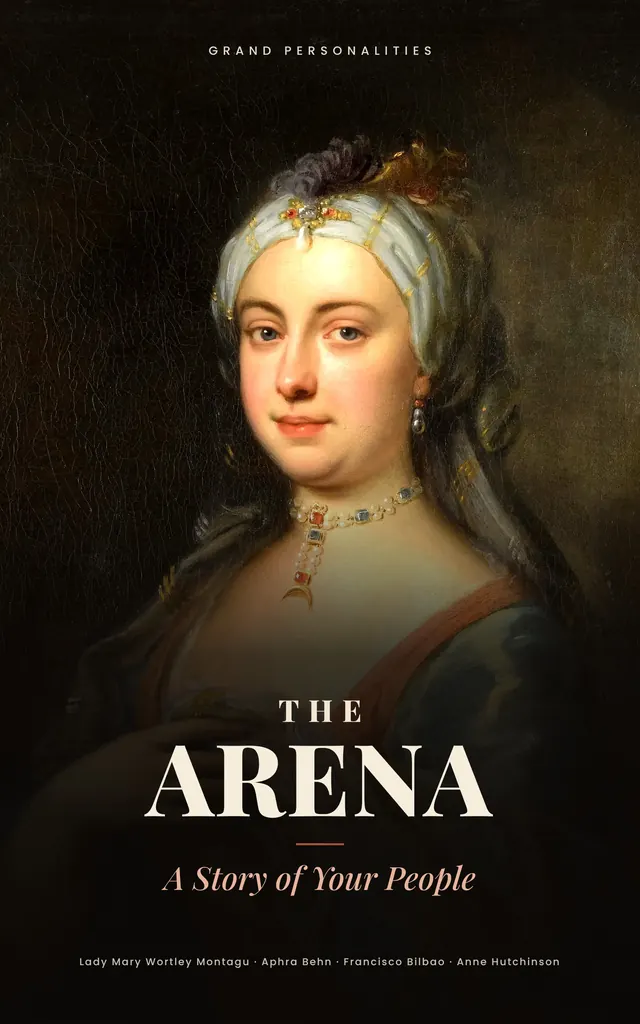
The book
The Arena: A Story of Your People
Her story and thirteen more, from an empress's household in Kyoto around the year 1000 to a tavern in Prague in 1911, grouped by the situations every Arena runs into: work, love, friendship, money, the body, purpose and power.
More famous Arenas
Questions people ask
What personality type was Lady Mary Wortley Montagu?
Her life fits the Arena, one of the houses at Grand Personalities: someone who argues to find out, throws out ten ideas an hour, and was never attacking the person. Closest four-letter code: ENTP.
What did Lady Mary Wortley Montagu do about smallpox?
After seeing inoculation, then called engrafting, in the Ottoman Empire, she had her son inoculated in Constantinople in 1718 and her daughter in London in 1721, the first known case in England. She then defended the practice in print.
Did Lady Mary Wortley Montagu discover inoculation?
No. Ottoman and Greek women had practiced it for generations, and reports of it had already reached London. She saw it, trusted it with her own children and campaigned for it at home.
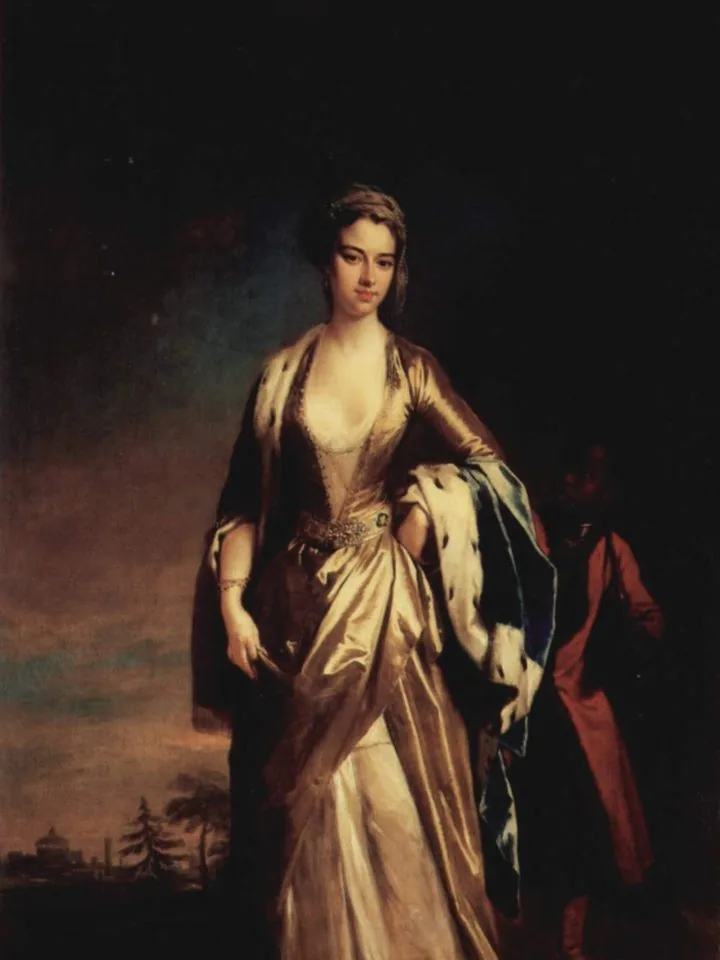
Portrait: Jonathan Richardson the younger, 1725 · Public domain · Source
