Famous Observatories
Lise Meitnerthe ObservatoryINTJ
Austria and Germany, 1878–1968 · physicist, refugee, letter writer
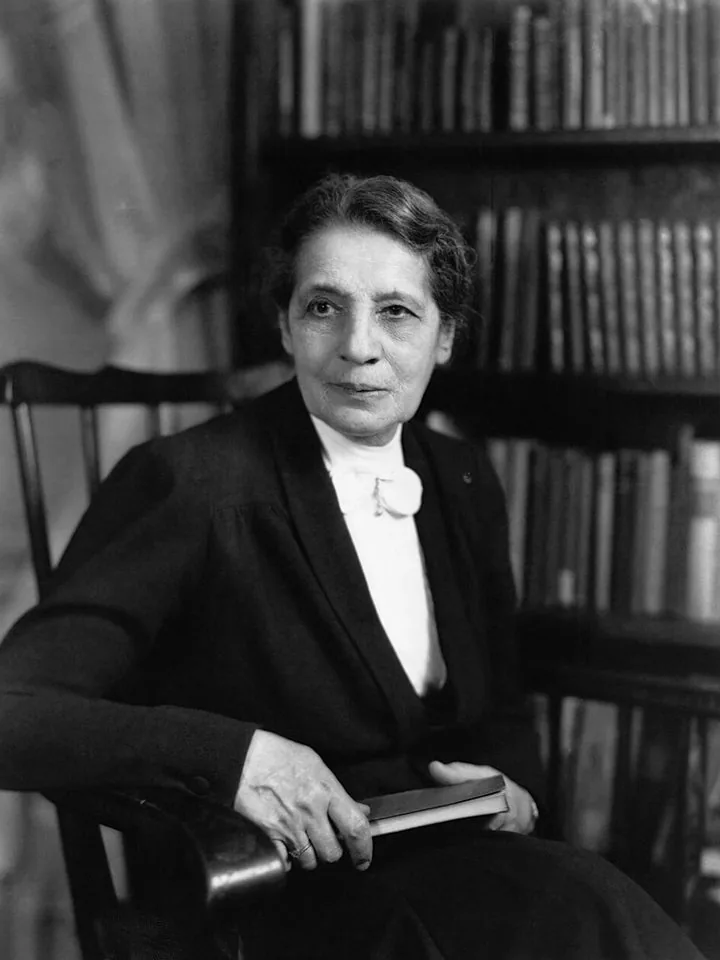
The story
The ring and the verdict
On 13 July 1938, Lise Meitner left Berlin for the Dutch border carrying a diamond ring that was not hers. She was 59, an Austrian physicist of Jewish family, and she was escaping Nazi Germany.
The ring had belonged to the mother of Otto Hahn, the chemist she had worked beside for some thirty years. She spent her last night in Berlin at his home, and he gave her the ring in case of emergency. There were no speeches. Something of value was quietly handed over, in case the worst happened.
Hahn helped her get out. That matters, because of what came later.
She had stayed far too long. Hitler came to power in 1933, when she was 54, and she remained in Berlin for five more years out of loyalty to her institute and the work she had built there.
Observatories are often slow to leave. Their loyalty runs to structures: the laboratory, the half-finished experiment, the team that finally works. Meitner could see deep inside the atom. She was slower to see the danger in the street outside.
In exile, the work went on. That December, Hahn wrote to her in Sweden with results he could not explain. Over Christmas, on a walk through the snow with her nephew Otto Frisch, she worked out what they meant: the uranium nucleus had split in two. The physicist who explained fission was a refugee, shut out of the laboratory where it was found. Observatories will recognize the method: one other mind, a long walk, and a problem nobody else could see yet.
In November 1945, the Nobel Prize in Chemistry for 1944 went to Hahn alone. In the years after, he made her part in the work smaller than it had been.
She had already turned her judgment on him. In June 1945 she wrote to him about what the German scientists had done. “You all worked for Nazi Germany,” she told him. The letter never reached him, and she never took the verdict back.
Then she turned the same judgment on herself.
“It was not only stupid but very wrong that I did not leave at once.”
There is no self-pity in that sentence, and no excuse. She does not say she was deceived, or that others were worse. The subject is her. It is the same exact reasoning she had brought to the nucleus, aimed where it hurt most.
Many people would have made a clean break with Hahn. He had worked on in Germany, taken the prize alone and shrunk her share of the story. She kept him. Hahn later wrote that they remained close friends all their lives.
She died in Cambridge in October 1968, at 89. She never softened the verdict, and she never let go of the friend.
The Observatory pattern in her life
- Sees inside the system first
- On a walk in the snow she worked out that the uranium nucleus had split.
- One standard for everyone, herself included
- She told Hahn they had all worked for Nazi Germany, then called her own staying “very wrong.”
- Loyal to structures, slow to leave
- She stayed in Berlin for five years after 1933 for the sake of her institute.
The Observatory: You build the whole model before you speak, then defend it like it cost you something. It did.
Are you an Observatory too?
Free, no email needed. Find out which house is yours.
Take the free test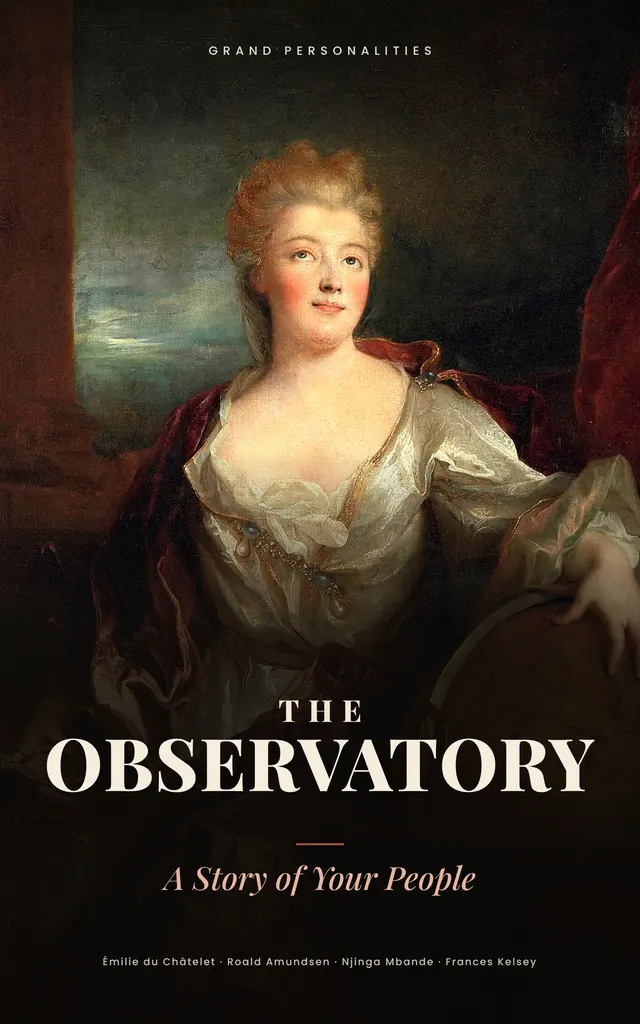
The book
The Observatory: A Story of Your People
Her story and fourteen more, from an execution ground in Edo to a hut on the Antarctic ice, grouped by the situations every Observatory runs into: work, love, friendship, money, the body, purpose and power.
More famous Observatories
Questions people ask
What personality type was Lise Meitner?
Her life fits the Observatory, one of the houses at Grand Personalities: someone who builds the whole model before speaking, then defends it like it cost her something. It did. Closest four-letter code: INTJ.
Why didn't Lise Meitner get the Nobel Prize?
The 1944 Nobel Prize in Chemistry for the discovery of nuclear fission went to Otto Hahn alone, announced on 15 November 1945. Meitner, by then a refugee in Sweden, had worked out with Otto Frisch that the uranium nucleus had split.
How did Lise Meitner escape Nazi Germany?
On 13 July 1938 she left Berlin with the Dutch physicist Dirk Coster and crossed into the Netherlands. Otto Hahn gave her his mother's diamond ring to use in an emergency.
Portrait: Harris & Ewing · Public domain · Source
