Famous Observatories
Queen Njingathe ObservatoryINTJ
Angola, c. 1583–1663 · queen, diplomat, war leader
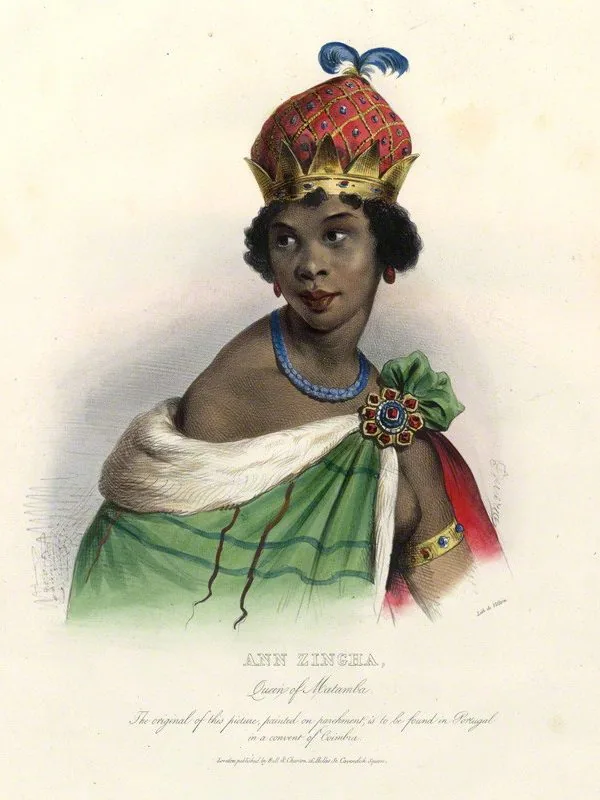
The story
The name she kept
In 1622, a princess of Ndongo came to Luanda at the head of an embassy to the Portuguese governor, and left with his name. Njinga, also spelled Nzinga, was about 40.
Ndongo was a kingdom in what is now Angola. The Portuguese colony on the coast was pushing inland, and its wars were bound up with the Atlantic slave trade. Her brother, the king, sent her to negotiate. An embassy was one of the few tools a kingdom in that position had, and she knew how to use it.
A famous story says she was offered no chair, so a servant knelt and she sat on the servant's back. It may be only legend. She did not need it. What she actually did was slower and more remarkable.
In Luanda she was baptized a Christian. Her godparents were the governor, João Correia de Sousa, and his wife. She took the name Ana de Sousa.
It is easy to read that as surrender. The rest of her long life suggests the opposite. The name tied her to the governor's own family, to the Church, and to the forms the Portuguese took seriously. A baptized queen with Portuguese godparents could not easily be treated as an outlaw. She could write to governors as one Christian to another, while pursuing aims that were never theirs.
Observatories tend to think this way. They learn the rules the other side respects and use them with precision, for a goal years away. A careful person who understands a system's own forms can often move it further than someone who simply shouts at it.
She became ruler in 1624. For decades she fought the Portuguese, negotiated with them, broke with them and negotiated again. She took the kingdom of Matamba and ruled from there, a war leader as well as a diplomat. Her power, like that of the Portuguese she fought, rested partly on the trade in human beings, and the people sold in it paid the highest price of all. They left no letters.
Through all of it, the name stayed. Decades after the font in Luanda, writing to the governors from Matamba, she still signed herself with it.
“Dona Ana de Sousa”
In 1656, thirty-four years after the embassy, she made peace with Portugal. Among the things the peace won was a person. Her sister Kambu, known to the Portuguese as Dona Bárbara, had been their captive since 1646. That October she came home to Matamba.
At the far end of more than thirty years of maneuvering, what Njinga collected was family.
She died on 17 December 1663, at about 80. Her statue in Luanda today carries the name she was born with, Njinga Mbande. Ana de Sousa was the name she wrote for the Portuguese. Njinga is the name her people kept.
The Observatory pattern in her life
- Plays for the far horizon
- The name she took at about 40 was still working for her in her seventies.
- Uses the other side's rules
- As a baptized queen, she could write to governors as one Christian to another.
- Holds a position for decades
- From the embassy of 1622 to the peace of 1656, she never let the contest go.
The Observatory: You build the whole model before you speak, then defend it like it cost you something. It did.
Are you an Observatory too?
Free, no email needed. Find out which house is yours.
Take the free test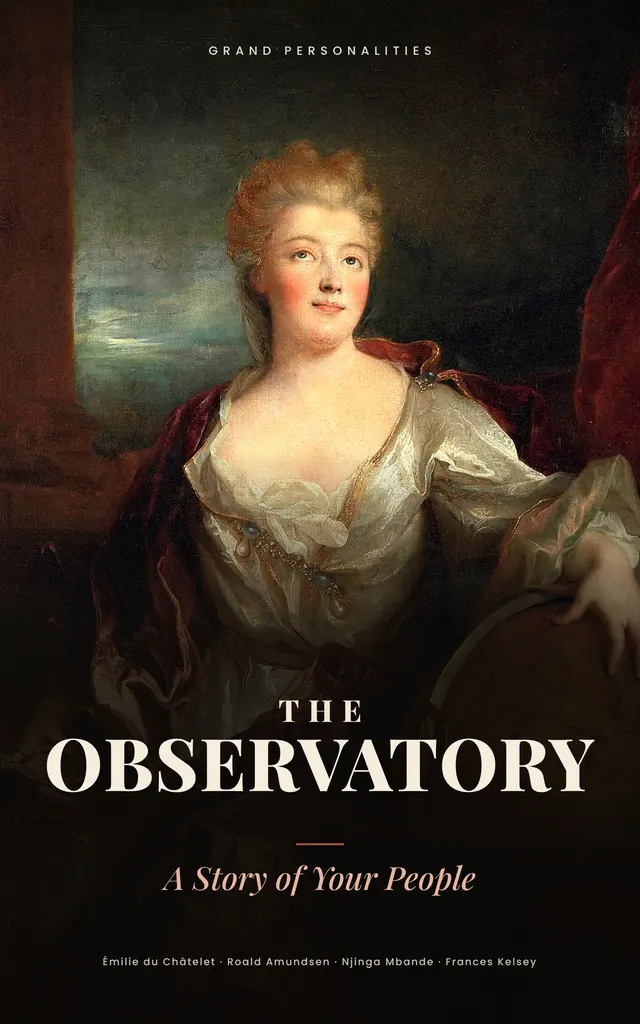
The book
The Observatory: A Story of Your People
Her story and fourteen more, from an execution ground in Edo to a hut on the Antarctic ice, grouped by the situations every Observatory runs into: work, love, friendship, money, the body, purpose and power.
More famous Observatories
Questions people ask
What personality type was Queen Njinga?
Her life fits the Observatory, one of the houses at Grand Personalities: someone who builds the whole model before speaking, then defends it like it cost her something. It did. Closest four-letter code: INTJ.
Why did Queen Njinga become a Christian?
She was baptized in Luanda in 1622, during an embassy to the Portuguese governor, and took the name Ana de Sousa. She went on using that name in her dealings with the Portuguese for decades, while fighting and negotiating with them.
Did Queen Njinga really sit on a servant instead of a chair?
It is the most famous story about her 1622 embassy to Luanda, but it may be only legend. What is certain is that she left Luanda baptized, with the governor as her godfather.
Portrait: Achille Devéria, 1830s · Public domain · Source
