Famous Hearths
María Remedios del Vallethe HearthISFJ
Buenos Aires and Upper Peru, c. 1766–1847 · nurse, soldier, captain
The story
I knew this woman
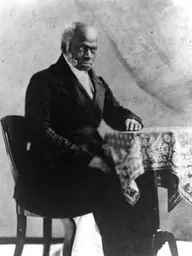
On 18 July 1828, the legislature of Buenos Aires argued over an old woman who begged for coins in the city's arcades. María Remedios del Valle was about 60. Nothing in the record says she was in the room.
The deputies wanted documents. General Juan José Viamonte, an old soldier who found speaking hard, stood up anyway, because he had something the papers did not. “I knew this woman in Upper Peru,” he told them, “and I recognise her now, here, living by begging.”
What he had seen began in 1810. She was born in Buenos Aires around 1766, and the records called her parda, a woman of African descent, a word that closed most doors. When the army of independence marched north to Upper Peru, she went with it, with her husband and two sons, one of them adopted.
She went as a camp follower and did the work Hearths are made for. She nursed the wounded and fed the hungry, prisoners included. She carried messages, and at times she took up arms.
Before the battle of Tucumán, on 24 September 1812, she asked General Manuel Belgrano to let her tend the wounded on the front line. He refused. She went anyway, and after the victory he gave her the title of captain.
Hearths keep rules. The one they will break without a second thought is the rule that keeps them from someone who is hurt.
At Ayohúma, on 14 November 1813, she was wounded and taken prisoner. For helping other prisoners escape, by most accounts, she was sentenced to be flogged in public for nine days. Seven times she waited in the condemned cell. She took six bullet wounds, all of them serious. The war killed her husband and both sons. She had gone north with three people she loved and came home alone.
The new country gave her nothing. By the mid-1820s she was begging in the streets of the city she had fought for.
Then she did the hardest thing of all. She asked. Her petition of 23 October 1826 listed the wounds, the cell and the dead, and then said plainly that she had a right to Argentina's gratitude.
The file was passed along, and the matter was put off. She went on begging. When it came back in 1828, Viamonte spoke, and so did another deputy, Tomás de Anchorena, who remembered what she had been to the army.
“She was the shoulder every commander and officer cried on, and she wanted nothing for it.”
The chamber granted her a captain's pay, 30 pesos a month, about a peso a day. In 1829 she was made a major of cavalry. From 1836 the pay lists carry her under a new name, Remedios Rosas, and in November 1847 one line in them records that she had died, at about 80.
Today Argentines call her the Madre de la Patria, the Mother of the Nation, and since 2013 the country has kept 8 November, the date recorded for her death, as the National Day of Afro-Argentines and African Culture.
In 1828 the deputies asked for papers. She had none. She had scars, and an old general who hated speeches, and in the end that was enough.
The Hearth pattern in her life
- Goes where the hurt people are
- Refused permission at Tucumán, she went to the front line anyway to tend the wounded.
- Looks after everyone within reach
- She nursed the wounded and fed the hungry, enemy prisoners included.
- Slow to ask for herself
- Only after years of begging did she petition, and then she called Argentina's gratitude her right.
The Hearth: You remember who takes their coffee how, and you carry more of the room than anyone logs.
Are you a Hearth too?
Free, no email needed. Find out which house is yours.
Take the free test
The book
The Hearth: A Story of Your People
Her story and fourteen more, from Castile in 1400 to Bath, Buenos Aires and occupied Beiping in 1944, grouped by the situations every Hearth runs into: work, love, friendship, money, the body, purpose and power.
More famous Hearths

Questions people ask
What personality type was María Remedios del Valle?
Her life fits the Hearth, one of the houses at Grand Personalities: someone who remembers who takes their coffee how, and carries more of the room than anyone logs. Closest four-letter code: ISFJ.
Why is María Remedios del Valle called the Mother of the Nation?
From 1810 she followed Argentina's army of independence, nursing and feeding its soldiers and sometimes fighting, and she lost her husband and both sons in the war. Argentina now honors her as the Madre de la Patria.
What happened to María Remedios del Valle after the war?
She was left with nothing and begged in the streets of Buenos Aires. In 1828, after General Viamonte and others vouched for her, the provincial legislature granted her a captain's pay.
Shown: the Hearth house art.