Famous Hearths
Pierre Toussaintthe HearthISFJ
Saint-Domingue and New York, c. 1766–1853 · hairdresser, carer, philanthropist
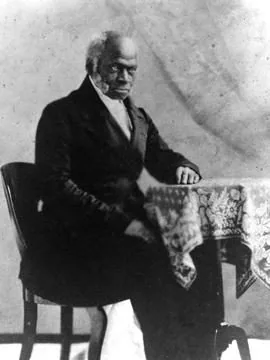
The story
The receipt and the small fund
In 1807, in New York, a dying woman called Pierre Toussaint to her bedside and signed the paper that made him free. She was his legal owner. For years, he had also been the one keeping her.
He was born enslaved in Saint-Domingue, the French colony that became Haiti, in 1766 by the date long given for him, in the household of the Bérard family. The Bérards brought him to New York, where he was apprenticed to a hairdresser.
He was very good at it. The work put his hands on the heads of the richest women in the city, in their dressing rooms, while they talked. He was warm company in the chair and known for keeping what he heard to himself.
The family's fortune was in the West Indies, and they expected to get it back. They never did. Around 1801 Jean Bérard died in Saint-Domingue, and his widow was left in New York with debts, a household and nothing coming in.
By one account, a creditor came to her door, and she told him in a shaking voice that he would have to wait. Toussaint followed the man into the street, arranged to pay the debt himself out of his own earnings, and came back with the receipt.
The receipt is the Hearth touch. Paying the debt was not enough. The woman who had been frightened by it needed to see, on paper, that it was gone.
From then on he treated his earnings as hers. He paid her bills and kept her house running, and, by the same account, brought home small treats so she could still have friends to tea. When she worried about money, he told her he had found new customers.
He did all this while he was, in law, her property. The tenderness between them was real, and it lived inside a system that let one of them own the other.
He held one thing back. From what he earned he set aside a small sum, regularly, for a purpose he told no one about. Secrecy was how he protected it. Money nobody knew about could not be asked for.
That fund bought his sister Rosalie her freedom. His own came from a dying woman's pen.
What he did with it shows who he was. On 5 August 1811 he married Juliette Noël, whose freedom he had also bought, and they raised Rosalie's daughter, Euphémie, as their own. He kept dressing hair for decades and spent much of what he made on the city's poor and sick, risking his life to nurse people through epidemics. Friends urged him to stop working. He told one of them why he would not.
“Madam, I have enough for myself, but if I stop work, I have not enough for others.”
He died on 30 June 1853. Today he lies beneath the high altar of St. Patrick's Cathedral in New York, the only layman buried there, and the Catholic Church has declared him Venerable.
He gave away nearly everything he ever earned. The little he kept back, a few coins at a time, bought two women their freedom.
The Hearth pattern in his life
- Meets the need before it's named
- He followed a creditor into the street and paid the debt himself, so his owner's widow would not have to beg for time.
- Closes the loop for others
- He brought her the receipt, so she could see for herself that the debt was gone.
- Keeps one purpose private
- He set aside a small sum for a purpose he told no one, and it bought his sister's freedom.
The Hearth: You remember who takes their coffee how, and you carry more of the room than anyone logs.
Are you a Hearth too?
Free, no email needed. Find out which house is yours.
Take the free test
The book
The Hearth: A Story of Your People
His story and fourteen more, from Castile in 1400 to Bath, Buenos Aires and occupied Beiping in 1944, grouped by the situations every Hearth runs into: work, love, friendship, money, the body, purpose and power.
More famous Hearths

Questions people ask
What personality type was Pierre Toussaint?
His life fits the Hearth, one of the houses at Grand Personalities: someone who remembers who takes their coffee how, and carries more of the room than anyone logs. Closest four-letter code: ISFJ.
How did Pierre Toussaint gain his freedom?
Madame Bérard, the widow who legally owned him and whom he had supported for years with his hairdressing earnings, freed him on her deathbed in 1807.
Why is Pierre Toussaint being considered for sainthood?
Once free, he spent decades giving his earnings to New York's poor and sick and helped fund the city's Catholic charities. The Catholic Church has declared him Venerable, a step on the way to sainthood.
Portrait: early 1850s · Public domain · Source
