The story
More like a state prisoner
On 23 October 1789, Martha Washington sat down in New York to write to her niece Fanny. She was 58. That spring her husband had become the first President of the United States, and she had become something the new country had no name for yet.
The letter begins the way Hearths' letters so often begin: with other people. There is a watch she has sent, and muslin for an apron. The children have had “very bad colds.” There are little handkerchiefs for Fanny's daughter Maria “to wipe her nose.”
Then, in the middle of all that, she told the truth. “I live a very dull life hear and know nothing that passes in the town,” she wrote. “I never goe to the publick place – indeed I think I am more like a state prisoner than anything else, there is certain bounds set for me which I must not depart from – and as I can not doe as I like I am obstinate and stay at home a great deal.”
She was the most prominent woman in the country, and she felt like a captive. She never says who set the bounds. They are simply there, like weather. Her one act of defiance is the word obstinate, and she turns it on herself. She stays at home.
Read quickly, that sounds like weakness. Look at what she had already carried. Widowed young, she had run her first husband's estate herself. In the war she spent her winters in her husband's army camps, knitting for the soldiers and visiting the sick. What New York handed her was a stage.
She played her part anyway. Every Friday evening she opened the house to callers. Two months after the prisoner letter she told a friend that “the greater part of our happiness or misary depends upon our dispositions, and not upon our circumstances.” When a Hearth can't change the room, she changes how she stands in it.
In 1797 the presidency ended and she went home to Mount Vernon. Soon she was writing to her friend Lucy Knox.
“I am again fairly settled down to the pleasant duties of an old fashioned Virginia house-keeper, steady as a clock, busy as a bee, and as cheerful as a cricket.”
The role had made her feel like a prisoner. The house, and the work she knew, made her feel like herself.
That house ran on people who were not free at all. Mount Vernon was worked by enslaved men, women and children. In May 1796, in Philadelphia, Martha's own maid, Ona Judge, escaped rather than be given away to Martha's granddaughter. The Washingtons tried to bring her back and never did. Martha's care was fierce for the people inside her circle. The people outside it paid.
Near the end of her life she had nearly all her letters with George destroyed. She never said why. Only a handful survive. Two of his were found years later, tucked behind a drawer of her writing desk.
She died at Mount Vernon on 22 May 1802, at 70. She left the world almost nothing of her marriage. She did leave two sentences, a prisoner in New York and a cricket at home, and between them she said exactly where she was most herself.
The Hearth pattern in her life
- Other people's needs come first
- Her “state prisoner” letter opens with a watch, an apron, the children's colds and handkerchiefs for a small girl's nose.
- Digs in quietly under pressure
- Unable to do as she liked, she called herself “obstinate” and stayed at home.
- Most herself keeping a house
- Back at Mount Vernon she was “steady as a clock, busy as a bee, and as cheerful as a cricket.”
The Hearth: You remember who takes their coffee how, and you carry more of the room than anyone logs.
Are you a Hearth too?
Free, no email needed. Find out which house is yours.
Take the free test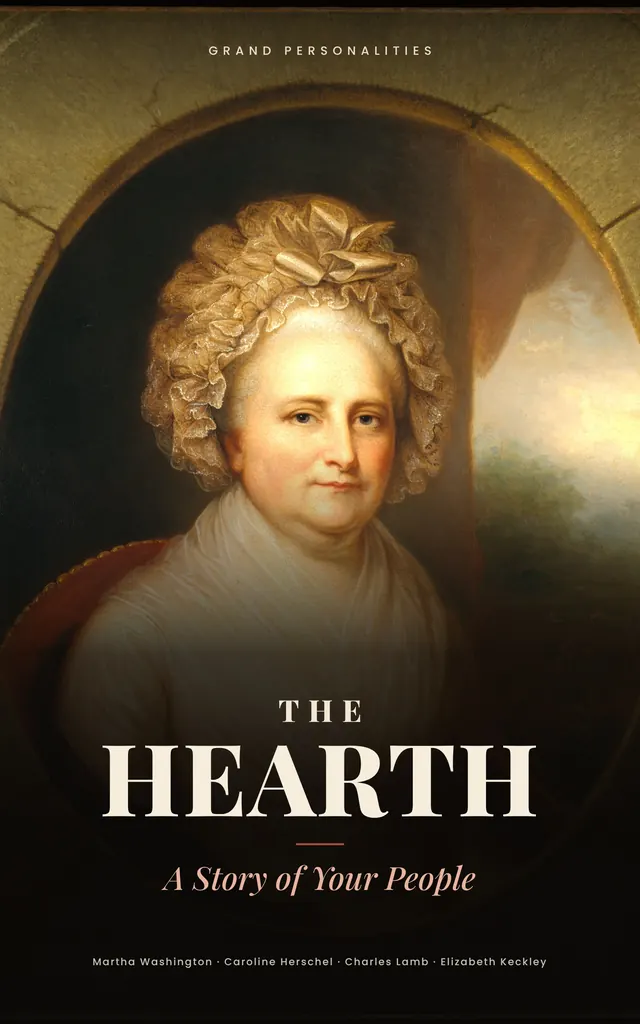
The book
The Hearth: A Story of Your People
Her story and fourteen more, from Castile in 1400 to Bath, Buenos Aires and occupied Beiping in 1944, grouped by the situations every Hearth runs into: work, love, friendship, money, the body, purpose and power.
More famous Hearths
Questions people ask
What personality type was Martha Washington?
Her life fits the Hearth, one of the houses at Grand Personalities: someone who remembers who takes their coffee how, and carries more of the room than anyone logs. Closest four-letter code: ISFJ.
Did Martha Washington like being First Lady?
Not much. In October 1789 she wrote to her niece that she felt “more like a state prisoner than anything else,” and back at Mount Vernon in 1797 she wrote happily of being “an old fashioned Virginia house-keeper” again.
Why did Martha Washington burn her letters?
She never said. Near the end of her life she had nearly all her letters with George destroyed, and only a handful survive, two of them found behind a drawer of her writing desk.
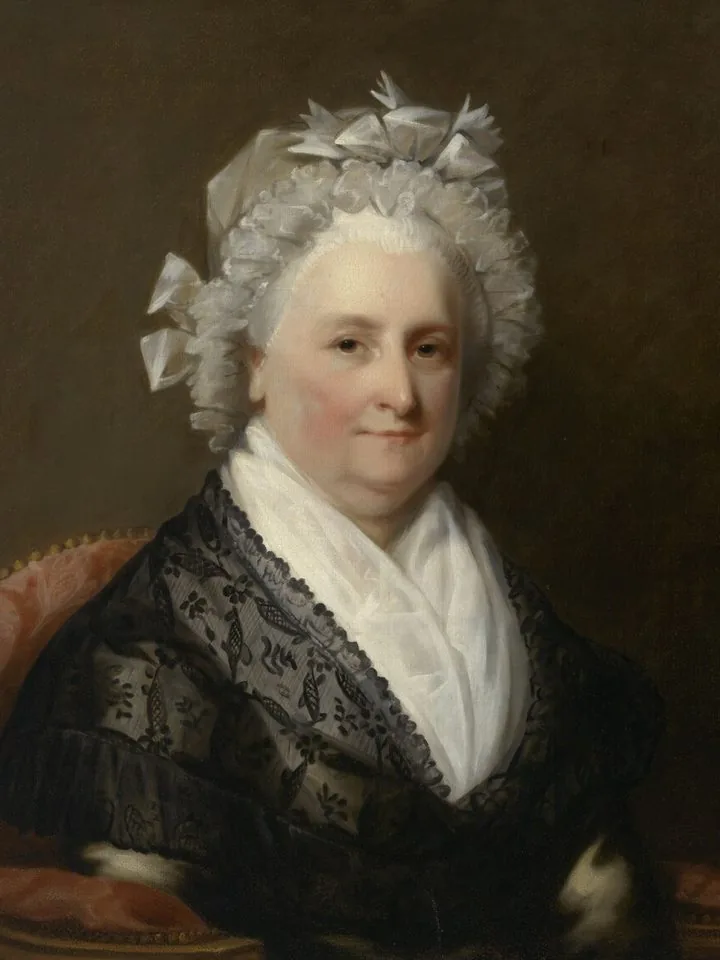
Portrait: After Gilbert Stuart and Charles Willson Peale · National Portrait Gallery · Public domain · Source