Famous Bridges
Octavia Hillthe BridgeENTJ
London, 1838–1912 · housing reformer, campaigner, National Trust co-founder
The story
Someone else keeps the books
In 1877, at 38, Octavia Hill collapsed. She was running homes for some three thousand London tenants, a band of volunteers and a growing campaign for open spaces, and she had kept nearly every detail of it in her own hands.
She had learned early that money matters. Born in Wisbech on 3 December 1838, she was the daughter of a corn merchant and banker who went bankrupt when she was a baby, and her mother raised the family on very little. As a young woman she worked as a copyist for the critic John Ruskin.
Around 1860 a brilliant, impulsive young woman named Sophia Jex-Blake came to live with the Hills for a time, and the two became intensely close. By one account Sophia clashed with Octavia's mother. Caught between her friend and her family, Octavia ended the friendship and would not see her.
When a relationship turns into constant conflict, Bridges sometimes close the door cleanly and get back to work. It stops the noise. It does not stop the grief, and Sophia, it is said, felt the loss for years.
Octavia got back to work. In 1865, when she was 26, Ruskin bought the leases of three cottages in Paradise Place, Marylebone, and put them in her hands. She did far more than collect rents. She held that you cannot deal with the people and their houses separately, so she came to know her tenants, kept the buildings in repair and built a whole system of management from nothing.
It grew fast. By 1874 she was running fifteen schemes with around three thousand tenants. She trained volunteers to work her way, and her standards were exacting: rents collected punctually, repairs done properly, nothing left to drift.
This is the gift Bridges bring. They see the whole system, build it and drive it. The cost is that they carry it all, and she carried it year after year.
Then the blows landed together. Ruskin, her old employer and backer, turned on her fiercely when she opposed a plan of his. An engagement to one of her helpers, the barrister Edward Bond, came to nothing. She broke down.
She went away to recover. When she came back, she did the thing that saved her. Her companion, Harriot Yorke, took over much of the everyday work that had worn Octavia down. Yorke stayed with her for the rest of her life. The woman who had held every ledger let someone else keep the books.
With the load shared, she did her largest work. In January 1895, at 56, she was one of the three founders of the National Trust, which still cares for land and buildings across Britain.
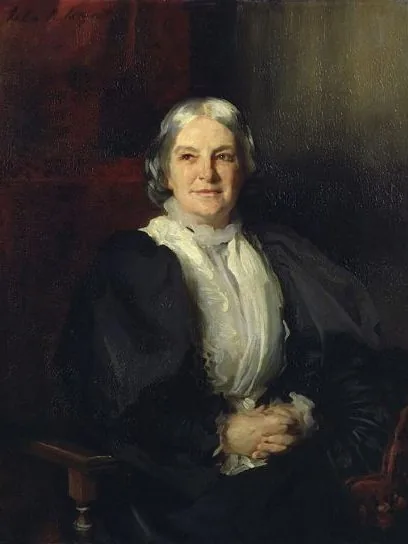
In 1898 her fellow-workers gave her a portrait by John Singer Sargent. Thanking them, she talked about what should outlast her.
“When I am gone, I hope my friends will not try to carry out any special system…”
She wanted the spirit of the work kept going, and the dead form let go.
She died on 13 August 1912, at 73. Sophia Jex-Blake had died seven months before her. The woman who once could not let go of a single detail ended by asking the people she trained to let go of her.
The Bridge pattern in her life
- Builds a system from nothing
- From three Marylebone cottages in 1865, she built a housing system serving around 3,000 tenants by 1874.
- Ends conflict decisively
- Caught between her closest friend and her family, she ended the friendship outright.
- Learns, late, to hand over
- After her collapse in 1877, she let Harriot Yorke take on the everyday work.
The Bridge: You see the end state, name the order of operations, and start moving people toward it.
Are you a Bridge too?
Free, no email needed. Find out which house is yours.
Take the free test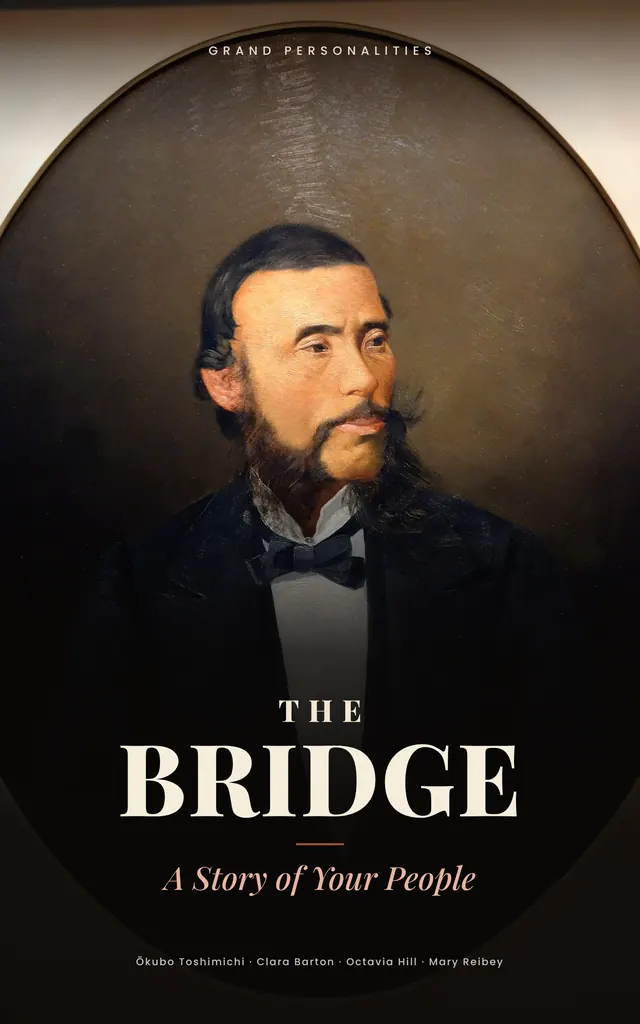
The book
The Bridge: A Story of Your People
Her story and thirteen more, from a village in the viceroyalty of Peru in 1780 to a Los Angeles inquest room in 1928, grouped by the situations every Bridge runs into: work, love, friendship, money, the body, purpose and power.
More famous Bridges

Questions people ask
What personality type was Octavia Hill?
Her life fits the Bridge, one of the houses at Grand Personalities: someone who sees the end state, names the order of operations and starts moving people toward it. Closest four-letter code: ENTJ.
What did Octavia Hill do?
She pioneered a way of managing homes for poor tenants in London, starting with three cottages Ruskin bought for her to run in 1865, and in 1895 she co-founded the National Trust with Robert Hunter and Hardwicke Rawnsley.
What was Octavia Hill's relationship with Sophia Jex-Blake?
The two young women were very close around 1860, when Jex-Blake lived with the Hill family for a time. Octavia later ended the friendship, by one account after clashes between Sophia and Octavia's mother.
Portrait: John Singer Sargent, 1898 · Public domain · Source
