The story
The next thirty years
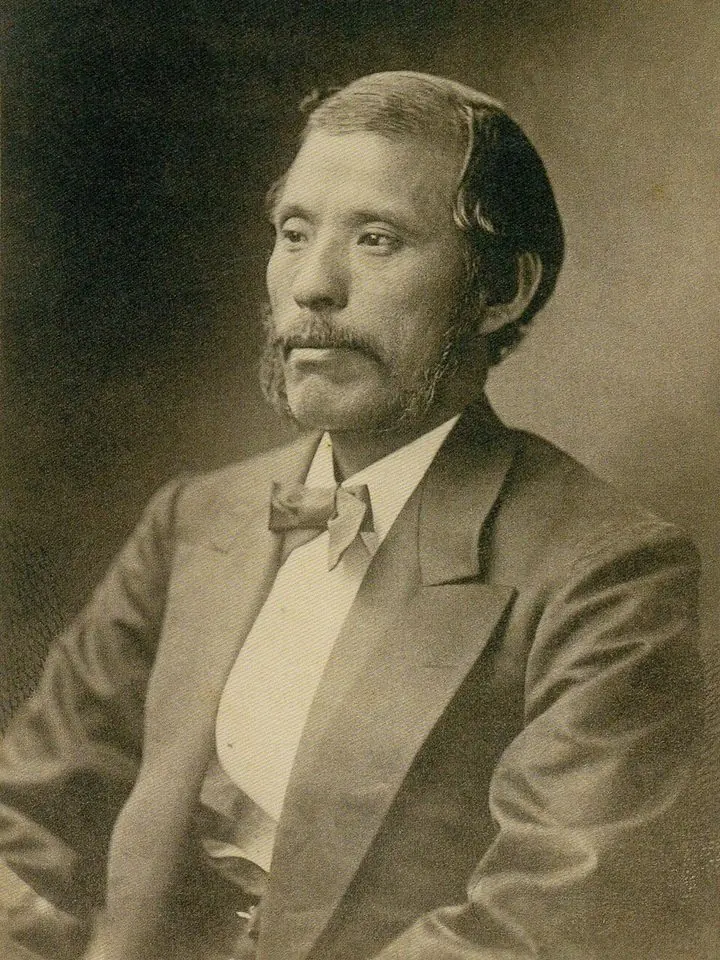
At six in the morning on 14 May 1878, Ōkubo Toshimichi sat down with a visitor and talked for nearly two hours about the next thirty years. He was 47, Home Minister, and the most powerful man in the government of Meiji Japan.
The visitor, Yamayoshi Moritsune, governor of Fukushima, wrote down what he heard. Ōkubo counted the thirty years from the Restoration of 1868. The first ten had gone on war and founding. The second ten, the building at home, he meant to carry himself. The last ten he left to whoever came after.
That is how Bridges think on an ordinary morning. A routine meeting with a provincial governor becomes a map of the decades.
To see what the map had cost him, go back to two boys in Kagoshima. Ōkubo was born there on 26 September 1830, into a low-ranking samurai family of the Satsuma domain. His closest friend, Saigō Takamori, was three years older. They rose together, and together they helped bring down the shogunate and put the young emperor at the head of a new state.
His hard reputation leaves out an early chapter. When Saigō was banished to a southern island, Ōkubo worked on the domain's ruler, Hisamitsu, patiently and for a long time, until his friend was called home. It was quiet lobbying, done in rooms where it could have cost him.
After 1868 he became the builder. He led the abolition of the old feudal domains, the world both men had been born into. He traveled abroad with the Iwakura Mission to study how Western states were run. Admirers later called him the Bismarck of Japan.
In 1873 the friends split. While Ōkubo was away, a plan had formed to send Saigō on a mission to Korea. Ōkubo came home and argued it down: build the country first. He won. Saigō resigned and went home to Kagoshima.
It was a decision made on the merits, the kind Bridges make well. A friendship does not sit on the same scales. In 1877 Saigō's students rose in revolt and carried him with them, and Ōkubo's government fought the war. On 24 September 1877, at Shiroyama in Kagoshima, the city where the two had been boys, Saigō died. Ōkubo was 46.
His grief came out as a task. He asked the scholar Shigeno Yasutsugu to write Saigō's life, saying that no one knew Saigō as well as he did.
Eight months later came the morning with the governor, and the sentence at the heart of it.
“To carry the Restoration's purpose through to the end, my settled intention is to give it thirty years.”
A little before eight, Yamayoshi left. Ōkubo set off by carriage for the palace. Near the Kioizaka slope in Tokyo, six samurai were waiting. They left a statement accusing him of ruling through officials who answered to no one, and many took the killing as revenge for Saigō.
He had mapped out thirty years and had less than an hour of them left. By one account, two of Saigō's old letters were in his breast pocket.
The Bridge pattern in his life
- Sees the end state first
- On his last morning he laid out Japan's next thirty years, decade by decade.
- Names the order of operations
- In 1873 he argued that building the country at home had to come before any mission abroad.
- Turns grief into a project
- When Saigō died, he asked a scholar to write his friend's life, because no one knew Saigō better.
The Bridge: You see the end state, name the order of operations, and start moving people toward it.
Are you a Bridge too?
Free, no email needed. Find out which house is yours.
Take the free test
The book
The Bridge: A Story of Your People
His story and thirteen more, from a village in the viceroyalty of Peru in 1780 to a Los Angeles inquest room in 1928, grouped by the situations every Bridge runs into: work, love, friendship, money, the body, purpose and power.
More famous Bridges
Questions people ask
What personality type was Ōkubo Toshimichi?
His life fits the Bridge, one of the houses at Grand Personalities: someone who sees the end state, names the order of operations and starts moving people toward it. Closest four-letter code: ENTJ.
Why did Ōkubo Toshimichi and Saigō Takamori fall out?
In 1873 Ōkubo led the opposition to sending Saigō on a mission to Korea, arguing that Japan had to build at home first. He won, Saigō resigned, and four years later Saigō died in the Satsuma Rebellion against Ōkubo's government.
How did Ōkubo Toshimichi die?
He was killed by six samurai near the Kioizaka slope in Tokyo on 14 May 1878, on his way to the palace, shortly after laying out his thirty-year plan to a visiting governor.
Portrait: Photograph, Washington DC, 1872 · Public domain · Source
