Famous Vaults
Fanny Burneythe VaultISTJ
England and France, 1752–1840 · novelist, diarist, letter-writer
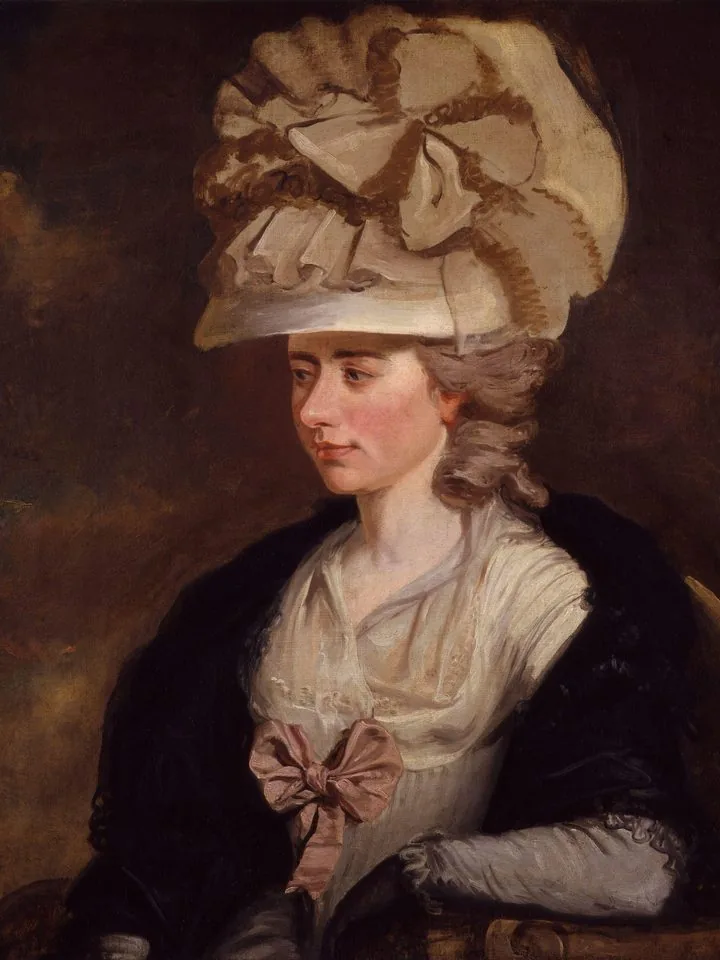
The story
Two hours' notice
On 30 September 1811, at her home in Paris, Fanny Burney was given two hours' notice that the surgeons were on their way. She was 59. They were coming to perform a mastectomy, and there was no anesthetic. Nothing of the kind existed yet. She was offered a wine cordial.
She was Madame d'Arblay by then, married to a French officer. To England she was Frances “Fanny” Burney, the comic novelist who wrote Evelina, and she had kept a journal full of jokes since her teens. Vaults are often pictured as gray and dutiful. She was quick and funny, and she watched every room with a novelist's eye.
Something had been wrong for months, and she had waited. Later she gave that state of mind an exact name: a “false confidence”.
Once the operation was decided, she took charge of what was still hers to decide. She wanted Dominique-Jean Larrey, chief surgeon of Napoleon's Imperial Guard and a man known for his speed, and she got him. Then she arranged for her husband to be kept in ignorance of the day. She kept the fear off her own face as well.
Seven men in black arrived. “I refused to be held,” she wrote. She meant to keep still by her own will. When she saw polished steel glitter through the cambric, she closed her eyes.
She bore it. When it was over, she noticed that Larrey, the battlefield surgeon, was nearly as pale as she was. Even then, part of her was keeping the record.
Then came the silence. “Not for days, not for Weeks, but for Months I could not speak of this terrible business,” she wrote later. She called it her plan of silence, and her own sisters did not hear the story from her.
An acquaintance broke it. M. de Boinville wrote the news to his wife “without any precaution”, and now the story was loose. If it was going to be told, she would tell it right.
On 22 March 1812, nearly six months after the operation, she began a long letter to her sister Esther and kept at it for weeks. She set it all down in order, and she put her own mistake in it. She described her months of false confidence, she wrote, “as a warning to my dear Esther” and to the other women of the family, should they ever feel the same alarm.
That is how Vaults often carry the worst thing. Steady in the hour, silent for months, and then an honest account written so that someone else is spared. A record that flatters its writer is no use as a warning. Hers worked because it told the truth about her delay as plainly as it told the truth about her courage.
Writing it cost her. She was a professional who could polish any page, and she sent this one off unread.
“I dare not revise, nor read, the recollection is still so painful.”
She lived more than 28 years longer and died in 1840, at 87. Strangers have been reading her letter for two centuries. The one person who never read it was the woman who wrote it.
The Vault pattern in her life
- Steady in the hardest hour
- Given two hours' notice of surgery without anesthetic, she refused to be held down and kept still by her own will.
- Carries the weight privately
- She kept the day from her husband and could not speak of the operation for months afterward.
- Keeps an honest record
- Her letter to Esther named her own months of “false confidence” as a warning to her sisters and nieces.
The Vault: You hold the record, finish what you started, and say almost none of it out loud.
Are you a Vault too?
Free, no email needed. Find out which house is yours.
Take the free test
The book
The Vault: A Story of Your People
Her story and fourteen more, from a palace library in Han dynasty China to a home in Franco's Madrid, grouped by the situations every Vault runs into: work, love, friendship, money, the body, purpose and power.
More famous Vaults


Questions people ask
What personality type was Fanny Burney?
Her life fits the Vault, one of the houses at Grand Personalities: someone who holds the record, finishes what they started, and says almost none of it out loud. Closest four-letter code: ISTJ.
Did Fanny Burney survive her mastectomy?
Yes. She had the operation at home in Paris on 30 September 1811, without anesthetic, and lived more than 28 years longer, dying in 1840 at 87.
Why did Fanny Burney write about her mastectomy?
After an acquaintance spread the news carelessly, she wrote a long letter to her sister Esther in 1812 so the story would be told accurately. She also meant it as a warning to the women of her family not to delay as she had.
Portrait: Edward Francis Burney, between circa 1784 and circa 1785 · Public domain · Source
