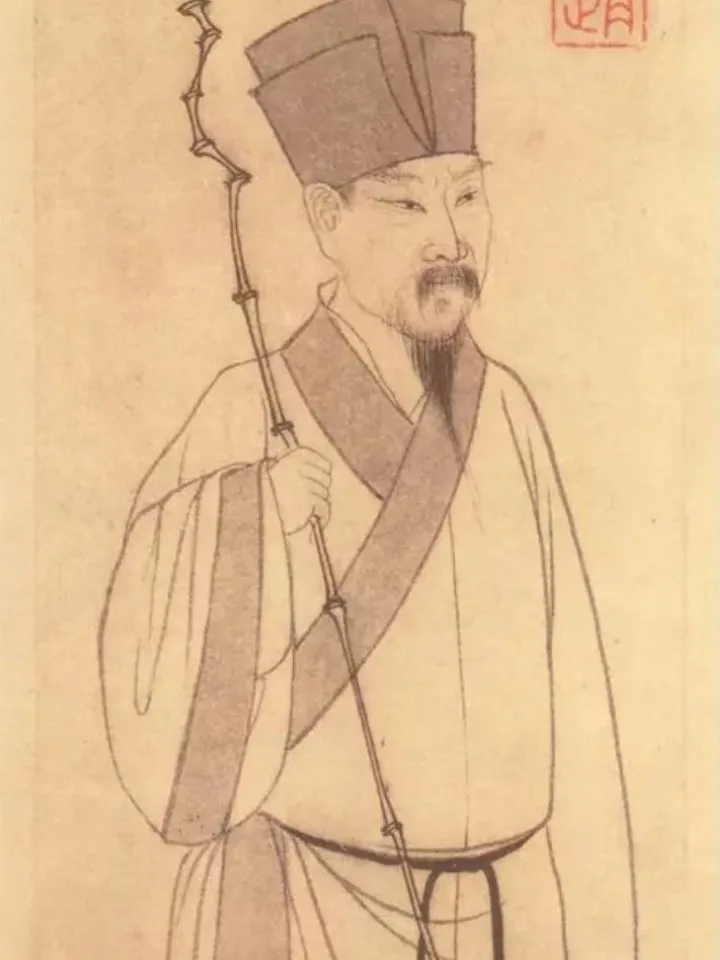
The story
A poem for the road
On the 28th day of the seventh month of 1079, an envoy from the capital walked into the prefect's hall at Huzhou with two soldiers. The prefect was Su Shi, 42, the most celebrated poet in China. He was too frightened to go out.
He knew why they had come. For years he had opposed the government's sweeping reforms, the New Policies, and he had done it the way Arenas often do, by making the objection funny. Friends copied his satirical verses out and kept them. That summer, censors combed years of his poems and accused him of mocking the emperor himself.
His deputy talked him into his official robe, and he stepped into the courtyard. By one account the envoy stood silent so long that onlookers imagined daggers under the soldiers' robes. Su Shi broke the silence. He expected death, he said, and asked only to say goodbye to his family.
At his door his wife and children were weeping, and he had nothing to say. Then he thought of an old story.
Long before, a hermit named Yang Pu, summoned before an emperor, was asked whether anyone had written him a poem for the road. Only my wife, he said. Her poem warned that this time they were hauling him off and it would cost him his old head. The emperor laughed and sent him home.
“Couldn't you write a poem to see me off, the way Hermit Yang's wife did?”
His wife laughed in spite of herself. Then he went out, and they tied him up and drove him off like livestock while the townspeople wept.
He believed he was going to his death, and the joke admitted it. It also carried the old story's ending, where the emperor laughs and the man comes home. It was the only gift he had left, and he gave it to the person who needed it most.
Friends who had kept his poems were stripped of rank or fined. His brother, Su Zhe, offered his own office to buy back Su Shi's life. Sure he would die in prison, Su Shi slipped a jailer two poems for his brother. In them he called his heart a startled deer, and asked to be brothers again in every life to come.
He was spared after about four months and sent under watch to Huangzhou. There he farmed a slope east of the town and took his name from it: Dongpo, East Slope, which is why many know him as Su Dongpo. The joke at his own fall became a new life.
He wrote his rhapsodies on the Red Cliff there. In 1084 he called on Wang Anshi, the retired architect of the reforms he had mocked, and the two old opponents found they could talk.
The exiles kept coming: Huizhou at 57, Danzhou on Hainan island at 60. In 1101, the year he died at 64, he wrote a few lines beside a portrait of himself. Asking himself what he had achieved in life, he named three places: Huangzhou, Huizhou, Danzhou.
Every one was a place he had been sent to be forgotten. He called them his life's work. It was a joke, and it was true.
The Arena pattern in his life
- Makes the objection funny
- He fought the New Policies in satirical verse that friends copied out and kept.
- Finds the joke under pressure
- Hauled off to prison and expecting death, he made his weeping wife laugh at the door.
- Laughs first at his own fall
- Disgraced and exiled, he named himself after the field he farmed, and later listed his exiles as his life's work.
The Arena: You argue to find out. Ten ideas an hour, and you were never attacking the person.
Are you an Arena too?
Free, no email needed. Find out which house is yours.
Take the free test
The book
The Arena: A Story of Your People
His story and thirteen more, from an empress's household in Kyoto around the year 1000 to a tavern in Prague in 1911, grouped by the situations every Arena runs into: work, love, friendship, money, the body, purpose and power.
More famous Arenas

Questions people ask
What personality type was Su Shi?
His life fits the Arena, one of the houses at Grand Personalities: someone who argues to find out, throws out ten ideas an hour, and was never attacking the person. Closest four-letter code: ENTP.
Why was Su Shi arrested and exiled?
In 1079 censors accused him of mocking the emperor in poems that satirized the government's New Policies. He spent about four months in prison and was then sent to Huangzhou under watch, the first of three exiles.
Why is Su Shi called Su Dongpo?
In exile at Huangzhou he farmed a slope of land east of the town and took his name from it: Dongpo means East Slope.
Portrait: Zhao Mengfu · Public domain · Source
