The story
The friend in his corner
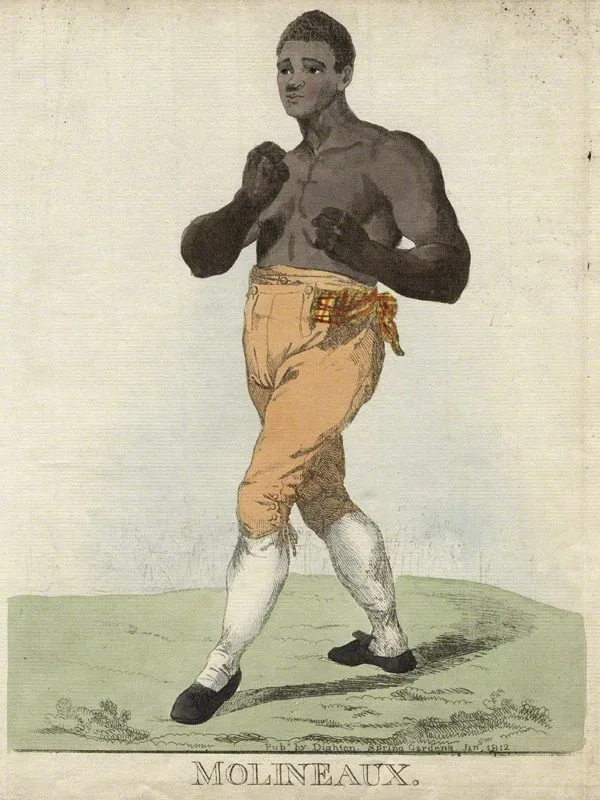
On 18 December 1810, on Copthorne Common in Sussex, Tom Molineaux, 26, stepped into a ring against Tom Cribb, the Champion of England. The betting was heavily against him.
He had been born in Virginia around 1784, by most accounts into slavery. How he got from there to England nobody really knows. He reached London in 1809 with no record, no backers and no name. Within about a year he was fighting for the title.
That speed is the Forge in him. He did not climb patiently through the ranks. He went straight at the best man in the country.
He did not get there alone. In his corner stood Bill Richmond, born enslaved on Staten Island in 1763, who had made himself a boxer in England and bought a London pub, the Horse and Dolphin. Cribb had beaten Richmond in 1805. Richmond set his own career aside to train Molineaux, and put his money behind him.
So two men born in slavery in America shared one corner, against the champion of the country that ran the sport.
Round after round, Cribb could not put the stranger down. In the 19th round, with the two men locked together, the crowd broke into the ring, and Molineaux hurt his hand in the scramble. He fought on.
At one point Cribb went down and seemed to take longer than the allowed thirty seconds to come back to the mark. To some of those watching, the fight should have ended there, with Molineaux as champion. It went on.
“…a negro should become the Champion of England!”
After the 34th round Molineaux told his corner he could not go on. They sent him back out, and in the 35th he lost.
Two days later Richmond took him to the Stock Exchange in London, where he was given an ovation and a purse of 45 guineas. Some people knew what they had seen.
The rematch came on 28 September 1811 at Thistleton Gap in Rutland, in front of some 15,000 people. In the 11th round Cribb broke Molineaux's jaw.
Then came the move that cost him most. Richmond had lost money on the fights and had to sell his pub. After the rematch, Molineaux dismissed him. When things go badly, Forges want to move, cut, change something fast, and the person closest to the loss is the easiest thing to cut.
Without Richmond, his record becomes one of drink, debt and decline. He died penniless in Galway, in Ireland, on 4 August 1818, at 34, in the bandroom of an army regiment.
Richmond started again. In time he became close friends with Tom Cribb, the man who had beaten him and his fighter, and the two would talk late into the night at Cribb's pub. Molineaux had the nerve to face the champion. Richmond found the harder nerve, and sat down with him as a friend.
The Forge pattern in his life
- Goes straight at the best
- Within about a year of reaching London, he was fighting the Champion of England.
- Fights on when hurt
- He hurt his hand when the crowd broke into the ring, and lasted 35 rounds.
- Cuts fast when things go wrong
- After the rematch, he dismissed Bill Richmond, the friend who had lost his pub backing him.
The Forge: You move first, fix it live, and get bored of any meeting about the meeting.
Are you a Forge too?
Free, no email needed. Find out which house is yours.
Take the free test
The book
The Forge: A Story of Your People
His story and fourteen more, from a desert kingdom in the first century to a Gestapo office in the south of France in 1944, grouped by the situations every Forge runs into: work, love, friendship, money, the body, purpose and power.
More famous Forges

Questions people ask
What personality type was Tom Molineaux?
His life fits the Forge, one of the houses at Grand Personalities: someone who moves first, fixes it live and gets bored of any meeting about the meeting. Closest four-letter code: ESTP.
Did Tom Molineaux beat Tom Cribb?
Not officially. In their December 1810 fight Cribb seemed to take longer than the allowed time to come back after a knock-down, and some felt Molineaux had won, but Cribb was given the fight in the 35th round and won the 1811 rematch in the 11th.
Who was Tom Molineaux's trainer?
Bill Richmond, another boxer born enslaved in America, who ran the Horse and Dolphin pub near Leicester Square. He trained and backed Molineaux until Molineaux dismissed him after the 1811 rematch.
Portrait: Robert Dighton, published January 1812 · Public domain · Source
