Famous Forges
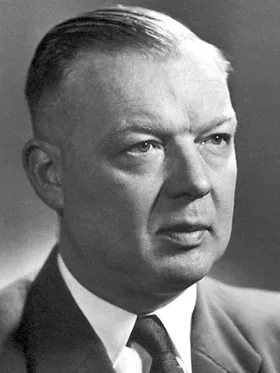
Werner Forssmannthe ForgeESTP
Germany, 1904–1979 · surgeon, self-experimenter, Nobel laureate
The story
A tube into his own heart
On a sunny afternoon in the early summer of 1929, in a small hospital in Eberswalde, near Berlin, Werner Forssmann, 24, strapped a nurse to an operating table. Then he numbed his own arm.
He was a junior surgeon with an idea his chief had already refused. Slide a thin tube into a vein at the elbow and keep pushing, up the arm and into the heart. If it worked, doctors could reach inside a living heart without opening the chest. His chief told him to try it on animals.
He did not want to wait, and reckless was not quite the word for him. He had studied a drawing of the same procedure done on a horse, and he had practiced for weeks on cadavers. What he lacked was permission.
The theater nurse, Gerda Ditzen, held the keys to the supplies, and she had agreed to let him try it on her. He told her she had to be strapped down in case she fainted. Once she was, he pretended to work on her arm and did it to his own instead. He cut down to the vein, slid in a rubber catheter made for the bladder, and pushed it up toward his shoulder.
Then he unbuckled her and asked her to call the X-ray department. She was angry, and she had every right to be. She made the call anyway.
They went down to the X-ray room with the tube still in his arm. By his own account a colleague burst in to stop him, and he fended him off with a few kicks. Then, watching the shadow on the screen in a mirror, he pushed the tube on into his chest.
The X-ray plate shows the tip lying in the right side of his heart. A man had threaded a tube from his elbow into his own heart, watched it arrive, and was alive to argue about the details.
This is the part of the Forge pattern people miss. The act looked impulsive, but it was planned in detail, rehearsed on the dead, and done in the one hour when nobody would stop him. The impulsive part was doing it alone.
He wrote it up fast, with the X-ray as proof. His paper on probing the right heart appeared in a German medical weekly on 5 November 1929. He was 25.
By then he had moved to the Charité in Berlin, under Ferdinand Sauerbruch, the most famous surgeon in Germany. Sauerbruch saw the paper and dismissed him for going ahead without approval.
“You certainly can't begin surgery in that manner.”
He left heart work for urology, the specialty his borrowed catheter had been made for. In 1932 he joined the Nazi Party, a choice that darkens everything after it. He served as an army doctor, was taken prisoner, and by 1950 was a urologist in the small town of Bad Kreuznach.
His idea had not waited for him. In other hands the heart catheter became an everyday tool of medicine, and in 1956, aged 52, the small-town urologist shared the Nobel Prize.
Forges are often right early and alone. He saw it in one afternoon. The world took twenty-seven years to agree.
The Forge pattern in his life
- Does it before anyone says no
- Refused by his chief, he catheterized his own heart in the quiet of the afternoon.
- Rehearses where nobody sees
- He practiced for weeks on cadavers before he ever tried it on a living body.
- Proves it fast and plainly
- He walked to the X-ray room with the tube in his arm and published the picture within months.
The Forge: You move first, fix it live, and get bored of any meeting about the meeting.
Are you a Forge too?
Free, no email needed. Find out which house is yours.
Take the free test
The book
The Forge: A Story of Your People
His story and fourteen more, from a desert kingdom in the first century to a Gestapo office in the south of France in 1944, grouped by the situations every Forge runs into: work, love, friendship, money, the body, purpose and power.
More famous Forges

Questions people ask
What personality type was Werner Forssmann?
His life fits the Forge, one of the houses at Grand Personalities: someone who moves first, fixes it live and gets bored of any meeting about the meeting. Closest four-letter code: ESTP.
What did Werner Forssmann do in 1929?
Against his chief's orders, he slid a urinary catheter into a vein in his own arm, pushed it into his heart and had it X-rayed to prove it. He is credited with the first cardiac catheterization in a living person.
Why did Werner Forssmann win the Nobel Prize?
He shared the 1956 Nobel Prize in Physiology or Medicine with André Cournand and Dickinson Richards for their discoveries on heart catheterization, the technique he had first tried on himself in 1929.
Portrait: Unknown author · Public domain · Source
