Famous Observatories
Andrés Bellothe ObservatoryINTJ
Venezuela, England and Chile, 1781–1865 · jurist, educator, poet
The story
The door of old age
In December 1826, in London, Andrés Bello wrote to Simón Bolívar. He was 45, a Venezuelan scholar and poet with a family to support, and he told the most famous man in South America that he was already at the door of old age. He could see no prospect, he wrote, but to leave his children beggary as their inheritance.
The sentence reads like a forecast. He had looked down the years, done the sums, and put the result on paper for the one person who might change it. Observatories often forecast like that.
He was wrong. He had nearly forty years still to live, and the greatest work of his life lay ahead.
It happened in Chile. He sailed there in 1829, after almost twenty years in London. On 17 September 1843, at 61, he gave the inaugural address as founding rector of the new University of Chile. He spoke of the scholar's solitary lamp, and of how all knowledge hangs together.
“All the human faculties form a system, in which there can be no order and harmony without the contribution of each.”
Alongside the university, he was holding a whole system in his own head: the civil code of Chile. A civil code is the law of ordinary private life. Who owns what, how a promise binds, what a marriage means, how property passes to the children when someone dies. It touches every family in a country.
He drafted it largely himself, and for about five years, from late 1847 to 1852, he carried it on almost alone. He was in his late sixties. One mind held the shape of the whole, every part bearing on every other. It is the kind of work that suits Observatories best and costs them most.
While he worked, his family was dying. Bello had fifteen children, and nine of them died before he did. The man who had feared leaving his children nothing spent his old age writing the rules by which every Chilean family would leave its property to its children.
In the 1850s, after yet another death, he described the effect in a letter. The repeated blows, he wrote, no longer produced grief so much as a callousing, a cold despair. He felt a curse was condemning him to a lonely old age.
It can sound cold. It is grief in a mind that cannot stop observing, even itself. He named the feeling and reported it, the way he would have reported a flaw in an argument. The precision was the mourning.
The code went to Congress with a message dated 22 November 1855. Bello wrote it, though it went out under the president's name, and it claimed no perfection: no such work, it said, had yet come from human hands. The code was promulgated on 14 December 1855, when he was 74, and came into force on 1 January 1857.
He died in Santiago on 15 October 1865, at 83. Venezuela, where he was born, and Chile, where he did his greatest work, both claim him.
The forecast he made at 45 was the least reliable thing he ever calculated. The code he wrote in his sixties is still in force.
The Observatory pattern in his life
- Holds a whole system alone
- For about five years in his late sixties he carried Chile's civil code almost single-handed.
- Forecasts in plain terms
- At 45 he told Bolívar, without self-pity, that he foresaw beggary for his children.
- Grief named with precision
- He described his mourning as a callousing and a cold despair, the way he might report a flaw in an argument.
The Observatory: You build the whole model before you speak, then defend it like it cost you something. It did.
Are you an Observatory too?
Free, no email needed. Find out which house is yours.
Take the free test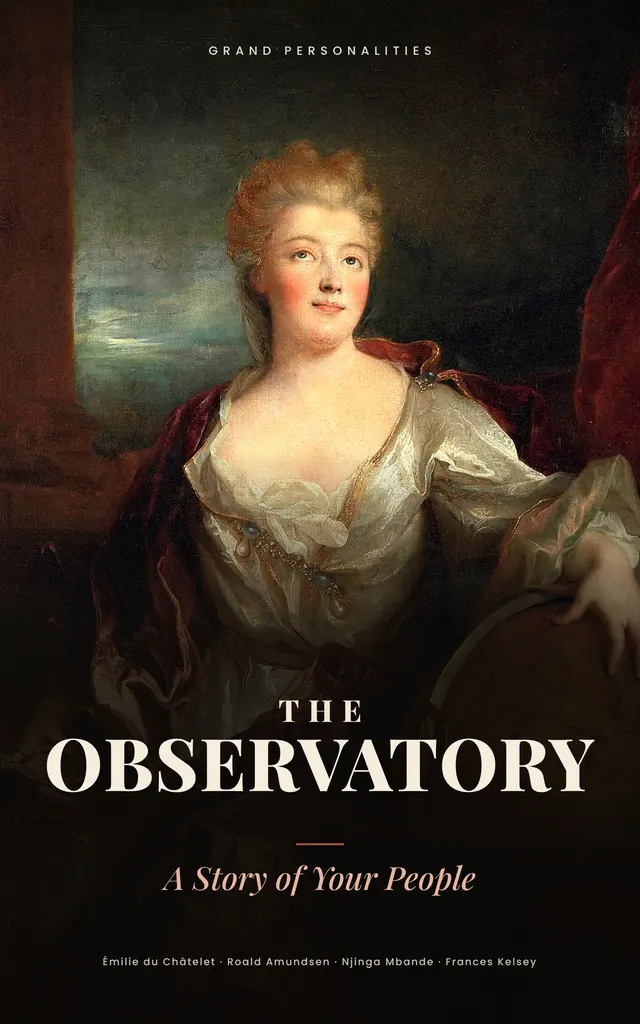
The book
The Observatory: A Story of Your People
His story and fourteen more, from an execution ground in Edo to a hut on the Antarctic ice, grouped by the situations every Observatory runs into: work, love, friendship, money, the body, purpose and power.
More famous Observatories

Questions people ask
What personality type was Andrés Bello?
His life fits the Observatory, one of the houses at Grand Personalities: someone who builds the whole model before speaking, then defends it like it cost him something. It did. Closest four-letter code: INTJ.
What is Andrés Bello famous for?
He drafted most of the Civil Code of Chile, promulgated on 14 December 1855, and was the founding rector of the University of Chile. He was also a poet.
Was Andrés Bello Venezuelan or Chilean?
Both claim him. He was born in Caracas in 1781, spent almost twenty years in London, and moved to Chile in 1829, where he did his greatest work and died in 1865.
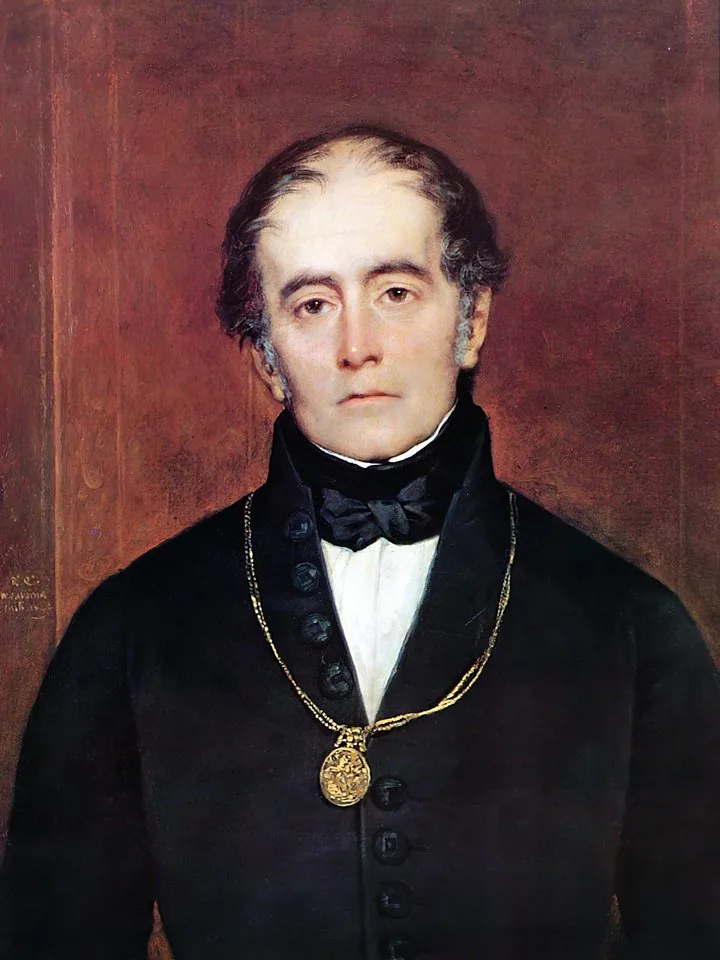
Portrait: Raymond Monvoisin, between 1843 and 1858 · Public domain · Source
