Famous Observatories
Benjamin Bannekerthe ObservatoryINTJ
Maryland, 1731–1806 · astronomer, almanac maker, farmer
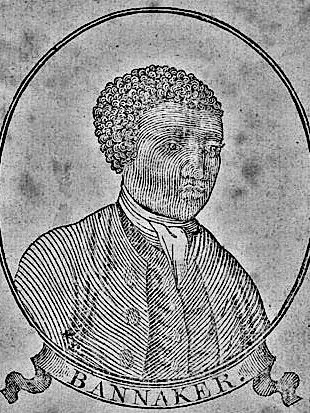
The story
In my own hand
On 19 August 1791, on a farm near Ellicott's Lower Mills in Maryland, Benjamin Banneker finished a letter to the Secretary of State, Thomas Jefferson. He was 59. With it went a whole year of the sky, calculated and copied out in his own hand.
It was an ephemeris: the tables of sun, moon and planets on which an almanac is built. Farmers lived by those pages. They took months of exacting arithmetic, and nobody could fake them. Either the eclipse came when you said it would, or it did not.
Banneker had been born free in Baltimore County on 9 November 1731. In a footnote to the letter he set down his family's history in one plain line: “My Father was brought here a S[lav]e from Africa.”
He spent most of his life farming, with a mind that wanted to know how things worked and nothing to feed it. Then, in 1788, when he was 56, his Quaker neighbor George Ellicott lent him a set of astronomical instruments and four books on astronomy. Banneker taught himself from them, alone, at an age when most men had stopped learning anything new.
Early in 1791 he worked as an assistant on Andrew Ellicott's survey of the land for the new federal capital. By the summer he had finished his calculations for 1792.
He chose Jefferson for a reason. In his Notes on the State of Virginia, Jefferson had suggested that Black people were inferior in reason. Observatories rarely argue a point like that in the abstract. They build the thing that settles it.
The letter opened with careful courtesy, then turned Jefferson's own Declaration of Independence back on him. “We are all of the Same Family,” Banneker wrote. He named what Jefferson was doing to his brethren: “detaining by fraud and violence” so many of them “under groaning captivity and cruel oppression.” The courtesy held the anger steady so he could aim it.
Then he came to the proof.
“This calculation, Sir, is the production of my arduous Study in this my advanced Stage of life.”
He had sent it in manuscript, he explained, “that you might also view it in my own hand writing.” He did not ask to be believed. He put the finished work where the doubt was.
Jefferson answered on 30 August. “No body wishes more than I do to see such proofs as you exhibit,” he wrote, and he sent the almanac on to Condorcet in Paris. That December, Banneker's almanac for 1792 went on sale in Baltimore.
Jefferson went on owning slaves. In a private letter in 1809, three years after Banneker's death, he wrote of him dismissively. The proof had been praised, and the belief stayed where it was. Observatories know that ache: the work cannot always convert the person it was built for.
Banneker died on 9 October 1806, at 74. As he was being buried, his house caught fire, and most of his papers burned with it. But he had asked for his journal to go to George Ellicott, and it had already left the house. Inside was his own copy of the letter to Jefferson.
Which is why it still exists, in his own hand.
The Observatory pattern in his life
- Lets the finished work argue
- He answered Jefferson's doubt with a year of calculations copied in his own handwriting.
- Teaches himself, alone and thoroughly
- At 56 he learned astronomy from four borrowed books and a set of borrowed instruments.
- Precision with real feeling inside
- His careful, courteous letter still named “groaning captivity and cruel oppression” to a man who owned slaves.
The Observatory: You build the whole model before you speak, then defend it like it cost you something. It did.
Are you an Observatory too?
Free, no email needed. Find out which house is yours.
Take the free test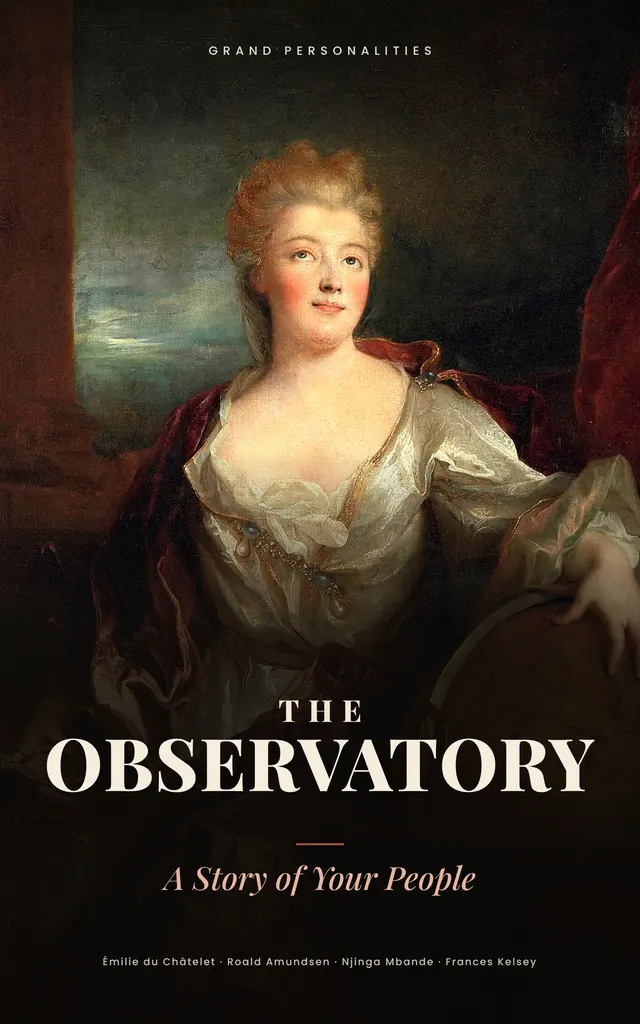
The book
The Observatory: A Story of Your People
His story and fourteen more, from an execution ground in Edo to a hut on the Antarctic ice, grouped by the situations every Observatory runs into: work, love, friendship, money, the body, purpose and power.
More famous Observatories

Questions people ask
What personality type was Benjamin Banneker?
His life fits the Observatory, one of the houses at Grand Personalities: someone who builds the whole model before speaking, then defends it like it cost him something. It did. Closest four-letter code: INTJ.
Why did Benjamin Banneker write to Thomas Jefferson?
Jefferson had suggested in Notes on the State of Virginia that Black people were inferior in reason. On 19 August 1791 Banneker sent him a handwritten almanac calculation as proof, with a letter challenging him over slavery.
Did Benjamin Banneker help design Washington, D.C.?
He worked as an assistant on Andrew Ellicott's survey of the federal district in early 1791. The story that he later redrew the city's plan from memory is a legend.
Portrait: Unknown author, 1795 · Public domain · Source
