Famous Lighthouses
Bartolomé de las Casasthe LighthouseINFJ
Spain and the Americas, 1484–1566 · priest, bishop, historian
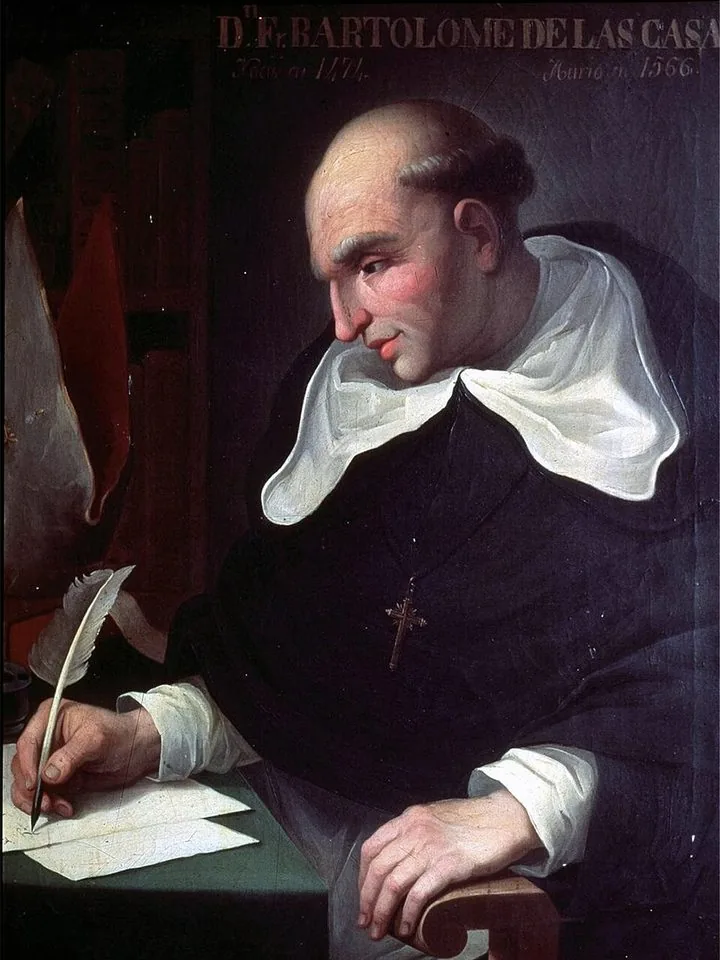
The story
The grant he gave back
On 15 August 1514, the feast of the Assumption, a priest of about 30 stood up in the young Spanish town of Sancti Spíritus in Cuba and told the colonists that the system they all lived on was unjust. He had just given up his own share of it.
The system was the encomienda. It granted a Spanish settler the labor of a group of Indigenous people, and in Cuba those people were the Taíno. Bartolomé de las Casas held one such grant with his friend Pedro de Rentería. It paid for his house, his standing and his future.
Earlier that year, preparing a sermon for Pentecost, he had been reading the thirty-fourth chapter of Ecclesiasticus. It says that an offering made from the goods of the poor is like killing a son before his father's eyes. He read it as a man living on Taíno labor, and he could not make the two fit.
So he went to the governor, Diego Velázquez, and told him he was giving up his grant. Then he preached against the encomienda to the very people who lived from it.
Lighthouses often change their lives this way. Nothing moves for years, and then a single page makes an arrangement impossible to go on accepting. What set Las Casas apart was that he never let it go.
For more than fifty years he argued, wrote and petitioned for the Indigenous peoples of the Americas. As Bishop of Chiapas in 1545, he ordered that colonists who would not free the people they held be refused absolution, which to a believer of that age meant their souls were in danger. The colonists turned on him. In 1550 and 1551, at Valladolid, he argued the case again before a royal panel.
There is a hard part, and he would want it told. From 1516, two years after his sermon, he urged that enslaved Africans be shipped to the Indies to spare the Taíno. The man who saw one injustice so clearly did not, for years, see the one he was proposing.
Clear sight can work like that. It can be fixed on one place while the place next to it stays dark. And a sacrifice already made can start to feel like proof that your next judgment is sound.
In time he saw it. In his History of the Indies, writing of himself as “the cleric”, he recorded that he had repented, because the captivity of Africans was “as unjust as that of the Indians.”
“He feared that neither his ignorance in this nor his good intention would excuse him before the judgment of God.”
It undid nothing. The ships had sailed. But he put the error into the same history in which he told the story of 1514, under his own name, where anyone could read it.
He died in Madrid on 18 July 1566, at 81. He was early to see one wrong and late to see another, and he signed his name to both.
The Lighthouse pattern in his life
- Sees the wrong before others
- One chapter of Ecclesiasticus showed him the system every Spaniard around him lived on.
- Pleads for strangers for decades
- He argued for the Indigenous peoples of the Americas for more than fifty years.
- Puts the truth in writing
- He wrote his own blind spot into his History of the Indies, under his own name.
The Lighthouse: Quiet, certain, and already three moves into a future you can feel but can’t prove yet.
Are you a Lighthouse too?
Free, no email needed. Find out which house is yours.
Take the free test
The book
The Lighthouse: A Story of Your People
His story and fourteen more, from the court of a Han dynasty emperor to a government office in Ottawa, grouped by the situations every Lighthouse runs into: work, love, friendship, money, the body, purpose and power.
More famous Lighthouses


Questions people ask
What personality type was Bartolomé de las Casas?
His life fits the Lighthouse, one of the houses at Grand Personalities: someone quiet and certain, already three moves into a future he can feel but can't prove yet. Closest four-letter code: INFJ.
Why did Bartolomé de las Casas give up his encomienda?
In 1514, while preparing a Pentecost sermon, he read the thirty-fourth chapter of Ecclesiasticus, on offerings made from what is taken from the poor, and decided he could no longer live on Taíno labor. He gave up his grant and preached against the system on 15 August 1514.
Did Bartolomé de las Casas support African slavery?
From 1516 he urged that enslaved Africans be brought to the Indies to spare Indigenous people. He later repented, writing in his History of the Indies that their captivity was as unjust as that of the Indians.
Portrait: Unknown painter, 16th century · Public domain · Source
