Famous Observatories
Émilie du Châteletthe ObservatoryINTJ
France, 1706–1749 · mathematician, physicist, translator of Newton
The story
A number in the register
In early September 1749, at the court of Lunéville in Lorraine, Émilie du Châtelet sent a bundle of manuscripts to the King's Library in Paris. She was 42, days from giving birth, and afraid she would not survive it.
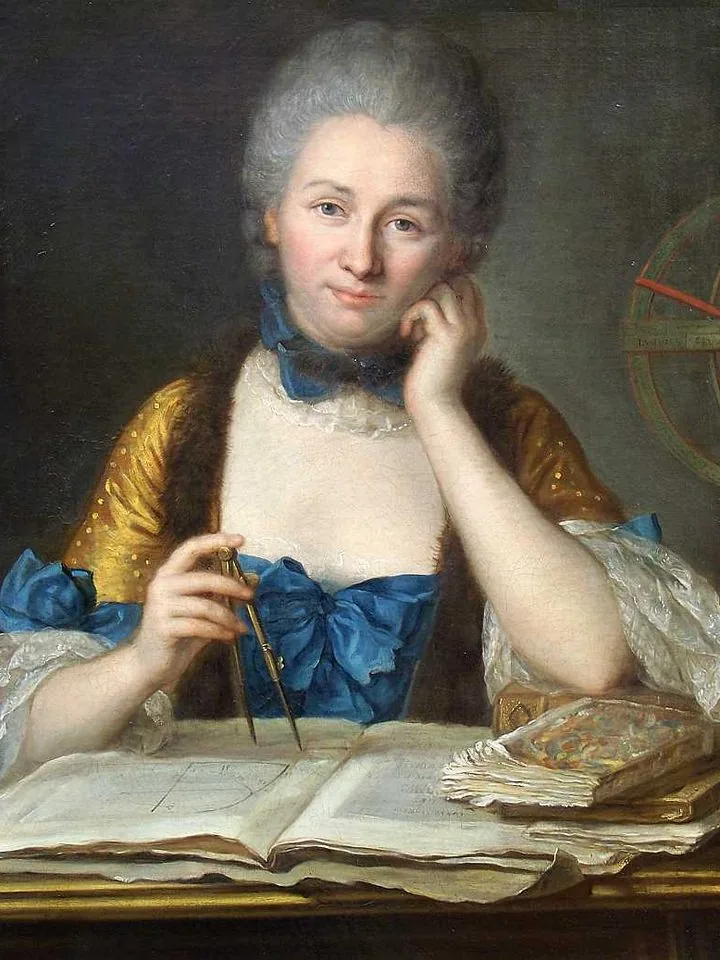
The pages were her French translation of Isaac Newton's Principia, the great book of the laws of motion and gravity. She had begun it in 1745 and won royal permission to publish in 1746. Newton's Latin was built from geometry, proposition on proposition. Putting it into French meant following the mathematics all the way down and making sure every step still held.
She was a mathematician and physicist from the high nobility, and in 1749 she found herself pregnant, at an age when childbirth was a serious danger.
She did not stop. She worked through the nights, cutting her sleep, to finish before the child came. The body had set a deadline, and she treated it the way Observatories treat most deadlines: as a constraint on the plan, never a reason to drop it.
Then she made provision. She wrote to the abbé Claude Sallier, keeper of the King's Library, and sent him the manuscripts with one request.
“I beg you to be so kind as to put a number on these manuscripts and have them registered, so that they will not be lost.”
She did not ask for praise, or publication, or to be remembered. She asked for a number and a place in the register. She knew what happens to papers when their author is gone. They scatter, get misfiled, or end up under someone else's name. A cataloged manuscript in a royal library has an identity and a keeper.
Observatories make this kind of provision almost by instinct, and usually in silence. The handover notes written before an operation. The list of accounts left in a drawer for a partner. Nobody asks for them, and they are rarely thanked. They are a form of love that only shows when it is needed.
The baby came on 4 September. Voltaire, whose life had long been bound up with hers, reported that she was at her desk working on Newton when the birth began. The little girl, he wrote, was laid on a quarto volume of geometry.
Six days later, on 10 September 1749, Émilie du Châtelet died. She was 42. Her daughter lived less than two years.
She is still too often remembered mainly as Voltaire's companion. That is exactly the kind of misfiling her letter was written to prevent.
The manuscripts were not lost. Her translation was published in 1759, ten years after her death, and it is still the standard French Newton. For more than two and a half centuries, French readers have met Newton through her.
Every one of them has inherited the provision she made in her last days, in a letter asking a librarian for a number.
The Observatory pattern in her life
- Carries hard work to the end
- She spent four years following Newton's mathematics step by step into French.
- Plans around the deadline
- Pregnant at 42 and fearing the birth, she cut her sleep to finish before the child came.
- Makes quiet provision for later
- She sent the manuscripts to the King's Library and asked for them to be numbered and registered.
The Observatory: You build the whole model before you speak, then defend it like it cost you something. It did.
Are you an Observatory too?
Free, no email needed. Find out which house is yours.
Take the free test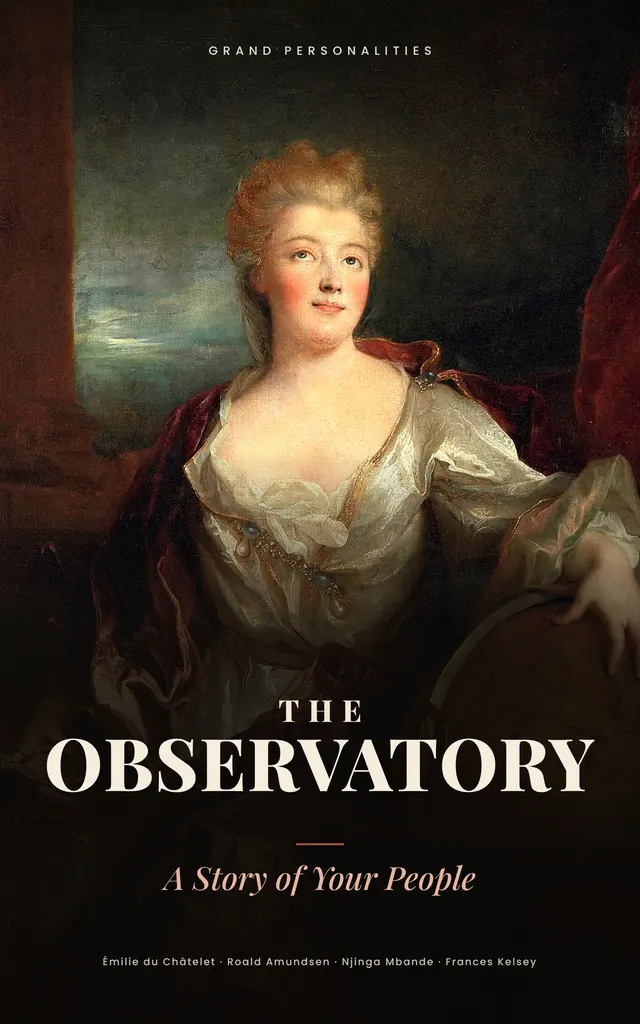
The book
The Observatory: A Story of Your People
Her story and fourteen more, from an execution ground in Edo to a hut on the Antarctic ice, grouped by the situations every Observatory runs into: work, love, friendship, money, the body, purpose and power.
More famous Observatories
Questions people ask
What personality type was Émilie du Châtelet?
Her life fits the Observatory, one of the houses at Grand Personalities: someone who builds the whole model before speaking, then defends it like it cost her something. It did. Closest four-letter code: INTJ.
How did Émilie du Châtelet die?
She died at Lunéville on 10 September 1749, aged 42, six days after giving birth to a daughter. She had raced to finish her translation of Newton's Principia before the birth.
What is Émilie du Châtelet known for?
Above all for her French translation of Isaac Newton's Principia, begun in 1745 and published in 1759, ten years after her death. It is still the standard French version.
Portrait: Maurice Quentin de La Tour, 18th century · Public domain · Source
