Famous Labyrinths
Carl Friedrich Gaussthe LabyrinthINTP
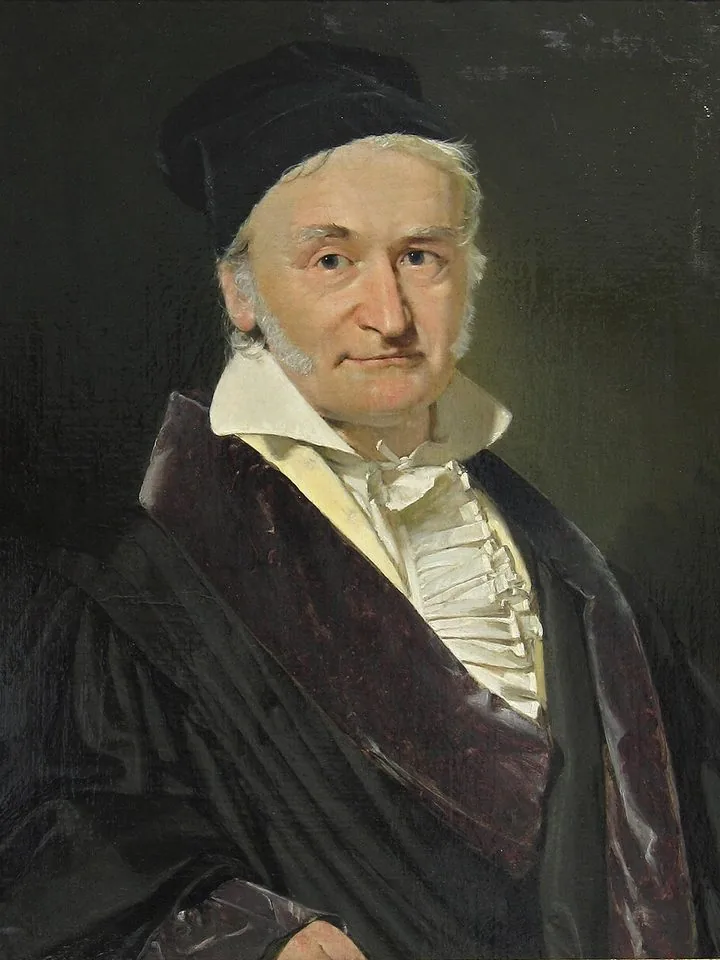
Germany, 1777–1855 · mathematician, astronomer, physicist
The story
To praise it would be to praise myself
On 6 March 1832, in Göttingen, Carl Friedrich Gauss, 54, answered a letter from his old university friend Farkas Bolyai.
Farkas had sent him a short work by his son, János. The young man had done something astonishing. For two thousand years geometry had rested on Euclid's assumption about parallel lines. János had built a complete, consistent geometry in which that assumption was false. He had, in effect, found a new kind of space.
His father wanted to know what the greatest mathematician alive thought of it. Gauss warned him he might be surprised. Then he explained why he could not praise it.
“To praise it would amount to praising myself.”
The young man's path and results, he went on, matched almost exactly the thoughts that had occupied his own mind for the past thirty or thirty-five years. He had never published them. He was glad, he said, to be spared the trouble of writing them up, and very glad that it was his old friend's son who had got there first.
From inside Gauss's head, every step of that letter is sound. The work agrees with his own, so praising it would mean praising himself, so he declines, honestly, and adds that he is pleased. There is no lie in it anywhere. Labyrinths will know the shape: a chain where every link holds, and the person at the other end still gets hurt.
He had his reasons for keeping quiet. On 27 January 1829 he had told the astronomer Friedrich Bessel that he held back his views on geometry because he dreaded “the cry of the Boeotians,” the uproar of people who would not understand. The Boeotians were ancient Greece's proverbial blockheads.
His motto, it is said, was pauca sed matura: few, but ripe. He would rather know a thing perfectly in private than defend it noisily in public. Many Labyrinths feel that pull. Being right is enough. Being seen to be right can feel like a vulgar extra.
The cost of the silence did not fall on Gauss. It fell on János. The man whose praise could have made his career had answered that he had been there first. János came to suspect that his ideas had been passed on behind his back, his trust in his father broke, and he never published again.
The bitter part is another letter. On 14 February 1832, three weeks before he wrote to Farkas, Gauss told his friend the astronomer Christian Gerling that he considered the young geometer Bolyai “a genius of the first rank.”
He wrote it to Gerling. He never wrote it to Bolyai.
The right sentence existed, in Gauss's own hand, three weeks before it was needed. It simply went to the wrong address.
The Labyrinth pattern in his life
- Won't publish until it's ripe
- He kept his ideas on a new geometry to himself for some thirty years.
- Reasons honestly, link by link
- His letter to Farkas contains no lie; each step follows from the one before.
- Keeps praise for private letters
- He called János “a genius of the first rank” to Gerling, never to János.
The Labyrinth: You take the idea apart because loving it isn’t the same as it being true.
Are you a Labyrinth too?
Free, no email needed. Find out which house is yours.
Take the free test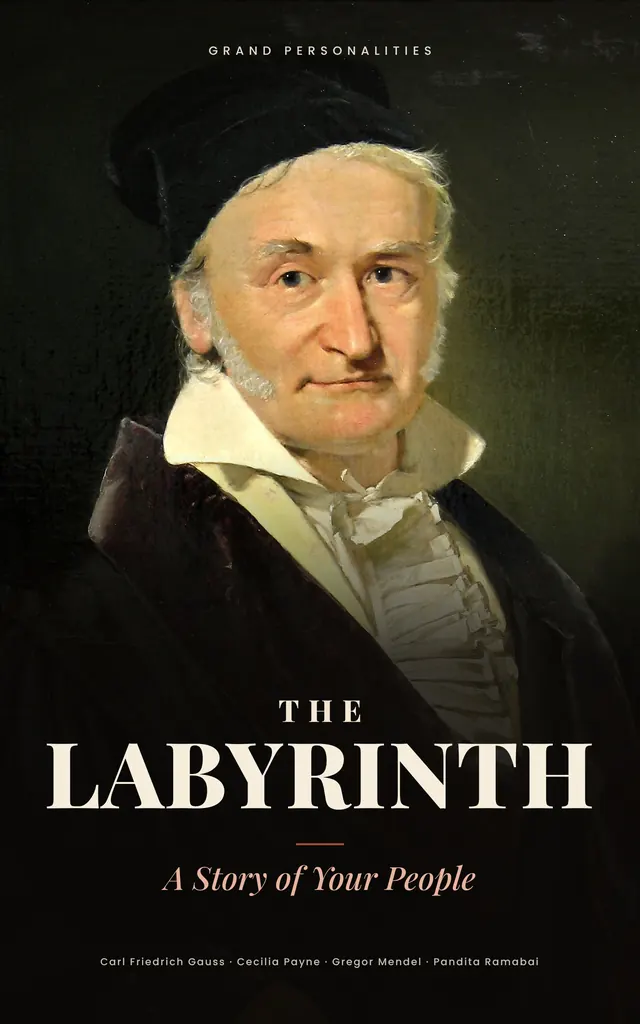
The book
The Labyrinth: A Story of Your People
His story and fourteen more, from a cave by an Ethiopian river to a monastery in Moravia and a radio laboratory in Sydney, grouped by the situations every Labyrinth runs into: work, love, friendship, money, the body, purpose and power.
More famous Labyrinths

Questions people ask
What personality type was Carl Friedrich Gauss?
His life fits the Labyrinth, one of the houses at Grand Personalities: someone who takes the idea apart, because loving it isn't the same as it being true. Closest four-letter code: INTP.
What did Gauss say about János Bolyai's geometry?
In March 1832 he told János's father that “to praise it would amount to praising myself,” because the results matched ideas he had held for thirty or thirty-five years. Privately, to Gerling, he called János a genius of the first rank.
Why didn't Gauss publish his non-Euclidean geometry?
In 1829 he told Bessel he feared “the cry of the Boeotians,” the uproar of people who would not understand. He preferred to publish only what he had finished to his own satisfaction.
Portrait: Christian Albrecht Jensen, 1840 · Public domain · Source
