Famous Garrisons
Cuthbert Collingwoodthe GarrisonESTJ
England, 1748–1810 · admiral, Nelson's second at Trafalgar, letter writer

The story
Grief in the dispatch
On 22 October 1805, aboard the frigate Euryalus off Cape Trafalgar in southern Spain, Vice-Admiral Cuthbert Collingwood sat down to write the official report of the greatest sea victory of the age. He was 57. The day before, his closest friend, Horatio Nelson, had been killed.
They had been friends since they served together as young officers in the 1770s, nearly thirty years. They were opposites. Nelson was the improviser, the man who saw an opening mid-battle and went for it. Collingwood, born in Newcastle upon Tyne in 1748, was the man of method: preparation, order, every ship in its place.
He admired exactly the gift he lacked. In one letter he called Nelson incomparable, a man who could spot advantages as they arose. It takes a secure kind of person to say that about a friend who is your opposite.
On the morning of 21 October the British fleet went into battle in two columns. Collingwood's Royal Sovereign led the second and raced ahead of the rest, the first ship into action. When Nelson's flags went up, his friend's reaction was pure Collingwood.
“I wish Nelson would make no more signals; we all understand what we have to do.”
During the fighting Nelson was shot. He sent an officer to Collingwood with his last farewell, and then he died. Command of the fleet passed to the steady one.
The battle was won, but the work was not finished. A gale blew up. Battered ships were short of anchors, and a victory can turn into a wreck within hours. Most of the captured enemy ships were lost on the rocks or sunk. No British ship was lost.
There is no painting of that. It is the job Garrisons are handed most often: finish the work after the brilliant one is gone, and make sure everyone who can come home does.
Then he wrote the report. Dispatches of that kind dealt in positions, prizes and casualties. Collingwood wrote those. He also wrote that his heart was rent with grief for the death of a friend, bound to him by many years and the strongest ties of affection. It was printed in the London Gazette, the grief sitting beside the names of the ships.
Garrisons tend to keep feeling on one side and duty on the other, and to deliver the duty while the feeling waits. He put both in the same document, and the report was no less true for it.
The navy then found it could not do without him. He was sent to command in the Mediterranean and kept there for years, rarely setting foot on shore. As his health failed he asked to come home, giving the most dutiful reason he could find: a worn-out admiral might fail at an important moment. The government refused. He wrote of how his thoughts kept carrying him back to his home at Morpeth. When his dog Bounce drowned in 1809, he told his sister he had few comforts, and the dog had been one, because it loved him.
Permission came in February 1810. He died at sea on 7 March, off Menorca, on his way home. He was 61.
He had brought every British ship through the storm after Trafalgar. He never brought himself home.
The Garrison pattern in his life
- Prepares while others improvise
- He was the man of method beside Nelson, the improviser, for nearly thirty years.
- Finishes the job after the hero falls
- He took command at Trafalgar and brought every British ship through the gale.
- Too reliable to be released
- He asked to come home in the language of duty, was refused, and died at sea.
The Garrison: You take the duty nobody wants, name the date, and hold the line after everyone else drifts.
Are you a Garrison too?
Free, no email needed. Find out which house is yours.
Take the free test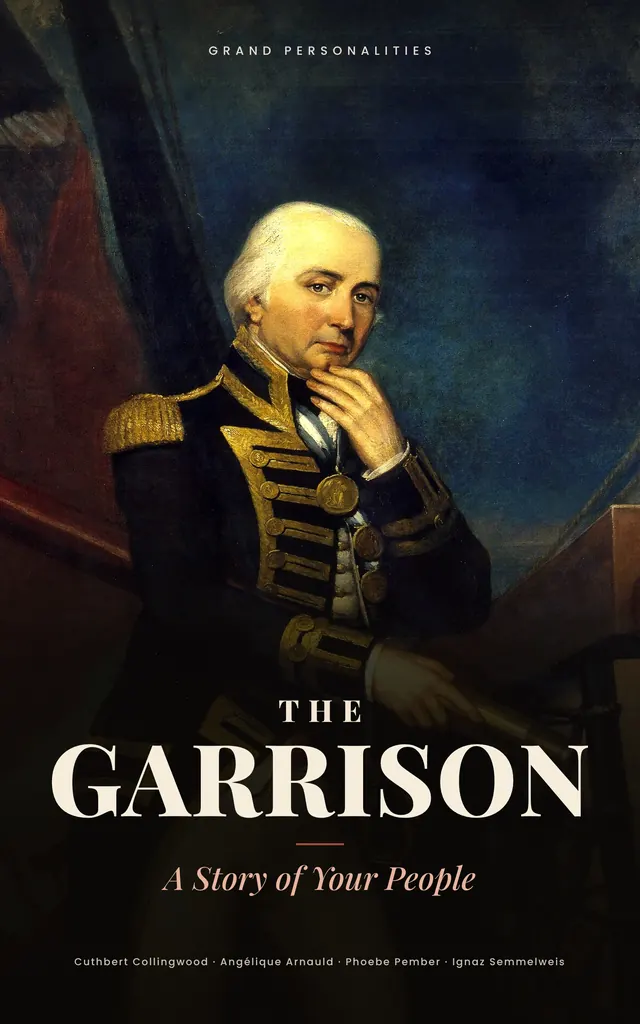
The book
The Garrison: A Story of Your People
His story and fourteen more, from a manor in fifteenth-century Norfolk to an Arctic shore in 1884, grouped by the situations every Garrison runs into: work, love, friendship, money, the body, purpose and power.
More famous Garrisons
Questions people ask
What personality type was Cuthbert Collingwood?
His life fits the Garrison, one of the houses at Grand Personalities: someone who takes the duty nobody wants, names the date and holds the line after everyone else drifts. Closest four-letter code: ESTJ.
What did Collingwood do at the Battle of Trafalgar?
He led the second British column in HMS Royal Sovereign, the first ship into action, and took command of the fleet when Nelson was killed. He then brought it through the storm that followed without losing a British ship.
How did Cuthbert Collingwood die?
He died of cancer at sea on 7 March 1810, off Menorca, aboard the Ville de Paris. After years of being kept on duty in the Mediterranean, he had finally been allowed to sail home.
Shown: the Garrison house art.