Famous Garrisons
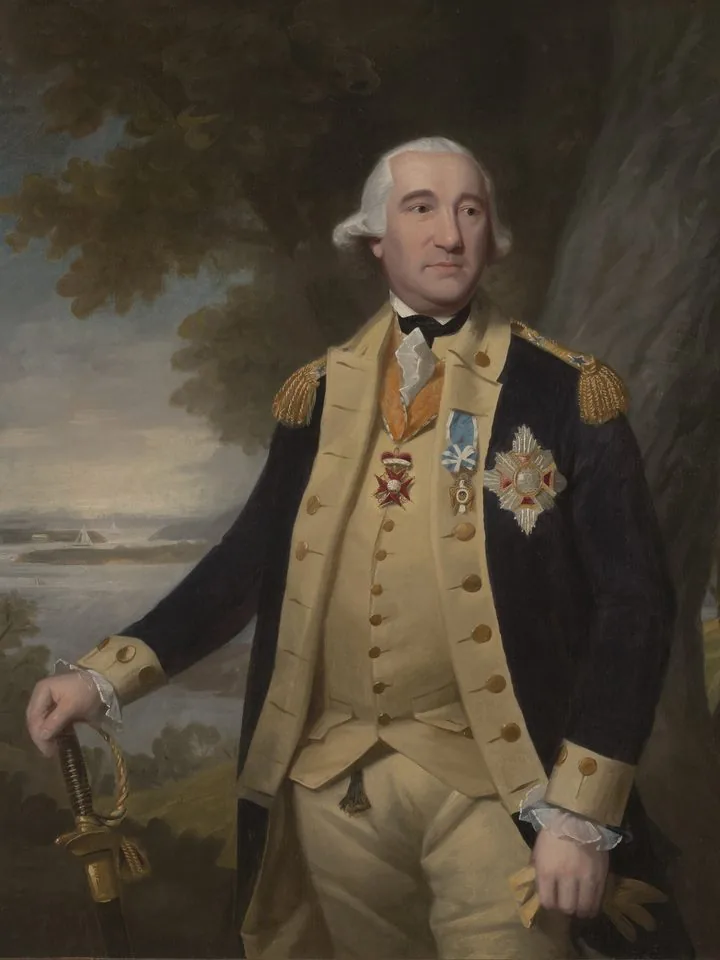
Baron von Steubenthe GarrisonESTJ
Prussia and America, 1730–1794 · drillmaster, inspector general, soldier
The story
The reason why
On 23 February 1778, a Prussian officer rode into the American army's winter camp at Valley Forge, Pennsylvania, to teach it how to drill. Friedrich Wilhelm von Steuben, known to Americans ever since as Baron von Steuben, was 47. He spoke German and French. He did not speak English.
He also came with a rank he had never held. Benjamin Franklin's letter of introduction from Paris, dated 4 September 1777, called him a lieutenant general in the King of Prussia's service. He had in fact been a captain, and for a time an aide to Frederick the Great.
Garrisons find a padded title hard to forgive. Steuben spent that spring earning his.
The army had no single way of doing things. Each unit marched and formed up by its own habits. It needed one standard, known to every company.
He did not write a memo and wait. In March he formed a model company, drawn from Washington's own guard and from the troops of every state, and drilled it himself, over and over, until it moved properly. Then those men went back to their units and taught what they had learned. One parade ground spread its standard across an army.
Every order took a detour on the way. He wrote the drill in French, and aides, among them Pierre Duponceau and Benjamin Walker, turned it into English. By one story, when his patience ran out, he would call on Walker to swear at the men in English for him.
The real lesson of that spring was about people. In Prussia an order explained itself. These soldiers were citizens, and they wanted to know why. He later told an old comrade in Europe that there you gave a soldier an order and he obeyed it, while here he had to give the reason first, and then the man did it.
He could have called that insubordination. He treated it as information, and at 47, in a foreign language, he changed his method. For a Garrison, who usually knows the right way before anyone else in the room, that is the hardest move of all: accepting that a rule will not carry itself. People keep a standard they understand.
Out of that winter came his Regulations for the Order and Discipline of the Troops of the United States, the Blue Book. Congress approved it on 29 March 1779, and the army drilled by it until the War of 1812.
Most of it is mechanics. But the instructions for captains say that each one should aim “to gain the love of his men, by treating them with every possible kindness and humanity.” Then comes the hardest line in it.
“He should know every man of his company by name and character.”
No captain can do that from behind a desk. He has to walk the line, as Steuben had all spring.
His own accounts were another matter. After the war he lived well beyond his means, and his old aides ended up keeping his books. He died in upstate New York on 28 November 1794, at 64, still in debt.
He had come to America with a rank he never held. He left its army a rulebook that told every captain to learn his men's names.
The Garrison pattern in his life
- Fixes the standard others skip
- He found an army with no common drill and wrote the Blue Book it used until the War of 1812.
- Shows it in person first
- He drilled one model company himself, then sent its men back to teach their own units.
- Bends the method, keeps the rule
- When citizen soldiers wanted to know why, he started giving reasons and kept the drill.
The Garrison: You take the duty nobody wants, name the date, and hold the line after everyone else drifts.
Are you a Garrison too?
Free, no email needed. Find out which house is yours.
Take the free test
The book
The Garrison: A Story of Your People
His story and fourteen more, from a manor in fifteenth-century Norfolk to an Arctic shore in 1884, grouped by the situations every Garrison runs into: work, love, friendship, money, the body, purpose and power.
More famous Garrisons

Questions people ask
What personality type was Baron von Steuben?
His life fits the Garrison, one of the houses at Grand Personalities: someone who takes the duty nobody wants, names the date and holds the line after everyone else drifts. Closest four-letter code: ESTJ.
What did Baron von Steuben do at Valley Forge?
Arriving on 23 February 1778, he drilled a model company of picked men himself and sent them back to teach their units, giving the army one common drill. That drill became his Blue Book, which Congress approved in 1779.
Was Baron von Steuben really a general?
Not when he arrived. Franklin's 1777 letter introduced him as a lieutenant general in the King of Prussia's service, but he had been a captain and an aide to Frederick the Great; Congress later made him a major general and inspector general.
Portrait: Ralph Earl, circa 1786 · Public domain · Source
