Famous Harbors
Dolley Madisonthe HarborESFJ
Washington and Virginia, 1768–1849 · first lady, hostess, slaveholder
The story
A basket at the door
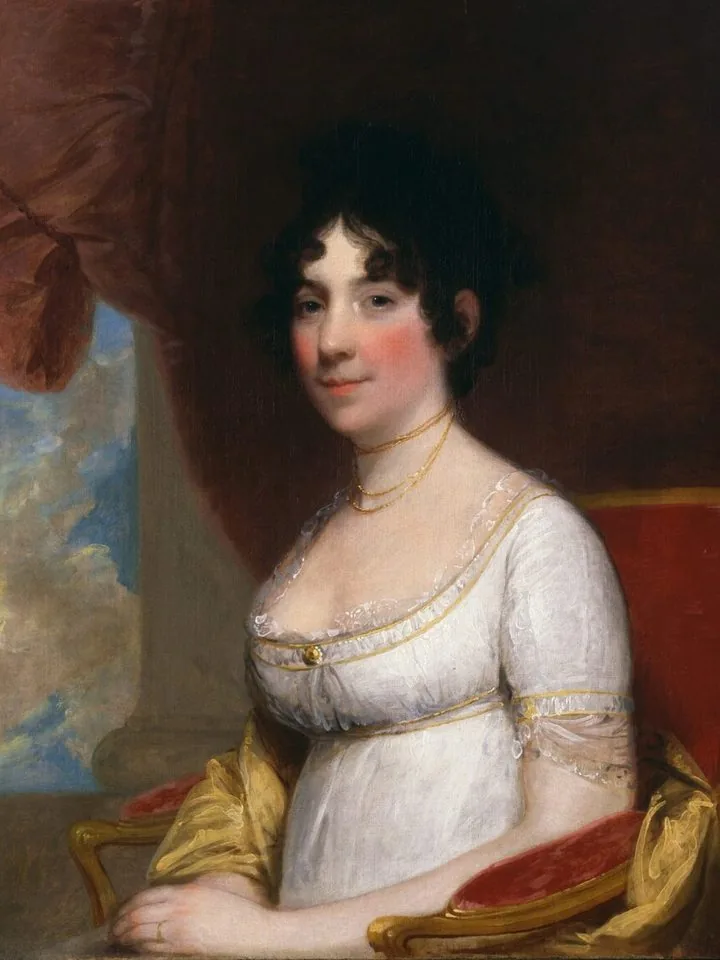
In the late 1840s, in a house on Lafayette Square in Washington, Dolley Madison was being fed, in part, by a man she had once owned. She was about 80. His name was Paul Jennings.
He told it himself in a short memoir, A Colored Man's Reminiscences of James Madison, published in Brooklyn in 1865. While he worked for Senator Daniel Webster, Webster often sent him to her with a market basket full of provisions, and told him to take her anything else she seemed to need. Then comes the line.
“I often did this, and occasionally gave her small sums from my own pocket, though I had years before bought my freedom of her.”
Jennings was born into slavery at Montpelier, the Madisons' Virginia plantation, in 1799. He grew up inside the household Dolley made famous. She was the great hostess of the young republic, with the gift Harbors are known for: a room felt warmer, and better run, once she was in it. Her famous table also rested on the work of enslaved people. Jennings was one of them.
On 24 August 1814, with British troops closing in on Washington, she was 46 and he was about 15. He remembered that she ordered her carriage and, passing through the dining room, “caught up what silver she could crowd into her old-fashioned reticule.” Even in flight, she reached for the things a host needs.
A more famous version of that day has her cutting George Washington's portrait from its frame. She did order it saved. Jennings, who was there, called the cutting story “totally false”: the doorkeeper, Jean Pierre Sioussat, and the gardener took it down. The hostess got the credit. The hands that did the lifting stayed in the margins, unless one of them wrote it down.
James Madison died in 1836, and her money began to run out. Much of it went on the debts of her son, Payne Todd, which she kept paying. Harbors find it very hard to refuse their own family. In most lives that costs the giver. In hers, the cost fell on people who had no say.
In 1844 she sold Montpelier. Over those years she sold many of the people enslaved there, against her husband's wishes. In 1846, at 78, she sold Paul Jennings to an insurance agent. Daniel Webster arranged his freedom, and Jennings worked off the price.
So the baskets came from both men. Webster's instruction was a host's instruction: notice what she lacks, and bring it. Jennings carried it out, and added coins of his own.
He wrote about the Madisons with restraint, and in places with warmth. “Mr. Madison, I think, was one of the best men that ever lived,” he wrote. He never told his readers what to make of the woman who sold him and was later fed by him. He let the facts sit where they fell.
Dolley Madison died in 1849, at 81. Her gift for welcome was real, and a capital felt it. Every table is paid for by someone, though. In her story, the truest host is the man who carried the basket.
The Harbor pattern in her life
- Makes a whole city feel welcome
- She was the most celebrated hostess of the young republic.
- Saves the table in a crisis
- Fleeing the British in 1814, she swept the dining-room silver into her bag on the way to the carriage.
- Can't say no to family
- She kept paying her son's debts long after the money ran out, and others paid the price.
The Harbor: You host, you organize, you notice who got left out — and you rarely get asked how you are.
Are you a Harbor too?
Free, no email needed. Find out which house is yours.
Take the free test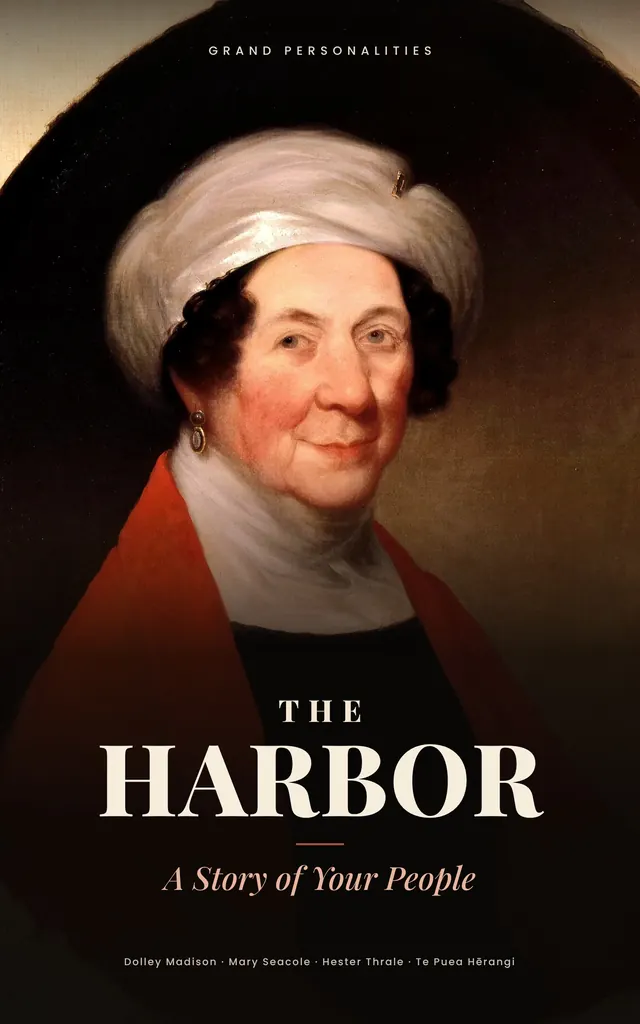
The book
The Harbor: A Story of Your People
Her story and fourteen more, from fourteenth-century Italy to twentieth-century New Zealand, from Jeju to Liverpool to Manila, grouped by the situations every Harbor runs into: work, love, friendship, money, the body, power and purpose.
More famous Harbors
Questions people ask
What personality type was Dolley Madison?
Her life fits the Harbor, one of the houses at Grand Personalities: someone who hosts, organizes and notices who got left out, and rarely gets asked how she is. Closest four-letter code: ESFJ.
Did Dolley Madison save the portrait of George Washington?
She ordered it saved as the British approached on 24 August 1814. Paul Jennings, who was there, wrote that the doorkeeper Jean Pierre Sioussat and the gardener took it down.
Did Dolley Madison own slaves?
Yes. Enslaved people worked in her household all her adult life, and after her husband's death she sold many of them, including Paul Jennings in 1846. Years later, as a free man, he brought her food when she was poor.
Portrait: Gilbert Stuart, 1804 · Public domain · Source
