Famous Harbors
Melchora Aquinothe HarborESFJ
Philippines, 1812–1919 · shopkeeper, revolutionary, exile
The story
She would not say where they went
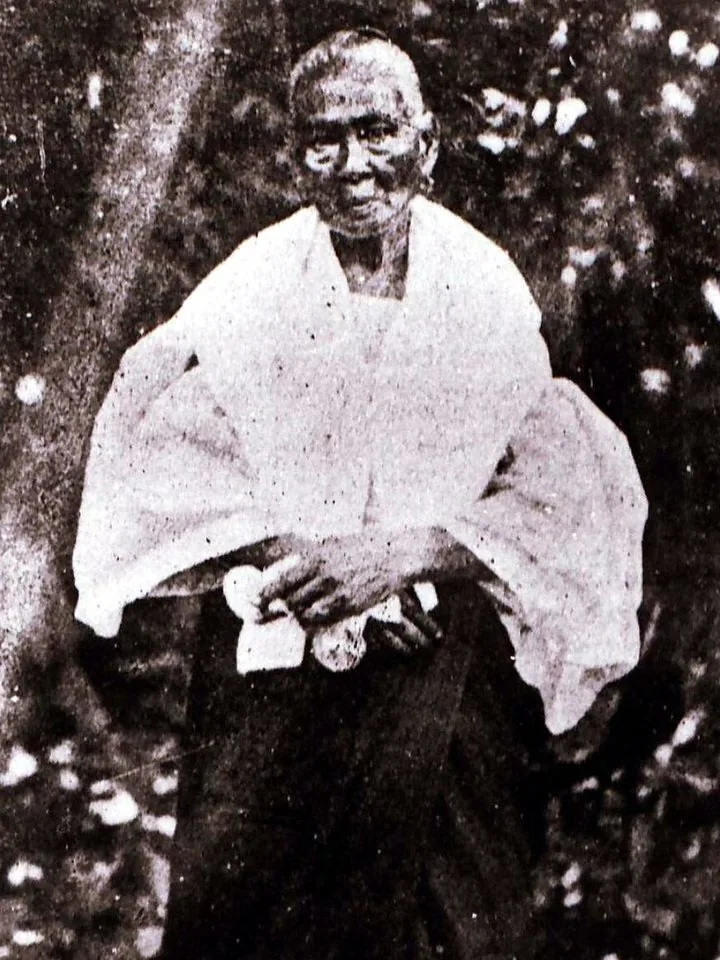
On 24 August 1896, Andrés Bonifacio brought his men to Melchora Aquino's place at Bahay Toro, outside Manila, for fear of a sudden attack. The Katipunan, the secret society that had just risen against Spanish rule, was on the run. She was 84. She took them in.
She fed them and she nursed them. By one later account she gave them a hundred cavans of rice and ten carabaos, the water buffalo that pull the plows. Whatever the exact amounts, the shape is clear: an old woman with a small shop fed a band of rebels from what she had.
She was born on 6 January 1812 in Banlat, Caloocan, to peasant parents, and never went to school. She married Fulgencio Ramos and was widowed. She kept a small store, the kind of neighborhood shop that sells a little of everything. The rebels had already gathered at the home of her son, Juan.
A shop like that is a host's post. Whoever keeps it sees the whole street come and go, and knows who is short of what. Harbors end up in that seat all the time, whether or not anyone names it.
When hunted men arrive at an old woman's door, she has choices. She can turn them away. She can feed them quickly and send them on. She took them in as guests, and looked after them for as long as they needed.
Five days later, on 29 August, the Guardia Civil, Spain's colonial police, came for her. She was held at Pasong Putik, in Novaliches, then moved to Bilibid prison in Manila. There she was questioned about where the rebels had gone. She would not tell.
No words of hers survive from the questioning, or from anywhere else. She left no letters. There is only the fact of her refusal. She was 84, in a colonial prison, and a single word could have pointed soldiers at the men she had fed. She did not say it.
“Mother of the Katipunan”
Harbors are often taken for soft. They are the hosts and the feeders, the ones who smooth things over. They also carry a steel that shows only under this kind of pressure, when someone they have taken in is threatened. Then the host goes quiet, and nothing moves her.
On 2 September 1896 the governor-general, Ramón Blanco, ordered her deported to Guam, in the Mariana Islands. She lived there under house arrest with another exile, Segunda Puentes, in the house of a man named Justo Dungca. Even the little that survives about her exile is about a household.
She came home in 1903, at 91, and lived another sixteen years. She died in 1919, at 107. The Philippines remembers her as Tandang Sora, Old Sora, and the place where she was born is now a district of Quezon City that carries the name.
Nothing in her first eighty-four years made her famous. She kept a shop, raised a family and buried a husband. Then, at an age when most people are asked for nothing, she was asked for everything, and she answered with silence.
The Harbor pattern in her life
- Keeps an open door
- At 84 she took in hunted rebels and fed them from her own stores.
- Looks after others at any age
- At an age when most expect to be cared for, she was nursing Bonifacio's men.
- Goes quiet to protect her own
- Questioned in a Manila prison, she would not say where her guests had gone.
The Harbor: You host, you organize, you notice who got left out — and you rarely get asked how you are.
Are you a Harbor too?
Free, no email needed. Find out which house is yours.
Take the free test
The book
The Harbor: A Story of Your People
Her story and fourteen more, from fourteenth-century Italy to twentieth-century New Zealand, from Jeju to Liverpool to Manila, grouped by the situations every Harbor runs into: work, love, friendship, money, the body, power and purpose.
More famous Harbors
Questions people ask
What personality type was Melchora Aquino?
Her life fits the Harbor, one of the houses at Grand Personalities: someone who hosts, organizes and notices who got left out, and rarely gets asked how she is. Closest four-letter code: ESFJ.
What did Melchora Aquino do for the Katipunan?
In August 1896, at 84, she sheltered, fed and nursed Andrés Bonifacio and his men. After her arrest she refused to tell the Spanish authorities where they had gone.
Where was Melchora Aquino exiled?
Governor-General Ramón Blanco deported her to Guam, in the Mariana Islands, in September 1896. She lived there under house arrest and came home in 1903, aged 91.
Portrait: Photograph, about 1896 · Public domain · Source
