Famous Harbors
Mary Seacolethe HarborESFJ
Jamaica and the Crimea, 1805–1881 · hotel keeper, nurse, writer
The story
The morning after the war
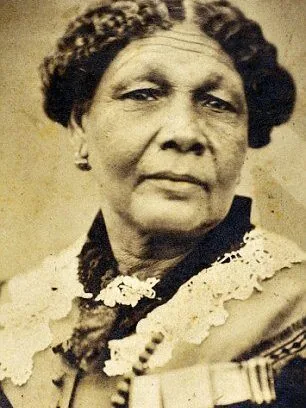
On 7 November 1856, Mary Seacole faced the Bankruptcy Court in Basinghall Street, London. She was 50. A few months earlier, an army had called her Mother.
She was born in Kingston, Jamaica, in 1805, and grew up in a boarding-house family. “I am a Creole,” she wrote, choosing her own word for who she was. Feeding, lodging and nursing people was the trade she was raised in.
In 1855, with her business partner Thomas Day, she opened a hotel in the Crimea. She named the spot Spring Hill. It stood near Kadikoi, within a mile of British headquarters, where tired and hungry men would pass. She called it the British Hotel. Harbors do this without thinking: the place is named for the guests.
It was a business as well as a kindness. The British Hotel sold food, drink and comfort, much of it to officers. She put a great deal of her own money into stock and building, on the faith that the army would keep coming through her door.
To the soldiers who came through, she was Mother Seacole. She fed them, nursed them, and called the young ones her sons. Far from home, it was the nearest thing to home many of them had.
“I love to be of service to those who need a woman's help.”
That gift was also where the danger hid. She stocked the way a mother stocks for a family that will always come home for dinner.
The Treaty of Paris was signed on 30 March 1856, and the war was over. The army sailed home within weeks and months. Spring Hill was left full of supplies bought for men who no longer needed feeding. The stock could not be sold, and the creditors could still reach her.
Count the months. Seven, from the peace to the courtroom. The bill did not come while she was busiest and most needed. It came when the role that made her Mother had simply ended. For Harbors that timing is familiar. The cost of a role is rarely charged while it runs. It arrives the morning after.
Then the story turned. The press took up her case, and a public fund was raised in her name. On 30 January 1857 she and Day were discharged from bankruptcy. That July a four-day festival was held for her benefit at the Royal Surrey Gardens. For once, the host was the guest.
The same month she published her own account, Wonderful Adventures of Mrs Seacole in Many Lands. She did not hide or apologize her way out of sight. She told her story under her own name and charged for it. In its way it was her bill: here is what I did, and here is what it was worth.
She lived until 1881. The rescue worked because she let it. She went to court, accepted the help, and then wrote down what Spring Hill had been worth, which was more than any ledger in Basinghall Street could show.
The Harbor pattern in her life
- Goes where the tired people are
- She built her hotel near the camp, within a mile of British headquarters, where hungry men would pass.
- Treats strangers as family
- The soldiers called her Mother Seacole, and she called the young ones her sons.
- Gives first, counts later
- She stocked for an army that sailed home, and the bill came seven months after the peace.
The Harbor: You host, you organize, you notice who got left out — and you rarely get asked how you are.
Are you a Harbor too?
Free, no email needed. Find out which house is yours.
Take the free test
The book
The Harbor: A Story of Your People
Her story and fourteen more, from fourteenth-century Italy to twentieth-century New Zealand, from Jeju to Liverpool to Manila, grouped by the situations every Harbor runs into: work, love, friendship, money, the body, power and purpose.
More famous Harbors
Questions people ask
What personality type was Mary Seacole?
Her life fits the Harbor, one of the houses at Grand Personalities: someone who hosts, organizes and notices who got left out, and rarely gets asked how she is. Closest four-letter code: ESFJ.
Why did Mary Seacole go bankrupt?
When the Crimean War ended in 1856, the army left faster than she could sell the stock she had bought for her British Hotel, and she was declared bankrupt in London that November. She was discharged in January 1857 after a public fund was raised for her.
Why was Mary Seacole called Mother Seacole?
The British soldiers she fed and nursed in the Crimea knew her as Mother Seacole, and she in turn called the young men she cared for her sons.
Portrait: Photograph, before 1881 · Public domain · Source
