Famous Garrisons
Dorothea Dixthe GarrisonESTJ
Massachusetts, 1802–1887 · asylum reformer, superintendent of army nurses, teacher
The story
The title and the purpose
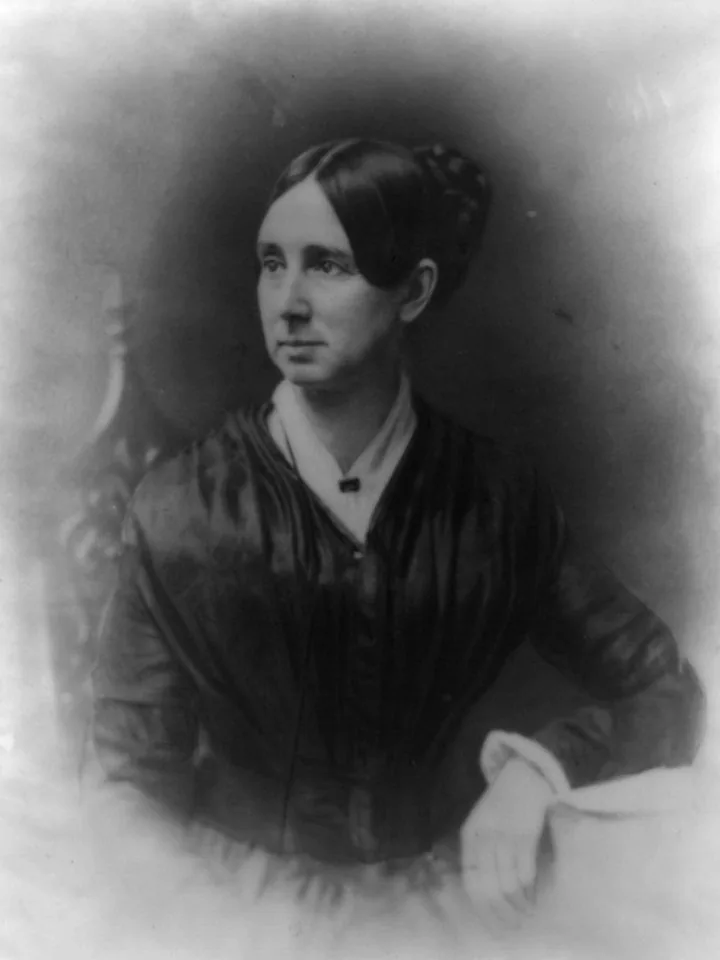
In June 1861, two months into the American Civil War, Dorothea Dix was made Superintendent of Women Nurses for the Union Army. She was 59. She would not be paid.
She was already famous. Since the early 1840s she had gone from state to state, inspecting the jails and poorhouses where people with mental illness were kept, and shaming legislatures into building hospitals for them. She did not take anyone else's word for what she found.
“What I assert for fact, I must see for myself.”
Now she had to find, vet and place the women who would nurse the Union's wounded, in hospitals run by army surgeons who did not want them there. Her rules became famous. Her nurses were to be no younger than thirty, and later thirty-five to fifty. They were to look plain and dress in brown, gray or black, with no bows, no curls, no jewelry and no hoop skirts.
It is easy to laugh at. Read it from inside, though, and it looks like armor. In 1861 a woman on a ward full of soldiers could be dismissed in a dozen ways. Dix sent in grown women, plainly dressed, so that nobody could pretend they had come for anything but the work. The rule was strict because the position was fragile.
Garrisons often write rules like that. From outside they look prim. From inside they are a wall around something that could easily be knocked down.
By one count she placed around three thousand women over the war. Each was found, judged against her standard, and then defended against surgeons who resented her authority. Some nurses resented her rules just as much, and called her Dragon Dix behind her back.
The wounded saw her differently. Soldiers called her an angel of mercy, and she insisted that wounded Confederates be cared for exactly like Union men. Her standard had no side.
In October 1863 the War Department issued General Orders No. 351. Nurses could now be appointed by the Surgeon General as well, and the doctors would decide where they served. Her post survived on paper. Her real power passed to the men she had spent two years fighting.
She was 61. She kept going. Unpaid, she went on recruiting and placing nurses until the war was over. One younger nurse later remembered her with pity, as an old lady still going through the motions of appointing every nurse in the army.
There are two ways to read that. One is denial, a woman who couldn't accept that the institution had moved on. The other is loyalty to the purpose over the title. The army had taken her authority. It had not taken away the wounded, or her knack for finding good women to nurse them.
Anyone who has lived through a reorganization has met her: the person whose post vanished from the new chart and who kept doing the work, because it still needed doing and nobody else knew how. The organization finds it awkward. The people being served are usually grateful.
Dix died in 1887, at 85. A general order had taken her title in an afternoon. Her purpose was never on that piece of paper.
The Garrison pattern in her life
- Takes the unpaid duty
- At 59 she took charge of the Union Army's women nurses without a salary.
- Writes the standard down
- Her strict rules on age and plain dress protected nurses nobody else would defend.
- Holds the line after losing rank
- Stripped of real authority in 1863, she kept placing nurses until the war ended.
The Garrison: You take the duty nobody wants, name the date, and hold the line after everyone else drifts.
Are you a Garrison too?
Free, no email needed. Find out which house is yours.
Take the free test
The book
The Garrison: A Story of Your People
Her story and fourteen more, from a manor in fifteenth-century Norfolk to an Arctic shore in 1884, grouped by the situations every Garrison runs into: work, love, friendship, money, the body, purpose and power.
More famous Garrisons

Questions people ask
What personality type was Dorothea Dix?
Her life fits the Garrison, one of the houses at Grand Personalities: someone who takes the duty nobody wants, names the date and holds the line after everyone else drifts. Closest four-letter code: ESTJ.
What did Dorothea Dix do during the Civil War?
From 1861 she served, unpaid, as Superintendent of Women Nurses for the Union Army, placing around 3,000 women as nurses. She insisted that wounded Confederate soldiers be cared for the same as Union men.
Why was Dorothea Dix called Dragon Dix?
It was a nickname some nurses used for her strict rules on age, dress and conduct, and her constant fights with army surgeons. Wounded soldiers called her an angel of mercy.
Portrait: Unknown · Public domain · Source
