Famous Workbenches
Elizebeth Smith Friedmanthe WorkbenchISTP
Indiana and Washington, 1892–1980 · codebreaker, cryptanalyst, expert witness
The story
The blackboard
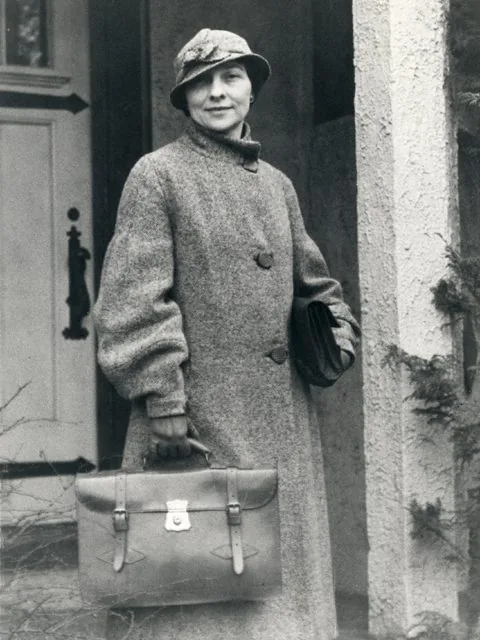
In 1933, in a federal courtroom in New Orleans, Elizebeth Smith Friedman asked the judge for a blackboard. She was 40, and she was the government's star witness.
On trial were 23 men accused of working for the Consolidated Exporters Corporation, a Vancouver liquor company that had been running alcohol into the United States through the last years of Prohibition. Its ships and agents talked to each other in code. Friedman had broken it.
Now she had to make a jury believe her. The defense lawyers kept objecting. To a jury of ordinary citizens who had never seen a cipher, a woman who claimed she could read secret messages might look like a conjuror, or a guesser.
Plenty of jobs have a version of this: the meeting where you have to show people with power, and no technical knowledge, why the thing you built works, or why the thing they want won't. It can feel like a performance, and performances are hard to trust.
Most Workbenches in that spot are tempted one of two ways. They state the result and expect it to stand, because it is correct. Or they bury the room in detail, because detail is where the truth lives. Neither works on a jury.
Friedman did a third thing. She went to the board and taught.
Step by step, she showed the jurors how the smugglers' ciphers worked and how she had cracked them, until people who had walked in knowing nothing about codes could follow the logic for themselves. She did not ask them to trust her expertise. She gave them enough of it to check her.
Five of the ringleaders were convicted.
The blackboard was not a performance. It was the work itself, made visible, and that is the kind of persuading Workbenches are best at.
She had come to codes from words, not numbers. Born in Indiana on 26 August 1892, the daughter of a Quaker dairyman, she was hired in 1916 by a wealthy textile merchant to hunt for hidden messages in Shakespeare. Nobody trained her for what came next. She learned codebreaking the way her people learn most things, by being handed a real problem and working at it until it gave way.
“Our office doesn't make 'em, we only break 'em.”
In the Second World War she did the most important work of her life, and almost nobody knew. Her Coast Guard unit read the secret radio traffic of German spy networks in South America, including messages sent on Enigma machines.
The public credit went to J. Edgar Hoover's FBI. Friedman had promised to keep her part secret, and she kept the promise until she died on 31 October 1980, at 88. The files were opened in 2008.
In New Orleans, with a blackboard, her work won. In the war, behind a wall of secrecy, it won again. Only the credit went somewhere else.
The Workbench pattern in her life
- Learns on the real problem
- Hired to hunt for hidden messages in Shakespeare, she became a codebreaker by working on actual codes.
- Lets people check the work
- At a blackboard in New Orleans, she walked the jury through the smugglers' ciphers step by step.
- Keeps the secret, skips the bows
- She kept her wartime codebreaking secret for the rest of her life while the FBI took the public credit.
The Workbench: You solve it by handling it. Quiet, practical, allergic to a plan that outruns the facts.
Are you a Workbench too?
Free, no email needed. Find out which house is yours.
Take the free test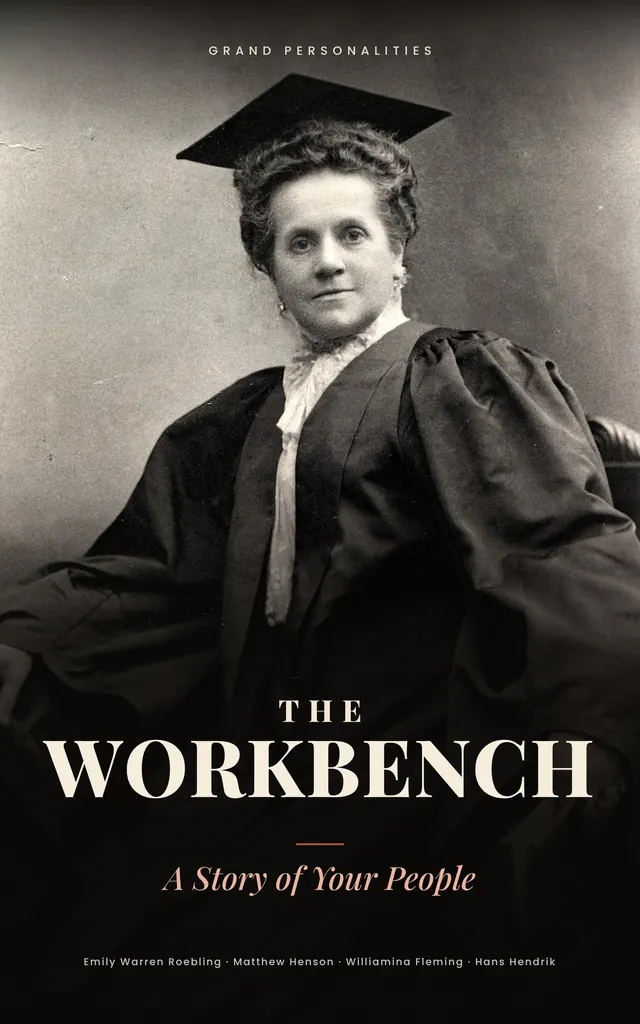
The book
The Workbench: A Story of Your People
Her story and fourteen more, from the court of fifteenth-century Korea to a canyon laboratory in New Mexico in 1946, grouped by the situations every Workbench runs into: friendship, work, money, love, power, identity and the body.
More famous Workbenches
Questions people ask
What personality type was Elizebeth Smith Friedman?
Her life fits the Workbench, one of the houses at Grand Personalities: someone who solves problems by handling them, quiet and practical, and allergic to a plan that outruns the facts. Closest four-letter code: ISTP.
What did Elizebeth Smith Friedman do in World War II?
Her Coast Guard codebreaking unit read the secret radio traffic of German spy networks in South America, including messages sent on Enigma machines. The work stayed secret until 2008, and J. Edgar Hoover's FBI took the public credit.
How did Elizebeth Smith Friedman help convict smugglers?
She broke the codes of the Consolidated Exporters Corporation's rum-running ring, and at the 1933 trial in New Orleans she used a blackboard to show the jury how. Five ringleaders were convicted.
Portrait: Unknown · Public domain · Source
