Famous Workbenches
Jang Yeong-silthe WorkbenchISTP
Joseon Korea, c. 1390–after 1442 · inventor, engineer, court craftsman
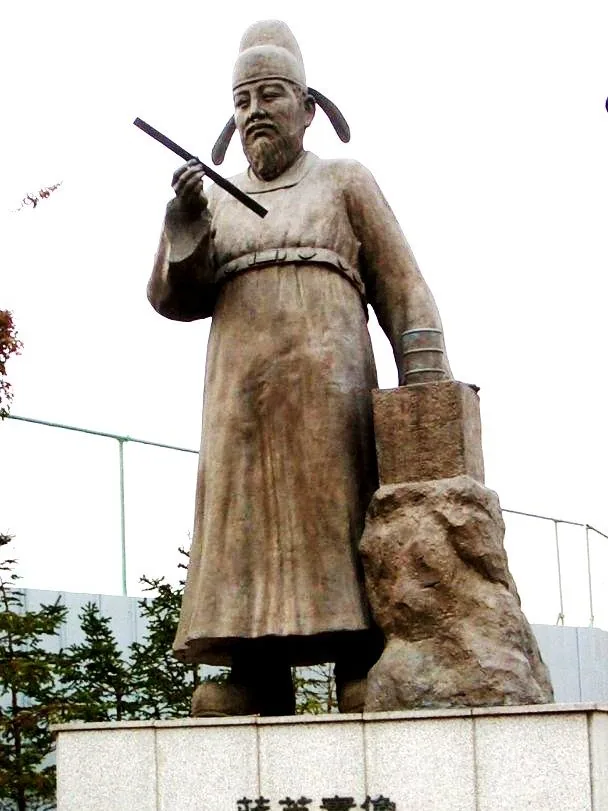
The story
It will certainly not break
In 1442, a carrying chair built for King Sejong of Joseon Korea broke, and the man who had supervised its making was handed to the royal tribunal for questioning. Jang Yeong-sil was about 52, and he was the most celebrated craftsman at court.
Nothing he ever said or wrote has survived. Everything known about him comes from the king who favored him and the officials who judged him. Letting the work do the talking comes naturally to a Workbench. Jang shows what that looks like when the work fails: a man known only through other people's sentences.
He was born into the lowest rank of Joseon society. His mother was a gisaeng, a woman bound to serve the state as an entertainer, and his father's family had come from China. That made him nobi, a government slave. Nothing about that birth should have led anywhere. But he could make things.
King Taejong protected him, and Taejong's son Sejong took him further. In 1433 Jang built a water clock that struck the hours by itself, with nobody standing by to sound them. Sejong wanted to give him a rank no man born unfree would normally hold. Without this man, the king told his ministers, the clock could never have been made.
“His skill surpasses others; Taejong protected him, and I too cherish him.”
The ministers agreed, pointing to a former government slave who had been raised before him. A society built on inherited rank had made room for a man whose only claim was his hands. Workbenches know the pride in that, and the fragility. A place earned by skill alone can be taken away the first time the skill seems to fail.
By 1442 he held the senior rank of daehogun, and he was trusted with the king's own carrying chair. Then it broke.
On the 27th day of the fourth month, the tribunal reported. Jang had not made the chair firm, and the law set his punishment at 100 strokes. Two officials who had supervised it with him faced 80 strokes each.
There was a fourth man. Jo Sun-saeng, an officer of Jang's own rank, had looked at the chair before it failed and seen where it was weak. He told Jang: “It will certainly not break.” The law set 80 strokes for him too.
The king cut Jang's sentence by two degrees and the other two officials' by one. Jo Sun-saeng, who had looked straight at the flaw and called it sound, he did not punish at all.
A few days later the officials returned to the case. The failure, they said, touched on disrespect to the throne. Jang and the others should lose their certificates of office and be flogged, as a warning to the rest. The king agreed.
After that, the court annals never mention Jang Yeong-sil again. Nobody knows where he went, how he lived, or when he died.
Royal favor had lifted him out of slavery. It could not hold up a carrying chair, and it did not cover him while the man who had called the weak point sound walked free.
The Workbench pattern in his life
- Lets the work speak
- Not one sentence of his survives; his water clock did his talking, and the king did the praising.
- Rises on skill alone
- Born a government slave, he was given court rank because, the king said, the clock could not have been made without him.
- Trusts good work to protect him
- He had the king's favor and the finest hands at court, and neither saved him when a colleague's “certainly not break” proved wrong.
The Workbench: You solve it by handling it. Quiet, practical, allergic to a plan that outruns the facts.
Are you a Workbench too?
Free, no email needed. Find out which house is yours.
Take the free test
The book
The Workbench: A Story of Your People
His story and fourteen more, from the court of fifteenth-century Korea to a canyon laboratory in New Mexico in 1946, grouped by the situations every Workbench runs into: friendship, work, money, love, power, identity and the body.
More famous Workbenches

Questions people ask
What personality type was Jang Yeong-sil?
His life fits the Workbench, one of the houses at Grand Personalities: someone who solves problems by handling them, quiet and practical, and allergic to a plan that outruns the facts. Closest four-letter code: ISTP.
What did Jang Yeong-sil invent?
He is best known for the self-striking water clock he built for King Sejong around 1433–34, which sounded the hours without anyone to strike them, and he made other astronomical instruments for the court. The rain gauge is often credited to him, though no record ties it to him directly.
What happened to Jang Yeong-sil?
In 1442 a carrying chair he had supervised for King Sejong broke. Charged with disrespect to the throne, he lost his office and was flogged, and the court annals never mention him again.
Portrait: Photo: Himasaram, 2006 · CC BY-SA 3.0 · Source
