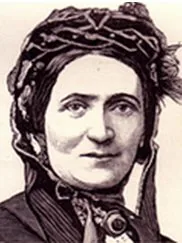
The story
The sling on her right arm
In December 1848, at the Custom House in Charleston, an officer told a young invalid planter to register his name, and the name of the slave traveling with him. The planter pointed to the poultice on his right hand and asked the officer to write it for him.
“I shan't do it,” the officer said. The other passengers turned to look.
The planter was Ellen Craft, 22, enslaved, and unable to write. The slave was her husband, William.
She had been born in 1826 in Clinton, Georgia, to an enslaved mother and the man who owned her. At about 11 she was given to his daughter as a wedding present. By 1848 she was married to William in Macon, and they could not bear to raise children who might be sold away from them.
Every road north ran past desks where travelers signed their names. Ellen's skin was pale enough to pass for white, so she would travel as an ailing young gentleman, Mr Johnson, with William as his servant. Her right arm would go in a sling, and a gentleman with a bad arm could ask the clerk to sign for him.
That is how Forges tend to solve a problem: change the situation until the problem disappears. The sling turned the most dangerous moment of the trip into a courtesy.
On the night before they left, they knelt and prayed, and William called it a desperate leap for liberty. Ellen broke down and sobbed. Then she stopped. “Come, William,” she said, “it is getting late.”
On the first train, an old friend of her owner's family sat down on the same seat. She went deaf. He remarked on the fine morning, louder and louder, and got back one polite word: “Yes.” Then he gave up. “I shall not trouble that fellow any more.”
“You have a very attentive boy, sir; but you had better watch him like a hawk when you get on to the North.”
At Charleston, with the crowd staring, strangers rescued her without knowing it. A young officer, somewhat the worse for brandy, vouched for the invalid. Then their steamer's captain offered to register the gentleman's name himself.
In Baltimore, on Christmas Eve, an officer would not let them board for Philadelphia without proof that William belonged to Mr Johnson. Ellen told him firmly he had no right to stop them. “Right or no right,” he said, “we shan't let you go.” She said nothing more and sat in the silence like an ill, wronged gentleman. Then the bell rang for the train, and the officer gave in.
They reached Philadelphia on Christmas morning. In the cab she said, “Thank God, William, we are safe!” and wept like a child. The fear had waited, as it often does in Forges, until the danger was over.
Freedom came with conditions. In 1850 two men came north from Macon to take them back, and that winter the Crafts sailed for England.
Before that, in their first weeks of freedom, a Quaker family took them in. Within three weeks, William wrote, they could spell and write their names. The woman who had crossed the South without signing hers could sign it at last.
The Forge pattern in her life
- Makes the problem disappear
- Unable to write, she put her right arm in a sling so the clerks would sign for her.
- Reads the person in front
- Seated beside a family friend who knew her face, she played deaf until he gave up.
- Cool in public, shaken after
- She held her nerve at Baltimore, then wept in the cab at Philadelphia.
The Forge: You move first, fix it live, and get bored of any meeting about the meeting.
Are you a Forge too?
Free, no email needed. Find out which house is yours.
Take the free test
The book
The Forge: A Story of Your People
Her story and fourteen more, from a desert kingdom in the first century to a Gestapo office in the south of France in 1944, grouped by the situations every Forge runs into: work, love, friendship, money, the body, purpose and power.
More famous Forges

Questions people ask
What personality type was Ellen Craft?
Her life fits the Forge, one of the houses at Grand Personalities: someone who moves first, fixes it live and gets bored of any meeting about the meeting. Closest four-letter code: ESTP.
How did Ellen Craft escape slavery?
In December 1848 she traveled from Macon, Georgia, disguised as a sick white planter called Mr Johnson, with her husband William posing as her slave. They reached Philadelphia on Christmas morning.
Why did Ellen Craft wear a sling?
Neither she nor William could write, and travelers had to sign their names at hotels and custom houses. With her right arm in a sling, she could ask officials to sign for her.
Portrait: Unknown author · Public domain · Source
