The story
One jacket by moonlight
On summer nights around 1910, when he was about 18, Juan Belmonte swam across the Guadalquivir in the dark with a gang of other boys. On the far bank lay the pastures of Tablada, outside Seville, and on the pastures were ranch bulls.
The boys stripped off, so the herdsmen would not spot their clothes. They had one jacket between them for a cape. They found a bull, crouched in a ring around it, and took turns stepping out in front of an animal many times their weight.
Years later he remembered one night above all. A hook of the horn had torn the jacket away. It lay on the ground a few steps from him, and the bull was still standing in the middle of the crouching boys. Their one tool was gone. Everything now depended on keeping still.
He was born in Seville on 14 April 1892, the son of a man who sold hardware and trinkets, and he grew up in the Triana quarter. Nobody taught him and nobody gave him permission. Forges often learn exactly like this: at night, in the open, with the real thing in front of them.
What he learned at Tablada became a revolution. He became a full matador in Madrid in 1913 and broke the old rules about where a bullfighter should stand. He planted his feet and let the horns pass a hand's width away, reading the animal from inches and staying put.
“Hurry and see him fight, because whoever doesn't see him soon won't see him at all.”
His great rival was José Gómez Ortega, known as Joselito. Each pushed the other to the edge, because each was standing on it. In 1919, at 27, Belmonte fought 109 corridas in a single season, a record that held until 1965.
The price was paid in his body. He was gored again and again, some two dozen times seriously. After every wound he healed, went back, and stood exactly as close as before.
On 16 May 1920 a bull killed Joselito at Talavera de la Reina. He was 25. Belmonte, who did the same dangerous thing every afternoon, lived on. Skill had kept him alive, and so had luck. Forges tend to give the first too much credit and the second too little, and Belmonte now had reason to know the difference.
He was always more than the brave body people saw. He read, and he sought out the company of writers, which surprised anyone who expected a bullfighter to be a brute.
In 1935 the journalist Manuel Chaves Nogales, who it was said cared nothing for bulls, turned Belmonte's memories into Juan Belmonte, matador de toros. It is through that book that the boys of Tablada reach us, in Belmonte's own voice.
He survived every goring, retired, and raised cattle on his ranch near Utrera. He took his own life there on 8 April 1962, a week before his seventieth birthday. His end does not explain his life.
What he chose to hand down was the boy by the river: a ring of friends, one torn jacket in the grass, and a bull in the moonlight while he kept perfectly still.
The Forge pattern in his life
- Learns with the real thing
- As a teenager he swam the Guadalquivir at night to practice on ranch bulls with one shared jacket.
- Reads danger at arm's length
- He planted his feet and let the horns pass a hand's width away.
- Goes back after every wound
- Gored seriously some two dozen times, he returned each time to stand just as close.
The Forge: You move first, fix it live, and get bored of any meeting about the meeting.
Are you a Forge too?
Free, no email needed. Find out which house is yours.
Take the free test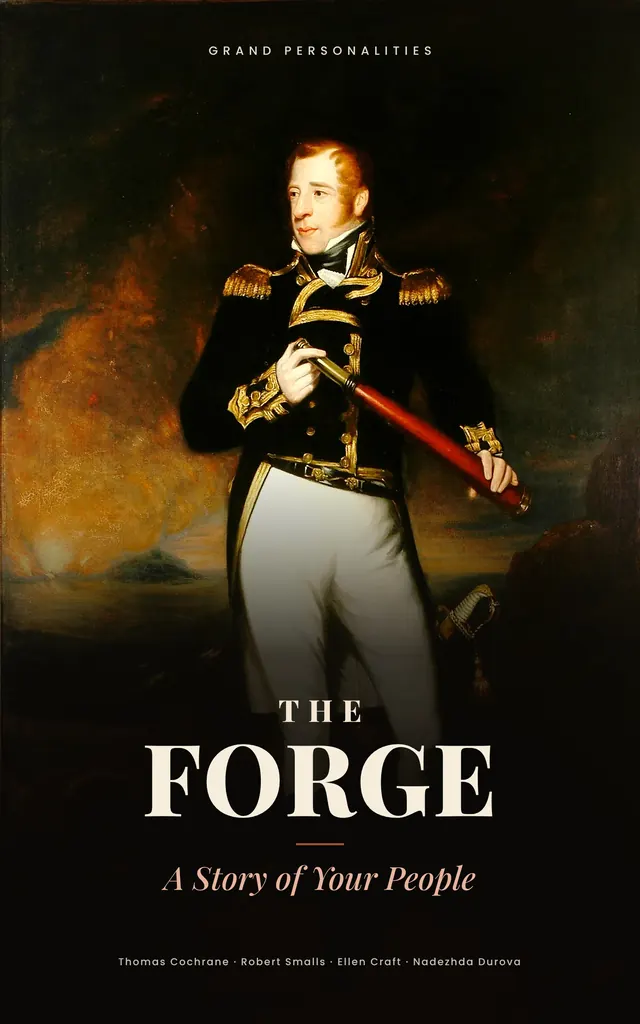
The book
The Forge: A Story of Your People
His story and fourteen more, from a desert kingdom in the first century to a Gestapo office in the south of France in 1944, grouped by the situations every Forge runs into: work, love, friendship, money, the body, purpose and power.
More famous Forges

Questions people ask
What personality type was Juan Belmonte?
His life fits the Forge, one of the houses at Grand Personalities: someone who moves first, fixes it live and gets bored of any meeting about the meeting. Closest four-letter code: ESTP.
Why was Juan Belmonte so important in bullfighting?
He fought far closer to the bull than earlier matadors, standing still while the horns passed, and his style changed the art in the 1910s. In 1919 he fought 109 corridas, a record that stood until 1965.
Who was Juan Belmonte's great rival?
José Gómez Ortega, known as Joselito. Their rivalry pushed both men to the edge of the art until Joselito was killed by a bull at Talavera de la Reina on 16 May 1920.
No free-to-use portrait of Juan Belmonte is available. Shown: the Forge house art.