Famous Auroras
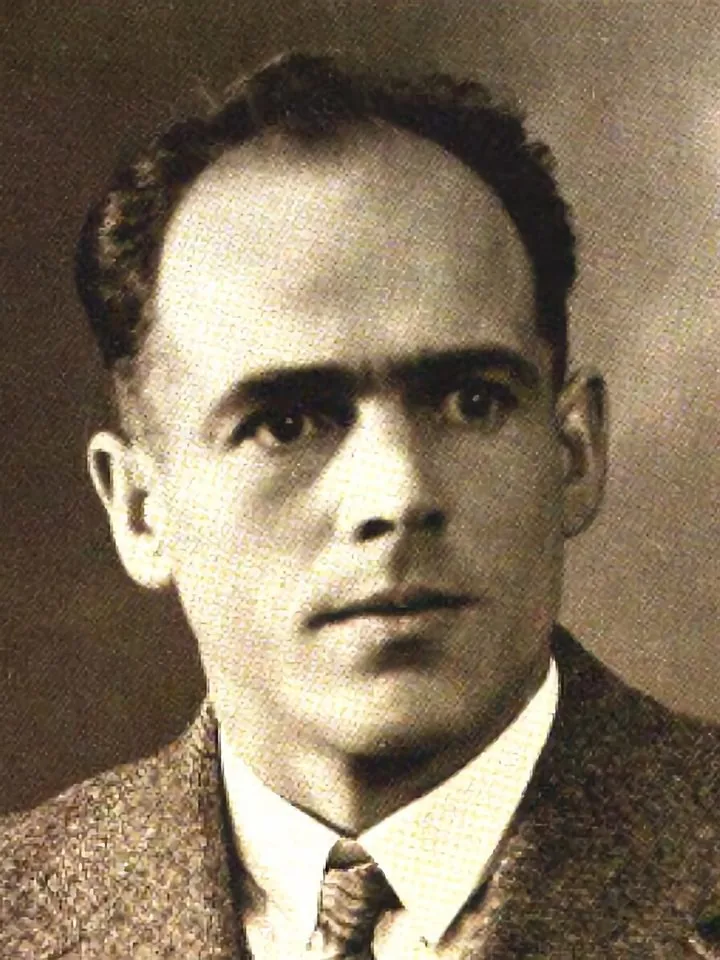
Franz Jägerstätterthe AuroraINFP
Austria, 1907–1943 · farmer, sexton, conscientious objector
The story
Better than a will in chains
On 1 March 1943, Franz Jägerstätter, a 35-year-old farmer from the Austrian village of St. Radegund, reported to the army barracks at Enns as ordered. By the next day he had told the army he would not fight.
He had a wife, Franziska, three small daughters and a farm to run. He did not desert or hide. He came on the day he was called and refused in person. He would serve as a medic, he said. He would not fight for Hitler's regime.
The offer was ignored, and he was arrested.
Nobody would have picked him for this. Born in 1907, the son of an unmarried maid, he grew up a village tearaway: the first in St. Radegund to own a motorbike, and no stranger to a fight. In 1933 he fathered a daughter outside marriage. Then he married Franziska in 1936, settled down, and became sexton of the parish church. His faith moved to the center of his life.
His conscience first showed itself in 1938. When Austria was absorbed into Germany and the people were asked to approve, he was the only person in the village to vote no. The official result still called the village unanimous. That year he also turned down the post of mayor. He did not organize anyone. He simply refused, alone.
He did not refuse every time. In 1940 he answered his call-up and did his training. When the summons came again in 1943, he could not go through with it.
Almost everyone he trusted told him to serve. His bishop did, when Franz went to ask him. His neighbors thought he was throwing his life away, and they had strong arguments: a wife, three girls, and a war that would go on without one farmer. Auroras know this pressure well. The hardest arguments come from the people who love you.
He listened to them all, and still could not.
He was held in Linz, then from May in Tegel prison in Berlin. On 6 July 1943 a military court sentenced him to death. From his cell he wrote to Franziska, explaining himself to the reader who mattered most.
“I write these words with my hands in chains, but that is still better than if my will were in chains.”
On 9 August 1943 he was taken to Brandenburg-Görden prison. Shortly before his death he was offered a document that would have saved his life. He would not sign it. He was guillotined that afternoon, aged 36.
Franziska was left with three daughters and the farm. That was the strongest argument against him. He heard it from everyone, and he never pretended it away. He chose anyway.
In 2007 the Church whose bishop had urged him to serve declared him blessed. In 2019 his story became the film A Hidden Life. They had chained his hands. His will stayed his own.
The Aurora pattern in his life
- Says no quietly, and alone
- He was the only person in St. Radegund to vote against the 1938 annexation, and organized no one.
- Offers a decent middle path
- Ordered to fight, he offered to serve as a medic instead.
- Writes it down for one reader
- From prison he explained himself in letters to his wife, Franziska.
The Aurora: You feel the whole room and keep most of it. What you make of it comes out later, whole.
Are you an Aurora too?
Free, no email needed. Find out which house is yours.
Take the free test
The book
The Aurora: A Story of Your People
His story and thirteen more, from third-century China and Bengal to Bordeaux, a mountain hermitage in Japan and a sanatorium in the Swiss snow, grouped by the situations every Aurora runs into: work, love, friendship, money, the body, purpose and power.
More famous Auroras
Questions people ask
What personality type was Franz Jägerstätter?
His life fits the Aurora, one of the houses at Grand Personalities: someone who feels the whole room and keeps most of it, and whose answer comes out later, whole. Closest four-letter code: INFP.
Why did Franz Jägerstätter refuse to fight?
A devout Catholic, he said fighting for the Nazi state would go against his religious conscience. He offered to serve as a medic instead, but the offer was ignored.
How did Franz Jägerstätter die?
A military court in Berlin sentenced him to death on 6 July 1943, and he was guillotined at Brandenburg-Görden prison on 9 August 1943, aged 36.
Portrait: Identity photograph, before 1942 · Public domain · Source
