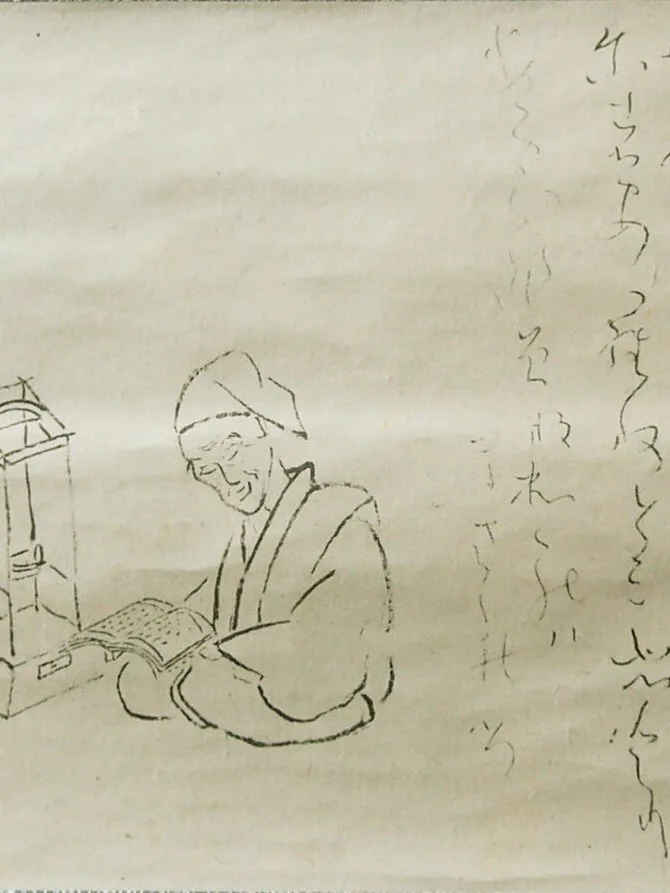
The story
Have you forgotten me?
Late in 1827, Ryōkan, a 69-year-old Buddhist monk who had spent his life turning things down, wrote a short poem to a young nun who had stopped coming to see him.
To see why that poem mattered, you have to know how much he had refused. He was born in 1758 at Izumozaki, in the province of Echigo, the eldest son of the village headman. The post was meant to be his. He gave it up to become a monk, and trained for years at Entsū-ji, a temple at Tamashima, far from home.
When his teacher died, a monk with his training could have taken a temple of his own. Ryōkan went wandering instead. Back in Echigo he lived for decades in a hermit's hut on Mount Kugami, begging for his rice in the villages below.
He made light of it. All his life, he wrote in one poem, he had been too lazy to make his way in the world. It was a lifelong refusal dressed as a shrug, so that nobody had to feel judged by it. Auroras often wrap their steel in wool like that.
He was no gloomy recluse. He drank sake, played ball with the village children and gave his poems away to anyone who asked. He was mild and funny, and immovable on the one question of how he would live.
In 1826 he moved to a hut on a patron's land at Shimazaki. The next spring a nun named Teishin came looking for him, carrying a temari, a hand-wound thread ball, and a poem. He was out, so she left them for him.
Teishin was 29, a samurai's daughter who had been married and then taken vows, and a poet herself. He answered in verse. That autumn they finally met, and from then on they wrote to each other in poems. She could read the private language he had spent a lifetime writing in.
Then she went quiet.
This is where Auroras usually go wrong. They let the silence mean something, usually something bad, and decide they will not be the one to ask. Ryōkan, who had refused a temple and his father's office, did not refuse to ask.
“Have you forgotten me? Or is the path hidden? These days I wait and wait, and still you do not come.”
Read it slowly. He offers her two explanations, and the second is no fault of hers at all. He gives her a way back that costs her nothing, and admits, in one line, that he is waiting.
She wrote back that she had been tied up with duties, and she came again. In his last winter, when he lay gravely ill, she came to nurse him, and he greeted her with another poem: the one I waited for, “when, when?”, has come, and now that we meet, what more is there to wish for?
He died on 18 February 1831, with Teishin beside him. Four years later she gathered his scattered poems into Hachisu no tsuyu, “Dew on the Lotus,” the first collection of his work. It exists because an old man who wanted nothing from the world asked one friend, plainly, why she had not come.
The Aurora pattern in his life
- Refuses quietly, without a fight
- He gave up his father's office and a temple of his own, and lived for decades on a begging bowl.
- Wraps steel in gentle humor
- He explained a lifelong refusal by saying he had been too lazy to make his way in the world.
- Trusts one reader completely
- When Teishin, who understood his poems, went quiet, he asked her plainly whether she had forgotten him.
The Aurora: You feel the whole room and keep most of it. What you make of it comes out later, whole.
Are you an Aurora too?
Free, no email needed. Find out which house is yours.
Take the free test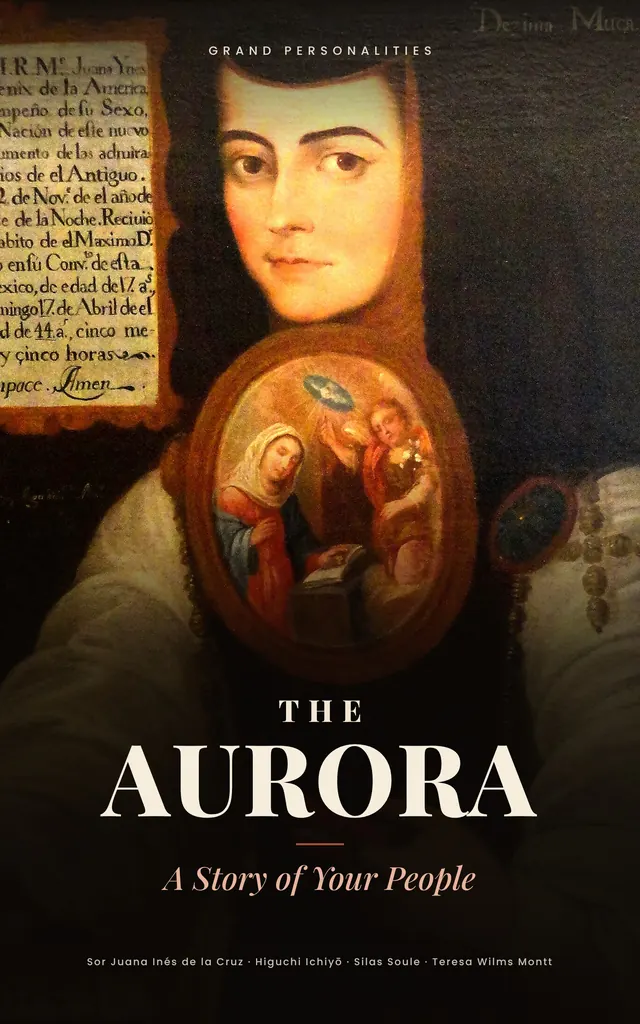
The book
The Aurora: A Story of Your People
His story and thirteen more, from third-century China and Bengal to Bordeaux, a mountain hermitage in Japan and a sanatorium in the Swiss snow, grouped by the situations every Aurora runs into: work, love, friendship, money, the body, purpose and power.
More famous Auroras
Questions people ask
What personality type was Ryōkan?
His life fits the Aurora, one of the houses at Grand Personalities: someone who feels the whole room and keeps most of it, and whose answer comes out later, whole. Closest four-letter code: INFP.
Who was Teishin to Ryōkan?
Teishin was a young Buddhist nun and poet who became Ryōkan's disciple in 1827 and exchanged poems with him until his death in 1831. In 1835 she compiled Hachisu no tsuyu, the first collection of his poetry.
Why did Ryōkan live as a hermit?
He gave up his place as heir to the village headman to become a monk, then declined a temple of his own. He lived for decades in a hut on Mount Kugami, begging for his food in the villages below.
Portrait: Portrait of Ryōkan, Edo period · Public domain · Source
