The story
I brought myself with me
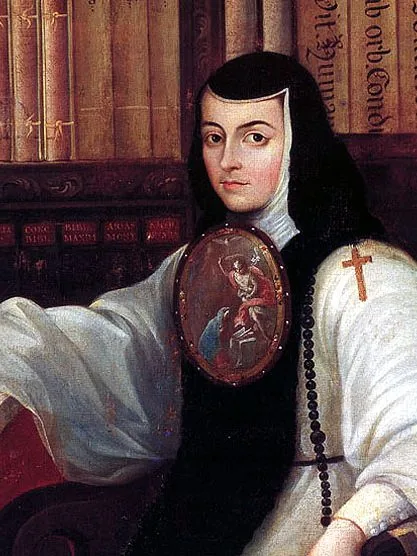
In the last days of November 1690, the bishop of Puebla printed a private critique by Sor Juana Inés de la Cruz and attached a scolding letter of his own. She was about 42, a nun of the convent of San Jerónimo in Mexico City, and the most celebrated writer in New Spain.
He signed his letter “Sor Filotea de la Cruz,” a nun who did not exist. Behind the mask he praised her mind warmly, then came to his point. It was a pity, he wrote, that so great an understanding should stoop to the petty news of the earth and not look into what happens in Heaven.
When the printed pages reached her, she broke into what she called “tears of confusion,” adding that crying did not come easily to her. Then she said nothing for three months.
Auroras rarely answer a blow in the hour it lands. They go quiet, and from outside the quiet looks like defeat. Inside, the reply is being built, sentence by sentence, until it can be said whole.
On 1 March 1691 she sent it: the Respuesta a Sor Filotea, the reply to Sister Filotea. She played along with the bishop's costume from the first line, addressing a “very illustrious lady,” and in her opening sentence she named the “just fear” that had kept her silent so long.
Then she told him the story of her own mind. She had learned to read before she was three. As a girl she set herself lessons, and if she failed to learn one in time she cut off some of her hair, since a head so bare of knowledge had no right to be dressed in hair. She gave up cheese because she had heard it made people slow.
Of all the lives open to a woman like her, she explained, the convent had been the least unsuitable, so in 1669 she took her vows. She had hoped, in part, to quiet the hunger to know. It came with her.
“I thought I was fleeing from myself, but, wretch that I am, I brought myself along with me.”
Once, she told him, a prioress who thought study was a matter for the Inquisition ordered her to stop. She obeyed, and put down her books. Her mind kept going. She went on studying everything God had made, with “this whole universal machine” as her book.
In form the Respuesta is humble from start to finish. In substance it defends her right, and every woman's right, to think. It is the Aurora gift at its most refined: everything said once, completely, in a shape that was very hard to punish.
No reply from the bishop is known. In her last years she gave up her library and her instruments, and whether she did so freely or under pressure, no one can now say. In 1695 an epidemic swept the convent. She nursed her sisters, caught it, and died on 17 April, at 46.
Five years later the Respuesta was printed in Madrid. She had tried to leave herself at the convent door, and failed, and the self she brought in with her is the one still being read.
The Aurora pattern in her life
- Goes quiet, then answers whole
- After the bishop's rebuke she kept silent for three months, then sent the Respuesta complete.
- Keeps the real self alive
- Ordered to stop studying, she put down her books and studied the whole world instead.
- Courteous outside, unbending inside
- She wrote to the bishop's invented nun with every courtesy while defending every woman's right to think.
The Aurora: You feel the whole room and keep most of it. What you make of it comes out later, whole.
Are you an Aurora too?
Free, no email needed. Find out which house is yours.
Take the free test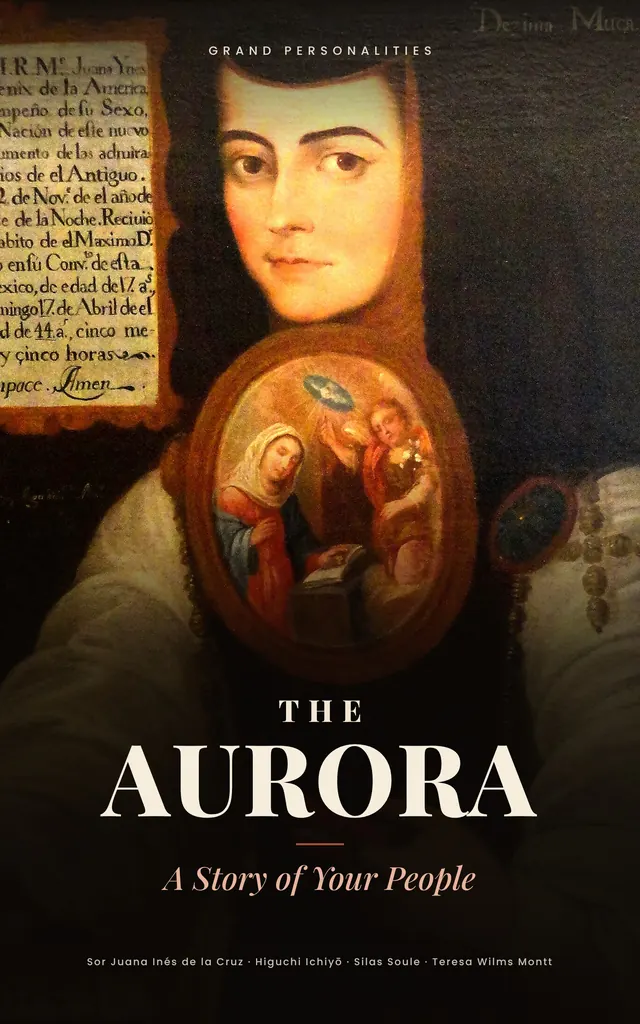
The book
The Aurora: A Story of Your People
Her story and thirteen more, from third-century China and Bengal to Bordeaux, a mountain hermitage in Japan and a sanatorium in the Swiss snow, grouped by the situations every Aurora runs into: work, love, friendship, money, the body, purpose and power.
More famous Auroras
Questions people ask
What personality type was Sor Juana Inés de la Cruz?
Her life fits the Aurora, one of the houses at Grand Personalities: someone who feels the whole room and keeps most of it, and whose answer comes out later, whole. Closest four-letter code: INFP.
What is the Respuesta a Sor Filotea?
It is Sor Juana's reply, dated 1 March 1691, to the bishop of Puebla, who had written to her under the pen name “Sor Filotea de la Cruz.” Humble in form, it defends her right, and every woman's right, to study and think.
Why did Sor Juana become a nun?
She wrote that, of the lives open to a woman like her in New Spain, the convent was the least unsuitable for someone who wanted to study. She took her vows at San Jerónimo in Mexico City in 1669.
Portrait: Miguel Cabrera, about 1750 · Public domain · Source
