The story
Rooms she never saw
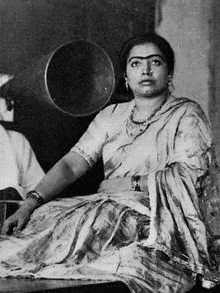
In November 1902, in two rooms of a Calcutta hotel, a 29-year-old singer stood in front of a recording horn. When her song ended she called out her name in English, and India had its first recording star.
She was Gauhar Jaan, also spelled Gauhar Jan. She had been born Angelina Yeoward on 26 June 1873, in Azamgarh, in northern India. Her mother, Malka Jaan, was a singer and dancer, and Gauhar grew up inside the exacting discipline of Hindustani classical music. She came from the world of the tawaifs, the trained women artists of north Indian music and dance, a world outsiders have often described crudely. Nothing about her art was casual.
The man with the machine was Fred Gaisberg of the Gramophone Company. Anyone who sang for him faced two problems.
The first was time. A side held about three minutes, and her music did not come in three-minute pieces. She shaped it to fit. Anyone can cut a long thing short. The art is to make the short thing feel whole.
The second problem belonged to the factory. The wax masters were going to Hanover, in Germany, for pressing, and the workers there needed to know whose voice was on each. So at the end of every side, she told them.
“My name is Gauhar Jaan!”
It was a label, spoken aloud, and she made it a signature. After the last note came the singer herself, telling you who had sung. Bonfires do this all the time. Handed a dull rule, they turn it into the line the audience remembers.
A singer in a salon can watch the room change. A record gives nothing back. She sang into a horn for listeners across a subcontinent and still reached them. She was reading a room that did not exist yet.
Between 1902 and 1920 she recorded more than 600 songs in more than ten languages. Her fee, by the usual account, was 3,000 rupees a session, and the company paid it. Generous people are often taken for careless ones. Gauhar Jaan knew what three minutes of her art were worth, and she asked for it.
She spent like a star. She is said to have driven a horse carriage through Calcutta against the rules and paid the fine every day. People still tell of the party she threw when her cat had kittens. In 1911 she sang at the Delhi Durbar for King George V.
None of that ruined her. Trust did. Later she married her secretary, a much younger man named Abbas, and let him handle her affairs. She came to believe he was robbing her, and took him to court. By most accounts she won, and the lawyers took much of the fortune anyway. Bonfires know this kind of ruin. It comes through the thing that makes them lovable: they let people in.
In 1928 the Maharaja of Mysore made her a palace musician. She died there on 17 January 1930, at 56, with most of the money gone.
The voice stayed. Play one of her old discs today and, when the music ends, she tells you who she is. She has been doing it for more than a hundred years, to rooms she never saw.
The Bonfire pattern in her life
- Turns a rule into a flourish
- The factory needed a label, so she ended every side by calling out her own name.
- Knows what her art is worth
- By the usual account she charged 3,000 rupees a session, and the company paid it.
- Lets people all the way in
- She handed her affairs to a husband she trusted, and lost much of her fortune in court.
The Bonfire: You raise the temperature of a room on purpose. Present tense, full volume, real warmth.
Are you a Bonfire too?
Free, no email needed. Find out which house is yours.
Take the free test
The book
The Bonfire: A Story of Your People
Her story and fourteen more, from Tang China and Elizabethan London to Tehran, Havana and the Montreal waterfront, grouped by the situations every Bonfire runs into: work, love, friendship, money, the body, purpose and power.
More famous Bonfires


Questions people ask
What personality type was Gauhar Jaan?
Her life fits the Bonfire, one of the houses at Grand Personalities: someone who raises the temperature of a room on purpose, in the present tense, at full volume and with real warmth. Closest four-letter code: ESFP.
Who was Gauhar Jaan?
She was a Hindustani classical singer and dancer who became India's first recording star in November 1902, when she sang for the Gramophone Company in Calcutta. Between 1902 and 1920 she recorded more than 600 songs in more than ten languages.
Why did Gauhar Jaan say her name at the end of her records?
The wax masters were shipped to Hanover, in Germany, to be pressed, and her spoken name let the workers there match each record to its singer. She turned the label into a signature.
Portrait: Unknown author, before 1930 · Public domain · Source
