Famous Lighthouses
George Washington Williamsthe LighthouseINFJ
United States and the Congo, 1849–1891 · soldier, historian, witness
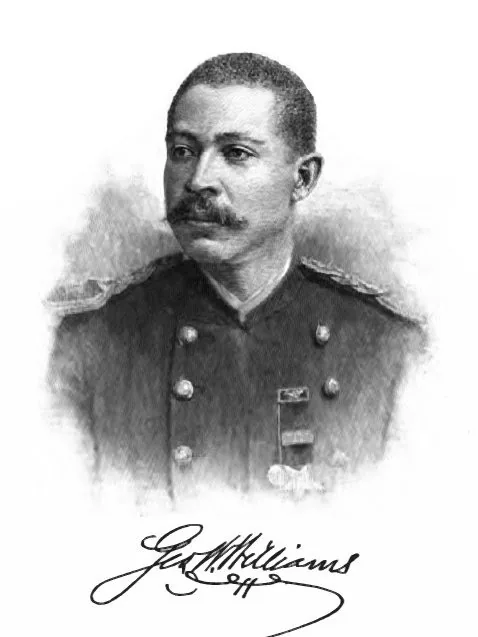
The story
Signed and dated at Stanley Falls
On 18 July 1890, at a river station 1,448 miles up the Congo, George Washington Williams wrote a place and a date at the head of a letter to a king: Stanley Falls, Central Africa. He was 40.
He had been born free in Bedford Springs, Pennsylvania, in 1849, and joined the Union Army at about 14. Since then he had been a minister, a newspaper editor, the first African American in the Ohio legislature and the author of a serious history of Black Americans. He was also careless with money, and he liked to be called Colonel, letting people think he had earned the rank in the war.
In 1889 he met King Leopold II of Belgium, who ruled the Congo Free State as his own and called it a work of charity. Williams found him a pleasant and entertaining man. When he said he wanted to see the Congo for himself, he was urged to put the trip off, by one account for five years at least.
Lighthouses tend to catch that moment. The welcome is warm, and folded inside it is a polite request not to look too closely.
He went anyway, with debts at home and a king's favor to lose, and traveled the length of the river.
The letter opened with perfect manners: “Good and Great Friend.” Then it told the king how thoroughly its writer had been “disenchanted, disappointed and disheartened.”
What followed came in twelve numbered charges. Treaties with the chiefs had been won with tricks: a hidden electric battery, a magnifying glass, a gun loaded out of sight. For sick African workers there were only three sheds. There was not a single chaplain. Two officers had bet £5 that they could hit a man in a canoe. They hit him, and “the trade canoe was transformed into a funeral barge and floated silently down the river.”
Rage pours out in one rush. Williams wanted to be believed, so he counted, keeping each charge separate so that a reader could test any one of them. Courteous, numbered and hard to dismiss as temper: it is how Lighthouses tend to deliver the worst news they have.
“All the crimes perpetrated in the Congo have been done in your name, and you must answer at the bar of Public Sentiment.”
He called for an International Commission. He promised to lodge his witnesses' names with the British Foreign Office. He made every charge “upon the word of honour of a gentleman,” signed it, and published it. To the American Secretary of State he wrote that the Congo state was guilty of “crimes against humanity.”
Henry Morton Stanley, the explorer who had made those treaties for the king, called it blackmail.
Williams had little time left to answer. He fell ill on the way home, reached England, and died in Blackpool on 2 August 1891, at 41. The reformers who later made the Congo's horrors famous seldom mentioned him, and his grave had no headstone until 1975.
He had been careless with money and with a title. He was never careless with his name. He put it under the truth, with the place and the date beside it, so that nobody could quietly take it back.
The Lighthouse pattern in his life
- Notices what the charm hides
- When the king's side urged him to delay his trip, he went to the Congo anyway.
- Delivers hard truths with courtesy
- He opened his letter “Good and Great Friend,” then listed twelve numbered charges.
- Puts his name to it
- He signed, dated and published the letter, staking his word of honor on every line.
The Lighthouse: Quiet, certain, and already three moves into a future you can feel but can’t prove yet.
Are you a Lighthouse too?
Free, no email needed. Find out which house is yours.
Take the free test
The book
The Lighthouse: A Story of Your People
His story and fourteen more, from the court of a Han dynasty emperor to a government office in Ottawa, grouped by the situations every Lighthouse runs into: work, love, friendship, money, the body, purpose and power.
More famous Lighthouses

Questions people ask
What personality type was George Washington Williams?
His life fits the Lighthouse, one of the houses at Grand Personalities: someone quiet and certain, already three moves into a future he can feel but can't prove yet. Closest four-letter code: INFJ.
What did George Washington Williams write to King Leopold II?
In an open letter dated Stanley Falls, 18 July 1890, he set out twelve numbered charges against Leopold's government of the Congo, from fraudulent treaties to the killing of Congolese people, and called for an international commission to investigate.
How did George Washington Williams die?
He fell ill on his way back from Africa and died of tuberculosis and pleurisy in Blackpool, England, on 2 August 1891, aged 41. His grave had no headstone until 1975.
Portrait: Harper & Brothers (publisher), published 1888 · Public domain · Source
