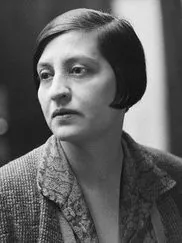
The story
What the children remembered
In 1916, Halide Edib (also spelled Edip), a celebrated Turkish writer in her early thirties, spoke with Cemal Pasha, the Ottoman commander in Syria, and objected to the orphanage he wanted her to help run.
The orphanage was at Antoura, in Mount Lebanon, in the buildings of a Catholic school, the Collège Saint-Joseph. Its children were orphans of the Armenian Genocide, with Kurdish children among them: about a thousand Armenians and two hundred Kurds, by one count.
She saw at once what the place was for. Ten years later, in her Memoirs, she recalled asking him plainly.
“Why do you allow Armenian children to be called by Moslem names? It looks like turning the Armenians into Moslems, and history some day will revenge it on the coming generation of Turks.”
Cemal called her an idealist. This was a Muslim orphanage, he said. He could not bear to see the children die in the streets, and after the war they would go back to their people. She refused to take part. Then she accepted, “as a duty towards humanity.”
Beacons will recognize the argument that moved her. It offers a kind heart only two choices: help on these terms, or watch children die. It flatters the urge to help and hides who set the terms. The children of Antoura had not been rescued from the streets. They had been taken from orphanages that already existed.
One of them was a small boy named Karnig Panian. Decades later he wrote down what he remembered. The boys were given Turkish names and numbers; his number was 551. Speaking Armenian was punished with beatings, carried out by the director, Fevzi Bey, in Halide's presence.
At sunset, as the flag came down, the children were made to cheer for Cemal Pasha. They went hungry, and by one count hundreds of them died there before the war ended.
They resisted with the smallest tools there are. They spoke Armenian in secret, shared their bread, and kept their real names when the public ones were Turkish names or numbers. When the war ended and the staff left, most of the Armenian children went back to who they had been.
Halide went on to become a national figure. She spoke to vast crowds in occupied Istanbul in 1919, served as a sergeant in the War of Independence, lived in exile, and later sat in parliament. Many in Turkey honor her still. In her 1926 Memoirs she told Antoura as a work of rescue. The children remembered something else.
Both memories are real, and her story is here because of the gap between them. She cared about children. She believed in shaping the young toward a better future. She had a powerful patron who needed her. Those strengths are common among Beacons, and at Antoura someone else decided what they were for.
She died in Istanbul on 9 January 1964, aged 79.
Before she ever took charge, she had named the wrong to the most powerful man in the region. The boys who kept their own names in secret held the line she had drawn and then let go.
The Beacon pattern in her life
- Says what the room won't
- She told Cemal Pasha to his face that renaming Armenian children would be a wrong history would remember.
- Devoted to shaping the young
- A school inspector who believed in education, she agreed to run the orphanage as a duty to humanity.
- Moved by a powerful patron
- Once Cemal framed it as saving lives, she took the work she had first refused.
The Beacon: You say the thing the room is feeling, then organize it into something people will follow.
Are you a Beacon too?
Free, no email needed. Find out which house is yours.
Take the free test
The book
The Beacon: A Story of Your People
Her story and fifteen more, from fourteenth-century Siena to twentieth-century Korea and from Hudson Bay to Buenos Aires, grouped by the situations every Beacon runs into: work, love, friendship, money, the body, purpose and power.
More famous Beacons
Questions people ask
What personality type was Halide Edib Adıvar?
Her life fits the Beacon, one of the houses at Grand Personalities: someone who says the thing the room is feeling, then organizes it into something people will follow. Closest four-letter code: ENFJ.
What did Halide Edib do at the Antoura orphanage?
In 1916 she took charge of administering the orphanage at Antoura in Mount Lebanon, where about 1,000 Armenian and 200 Kurdish children were given Turkish names and raised as Turks and Muslims. One survivor, Karnig Panian, recalled beatings for speaking Armenian carried out in her presence.
Why is Halide Edib famous in Turkey?
She was a leading novelist and campaigner for women's education, spoke to huge crowds in Istanbul in 1919, and served in the nationalist army in the War of Independence, where she rose to the rank of sergeant.
Portrait: Unknown author, 1930s · Public domain · Source
