The story
Whose words they were
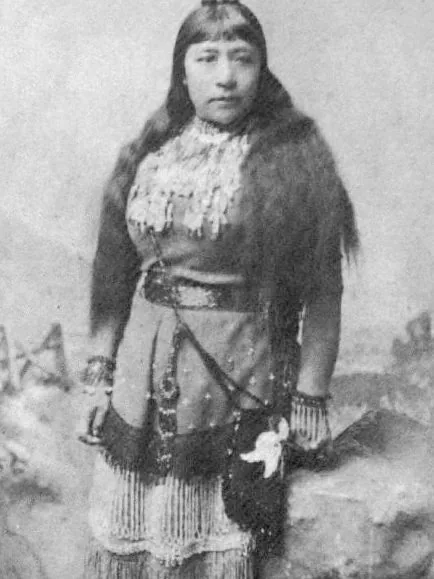
In June 1878, during the Bannock War in south-eastern Oregon, Sarah Winnemucca, about 34, rode out from the army's lines to bring her father home.
She was Northern Paiute, born around 1844, and her Paiute name was Thocmetony, Shell Flower. Her father was the chief known as Winnemucca. That summer she was working for General O. O. Howard as an interpreter and scout, and her father and his band were caught in the hostile Bannock camp.
Before she set off, a captain accused her of carrying ammunition in her wagon. By her own account she told him that if he found anything in it besides a knife, a fork and a pair of scissors, he could have her head for a football.
Then she rode, with two companions, past a burnt-out ranch and through country at war. Near the camp her brother met her and told her to paint her face. She painted it, wrapped herself in a blanket, and went in.
She found her father. She had come to get him out, she told him, even if it cost her own life. Then she laid out the plan and asked his people to whisper it among themselves.
She did not stand up and command them. A plan people pass to each other quietly is a plan they own, and it does not reach the wrong ears. Beacons at their best rescue people in a way that leaves them standing upright. In her telling, the women slipped out of the camp one by one, and the band followed.
By her own reckoning she rode more than two hundred miles in those few days. She called it the hardest work she ever did for the government.
The rescue turned out to be the easier part. After the war, the army moved the bands she had helped bring in, marching them in winter to the Yakama reservation. The assurances she had carried to her people were broken.
She tried again. In 1880 she won a written promise from Carl Schurz, the Secretary of the Interior, that her people could go home, and carried it north to Yakama. That promise was broken too.
Her people blamed her. One man accused her of selling them. She answered that she had never told them her own words; they had been the white people's words, not hers. Beacons know that wound. When both sides trust you, you become the face of promises you never made.
So she used the one thing nobody could break for her. In 1883 she gave nearly three hundred lectures in the north-eastern United States and published Life Among the Piutes, her people's history and their wrongs, in her own words.
“With the help of Him who notes the sparrow's fall, I mean to fight for my down-trodden race while life lasts.”
She kept that promise until October 1891, when she died at about 47. She had learned that she could carry other people's words but could not make them true. So she made sure the last words with her name on them were her own.
The Beacon pattern in her life
- Walks into danger for others
- She painted her face and rode into a hostile camp to bring her father's band out.
- Lets people own the plan
- Instead of announcing the escape, she asked her father's people to whisper it among themselves.
- Turns a cause into a voice
- When the promises failed, she gave nearly three hundred lectures and wrote her people's story herself.
The Beacon: You say the thing the room is feeling, then organize it into something people will follow.
Are you a Beacon too?
Free, no email needed. Find out which house is yours.
Take the free test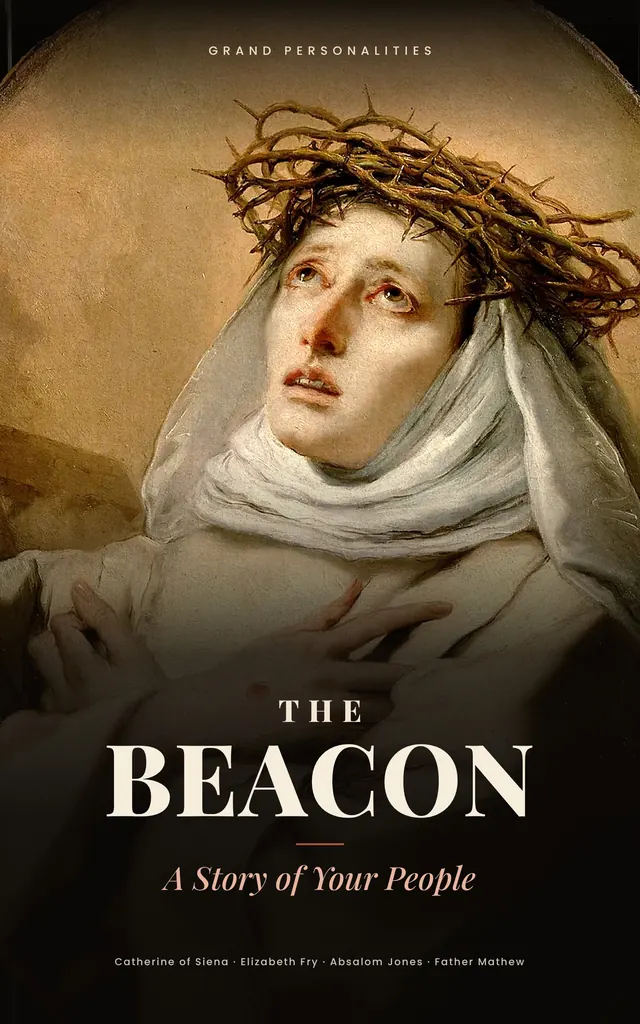
The book
The Beacon: A Story of Your People
Her story and fifteen more, from fourteenth-century Siena to twentieth-century Korea and from Hudson Bay to Buenos Aires, grouped by the situations every Beacon runs into: work, love, friendship, money, the body, purpose and power.
More famous Beacons
Questions people ask
What personality type was Sarah Winnemucca?
Her life fits the Beacon, one of the houses at Grand Personalities: someone who says the thing the room is feeling, then organizes it into something people will follow. Closest four-letter code: ENFJ.
What did Sarah Winnemucca do in the Bannock War?
Working as an interpreter and scout for General O. O. Howard in June 1878, she rode into the hostile Bannock camp and helped bring out her father, Chief Winnemucca, and his band.
What is Life Among the Piutes?
Published in 1883, it is Sarah Winnemucca's own account of her people's history and their treatment by settlers and the government. It is considered the first known autobiography written by a Native American woman.
Portrait: Unknown · Public domain · Source
