Famous Wildfires
Henry Dunantthe WildfireENFP
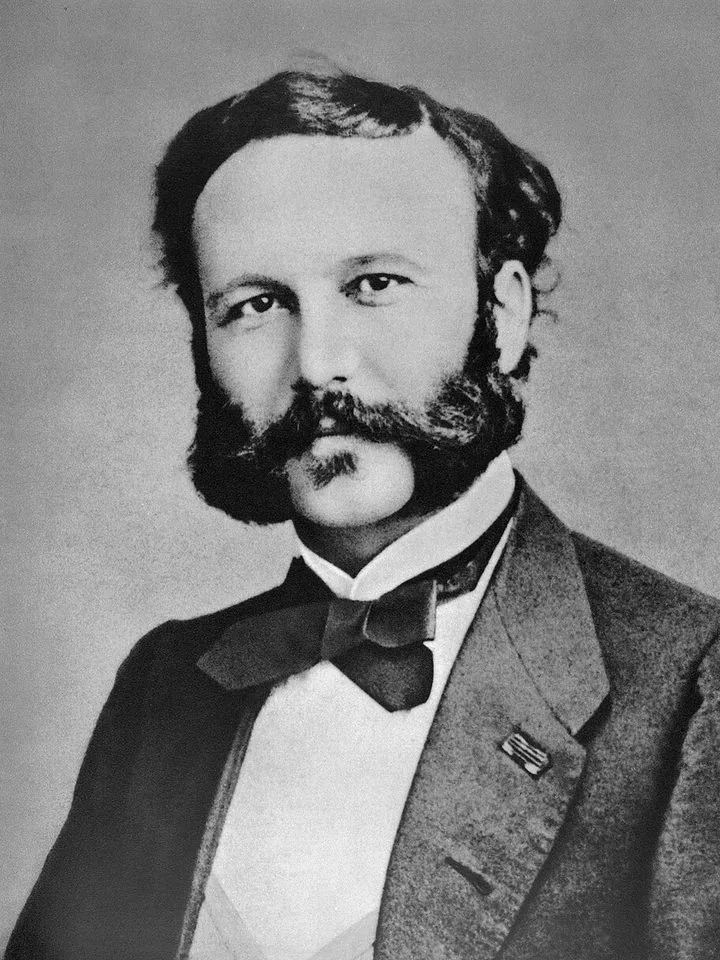
Geneva, 1828–1910 · businessman, humanitarian, Red Cross founder
The story
The man in Room 12
On 25 August 1867, Henry Dunant resigned as secretary of the committee in Geneva he had helped to found. He was 39. On 8 September he was removed from it altogether. That committee would become the International Committee of the Red Cross.
That spring a Geneva company called the Crédit genevois, on whose board he sat, had gone under. Dunant went bankrupt with it, and so did relatives and friends who had trusted him with their money. A Geneva court later found that he had knowingly deceived his partners. He left the city and never went back.
To see how far he fell, go back eight years, to a church in northern Italy.
In June 1859 Dunant was 31, a businessman traveling on behalf of his ventures in French Algeria. On the evening of the 24th he reached Solferino, where a great battle had been fought that day. The wounded poured into the nearby town of Castiglione, and he stayed.
In the main church alone, he later wrote, nearly five hundred soldiers lay piled together, with a hundred more on straw outside. Nobody was in charge. So he started organizing care, and the women of the town joined him.
“…the women of Castiglione, seeing that I made no distinction between nationalities, followed my example.”
An enemy soldier lay on the same straw as a friendly one, and somebody had to decide whether he got water. A stranger from Geneva decided that he did, and a town followed him. “Tutti fratelli,” the women repeated. All brothers. This is what Wildfires do in an emergency: they see the person, ignore the category, and start before anyone gives permission.
He went home and wrote the book. Then he became the cause. He traveled, lobbied and talked his way into royal courts, and the movement for the wounded took shape in Geneva.
His business in Algeria and his seat on the Crédit genevois board got whatever hours were left, which was not many. Wildfires rarely mean to neglect the accounts. Something more important simply turns up every day. When the collapse came, it came all at once.
For two decades afterward he drifted, poor and nearly forgotten. From 1892 he lived in a hospice in Heiden, a small Swiss town above Lake Constance, in Room 12. In 1895 a newspaper editor found him there and reminded the world what it owed him.
In 1901, at 73, he shared the first Nobel Peace Prize. He stayed in Room 12. He never spent any of the prize money.
He died in Heiden on 30 October 1910, aged 82. He had already lost one fortune to a cause. The second he simply left alone.
The Wildfire pattern in his life
- Starts before anyone gives permission
- No one appointed him at Castiglione. He began organizing care, and the town's women followed his lead.
- Sees the person first
- Among the wounded he “made no distinction between nationalities.”
- Pours everything into the cause
- He lobbied royal courts for the wounded while his own business quietly went under.
The Wildfire: Fast, warm, everywhere at once. You start the thing and someone else usually files it.
Are you a Wildfire too?
Free, no email needed. Find out which house is yours.
Take the free test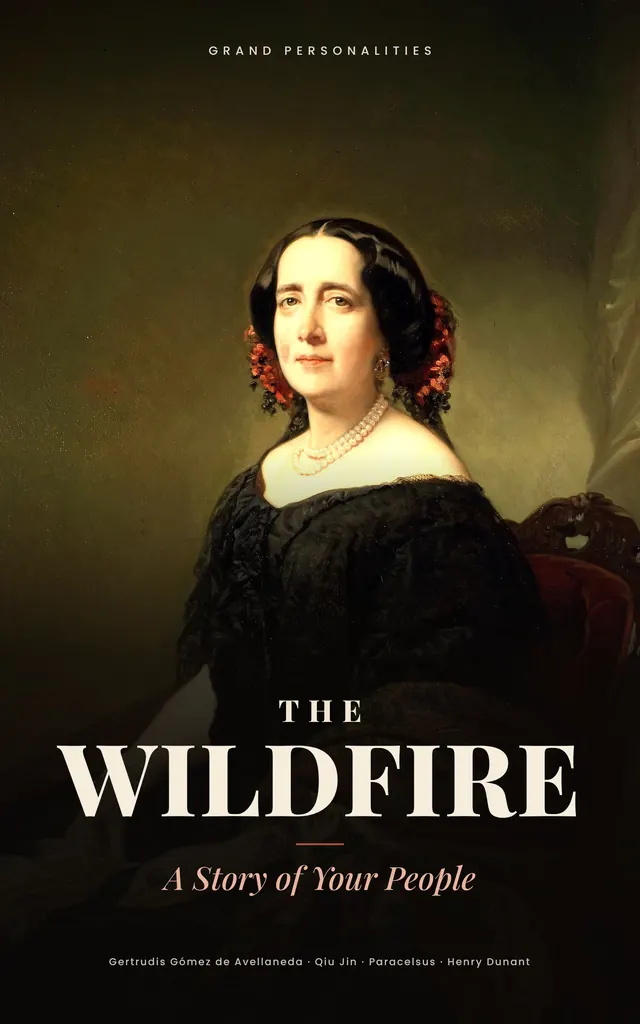
The book
The Wildfire: A Story of Your People
His story and fourteen more, from a brewery in medieval Norfolk to a beach in New Guinea, grouped by the situations every Wildfire runs into: power, work, love, friendship, money, the body and purpose.
More famous Wildfires
Questions people ask
What personality type was Henry Dunant?
His life fits the Wildfire, one of the houses at Grand Personalities: someone fast, warm and everywhere at once, who starts the thing and usually leaves someone else to file it. Closest four-letter code: ENFP.
Why was Henry Dunant forced out of the Red Cross?
In 1867 the Crédit genevois, a company on whose board he sat, collapsed and he went bankrupt, taking friends' and relatives' money with him. He resigned as secretary of the Geneva committee on 25 August and was removed from it on 8 September 1867.
What did Henry Dunant do with his Nobel Prize money?
He never spent it. He shared the first Nobel Peace Prize in 1901, stayed on in Room 12 of the hospice in Heiden, and left the money to charities in Switzerland and Norway.
Portrait: Frédéric Boissonnas · Public domain · Source
