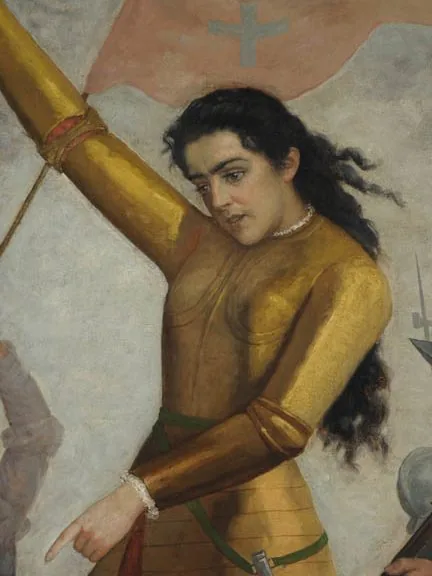
The story
How, or whether
Before dawn on 11 September 1541, Inés Suárez, about 34, was in a house in the new Spanish camp of Santiago, in Chile, when the roofs around her began to burn.
The camp had been dedicated only that February, a cluster of thatched buildings behind a palisade. Its founder, Pedro de Valdivia, was away, and Captain Alonso de Monroy was in command. Thousands of warriors from the valley, led by Michimalonco, had come to burn the town and free their leaders.
Seven of those leaders, caciques held hostage by the Spaniards, were in the house with her, under guard. As the thatch caught fire, the prisoners called out to their people.
She had been born around 1507 in Plasencia, in Extremadura, a woman of modest birth. In about 1537 she crossed to the Americas, probably looking for her husband, and found herself a widow. She became Valdivia's partner and went south with his expedition into Chile, the only Spanish woman among them.
She was there to work. She uncovered a plot against Valdivia and nursed the sick and wounded. As the only woman of her kind in every camp, she was watched and judged harder than anyone, and she became the one the others turned to.
Accounts of that morning differ on the details. One chronicler says she took up a sword and killed the prisoners herself. Another, writing decades later, gives her a famous exchange with a frightened guard. On the core they agree: she decided the seven should die, and she took part.
“In what manner shall we kill them, my lady?” “In this manner.”
The dialogue is probably a writer's polish. It still gets one thing right. The man with the weapon froze and turned to her, and she answered. In a crisis, Bridges are often the ones handed the terrible question.
Then she put on a coat of mail and went out into the fighting to nurse the wounded. The settlement survived the attack.
Now look at that room from the other side. Seven men were bound and helpless, leaders of the people whose land this was, and their only act in that moment was calling to their own. Every word we have about it was written by Spaniards. The seven left no account.
The instinct in that room is the one that carries Bridges through a fire: see the danger, see the fastest way to end it, and decide while others are still asking how. Speed alone is no virtue. A decision is only as good as what it decides.
In 1548 the royal envoy Pedro de la Gasca cleared Valdivia of the charges against him, except where she was concerned. He ordered Valdivia to give her up and see her married to someone else. The nerve the chroniclers praised had become a scandal.
In 1549 she married Valdivia's captain Rodrigo de Quiroga, and later helped pay for the church of La Merced in Santiago. By one account she also paid for masses for Valdivia's soul. She died around 1580.
Everything we know of her was said by men: admirers, enemies, a lover on trial. They agree on one thing. When everyone turned to her and asked how, she answered. The braver question, for anyone in her seat, is whether.
The Bridge pattern in her life
- Decides while others freeze
- With the camp burning and the guards hesitating, she made the call on the seven hostages.
- Becomes the one others turn to
- The only Spanish woman on the expedition, she uncovered a plot against Valdivia and nursed the wounded.
- Acts fast, sometimes too fast
- Seven bound prisoners died on a decision made in minutes, with no room left to ask whether.
The Bridge: You see the end state, name the order of operations, and start moving people toward it.
Are you a Bridge too?
Free, no email needed. Find out which house is yours.
Take the free test
The book
The Bridge: A Story of Your People
Her story and thirteen more, from a village in the viceroyalty of Peru in 1780 to a Los Angeles inquest room in 1928, grouped by the situations every Bridge runs into: work, love, friendship, money, the body, purpose and power.
More famous Bridges

Questions people ask
What personality type was Inés Suárez?
Her life fits the Bridge, one of the houses at Grand Personalities: someone who sees the end state, names the order of operations and starts moving people toward it. Closest four-letter code: ENTJ.
What did Inés Suárez do during the attack on Santiago?
On 11 September 1541, with the camp on fire, she decided that seven caciques held hostage should be killed and took part in their deaths, then nursed the wounded through the fighting. Spanish chroniclers praised her for it; the seven men's own people left no account.
Who did Inés Suárez marry?
She crossed to the Americas as the wife of Juan de Málaga, who had died, and then became Pedro de Valdivia's partner. In 1549, after the royal envoy La Gasca ordered Valdivia to give her up, she married his captain Rodrigo de Quiroga.
Portrait: José Mercedes Ortega, 1897 · Public domain · Source
