Famous Bridges
William Mulhollandthe BridgeENTJ
Los Angeles, 1855–1935 · ditch-tender, chief engineer, aqueduct builder
The story
I was the human
On the morning of 12 March 1928, William Mulholland drove out to the St. Francis Dam to look at a leak. He was 72, chief engineer of the Los Angeles water system, and the city's most trusted voice on water.
The dam keeper, Tony Harnischfeger, had telephoned. Muddy water was running out of the west side of the dam, and reporting that was his job. Mulholland came with his assistant, Harvey Van Norman. They watched the leak for about two hours, decided that roadwork nearby explained the mud, and judged the dam safe. Then they drove home.
A few minutes before midnight, the dam gave way. Some twelve billion gallons of water went down San Francisquito Canyon in the dark. Harnischfeger and his family were among the first to die. By the time the flood reached the sea, more than four hundred people were dead.
Mulholland had never trained as an engineer. Born in Belfast in 1855, he went to sea young, reached Los Angeles in 1877 and took work clearing the city's water ditches. He learned the system from the bottom and kept rising until he ran it.
He saw the whole city as one water problem, and the whole problem at once, which is the gift Bridges bring to a job like his. Los Angeles was outgrowing its river, so he went looking for another, far to the north in the Owens Valley. The city got the water rights there by hard dealing, and the valley's farmers and Paiute people lived with the cost.
On 5 November 1913, at 58, he opened the aqueduct that carried that water south. He spoke briefly, without notes. Then the gates opened, the water came pouring down, and he turned to the mayor and shouted, “There it is, Mr. Mayor. Take it!”
The job was done, so use it. That is the strength of the pattern, and its cost. A man who explains himself in a shout is a man nobody asks to explain. After thirty years of being right, hardly anyone in Los Angeles could tell him he was wrong about water.
So on that March morning, the man on the ground saw something wrong and picked up the telephone. The man at the top came, looked, trusted fifty years of experience, and left the reservoir full.
The coroner's inquest opened in Los Angeles on 21 March. Mulholland could have pointed at the rock, or at his deputy, or at the keeper, who could no longer answer. Under oath, he did none of that.
“Don't blame anyone else, you just fasten it on me. If there was an error in human judgment, I was the human.”
The jury put the error where he had put it, on his bureau and its chief engineer, and found no crime. Then it wrote a sentence for every office where one person signs off alone. A great dam, it said, should never be left “to the sole judgment of one man, no matter how eminent, without check by independent expert authority.”
He retired soon after and died in 1935, at 79. Some in the valley never forgave him.
In 1913 he handed a city its water with a shout. In 1928 he took its grief in four words: I was the human.
The Bridge pattern in his life
- Sees the whole problem at once
- He treated a fast-growing Los Angeles as one water problem and brought a river's worth of water from the Owens Valley.
- Delivers, then moves on
- When the aqueduct opened in 1913, he pointed at the water and told the mayor to take it.
- Owns the outcome out loud
- Under oath after the dam failed, he told the jury not to blame anyone else.
The Bridge: You see the end state, name the order of operations, and start moving people toward it.
Are you a Bridge too?
Free, no email needed. Find out which house is yours.
Take the free test
The book
The Bridge: A Story of Your People
His story and thirteen more, from a village in the viceroyalty of Peru in 1780 to a Los Angeles inquest room in 1928, grouped by the situations every Bridge runs into: work, love, friendship, money, the body, purpose and power.
More famous Bridges

Questions people ask
What personality type was William Mulholland?
His life fits the Bridge, one of the houses at Grand Personalities: someone who sees the end state, names the order of operations and starts moving people toward it. Closest four-letter code: ENTJ.
Was William Mulholland blamed for the St. Francis Dam disaster?
The coroner's jury placed the error in engineering judgment on the Bureau of Water Works and Supply and its chief engineer, Mulholland, but found no criminal act. He had already told the jury, under oath, to put the blame on him.
What did William Mulholland say when the Los Angeles Aqueduct opened?
At the opening on 5 November 1913, as the water poured down, he turned to the mayor and shouted, “There it is, Mr. Mayor. Take it!”
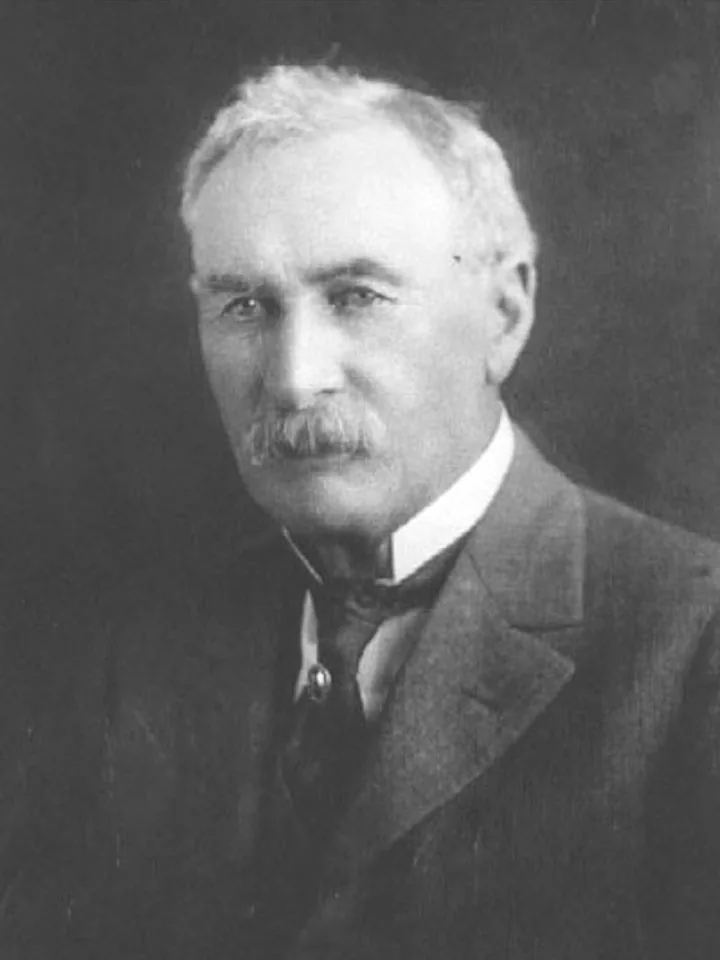
Portrait: Los Angeles Herald-Examiner, 1924 · Public domain · Source
