Famous Bridges
Zeng Guofanthe BridgeENTJ
China, 1811–1872 · scholar-official, army builder, letter writer

The story
Keep the one word
In January 1853, at 41, Zeng Guofan was told to raise a local militia in his home province of Hunan. He built an army instead.
China was deep in the Taiping rebellion. Zeng, also spelled Tseng Kuo-fan, was a scholar-official from a family of small rural gentry, a man of books and memorials to the throne. His orders were to gather local men and defend the province.
What he made was new: an army recruited on personal loyalty, with its own finances, where every officer owed his place to a relationship that ran back, in the end, to him. It became known as the Xiang Army, the army of Hunan. It was his design from top to bottom. In a real sense, it was him.
Bridges often build like this, around themselves, because it is the fastest way to make something work. The danger arrives with the first defeat. When the thing you built is you, its loss feels like your own.
In April 1854, at 42, his forces were routed at Jinggang, near Changsha. In his anguish, Zeng tried to take his own life. A member of his staff saved him.
What he did next was very like him. He wrote to the throne about the rout and asked to be punished. He made no excuses for the defeat. He asked for the penalty. The emperor kept him in command.
That October, less than six months later, his army retook the great river city of Wuchang. In December it won again at Tianjiazhen. The man who had wanted to die in the spring was winning by the autumn.
The war went on for ten more years. Through it all he wrote, by one count, nearly fifteen hundred letters to his family, full of instruction and correction, which is how Bridges often write love. He kept a diary of his own conduct until the day before he died, checking himself like an account.
On 19 July 1864, his forces took the rebel capital, Nanjing. He was 52. Then he did the hard thing. He disbanded most of his own army and sent the men home to their farms. He had learned to let the instrument go once its work was done.
Later, his younger brother Guoquan, the general who had taken Nanjing, went through a bad stretch of his own. Zeng wrote to him as a man who had been beaten badly and lived. Take the blow, he said, and swallow the broken teeth with the blood.
Then he pointed his brother to his own worst years, 1857 and 1858, the time he called simply his regret, and gave him a sentence to carry.
“Silently keep the one word ‘regret’, and nothing cannot be retrieved.”
He meant something gentler than despair, and quieter than the fierce self-blame of his memorial after Jinggang. Know exactly how you failed. Carry it without announcing it, as part of your kit. Then the mistake becomes a tool.
He died in 1872, at 60. The man who once could not survive a defeat ended by teaching his brother how to. Keep the one word, silently. Then go and win in October.
The Bridge pattern in his life
- Builds the machine from scratch
- Told to raise a local militia in 1853, he built the Xiang Army instead.
- Takes responsibility whole
- After the rout at Jinggang, he wrote to the throne and asked to be punished.
- Lets go when the job's done
- Once Nanjing fell in 1864, he disbanded most of the army he had made.
The Bridge: You see the end state, name the order of operations, and start moving people toward it.
Are you a Bridge too?
Free, no email needed. Find out which house is yours.
Take the free test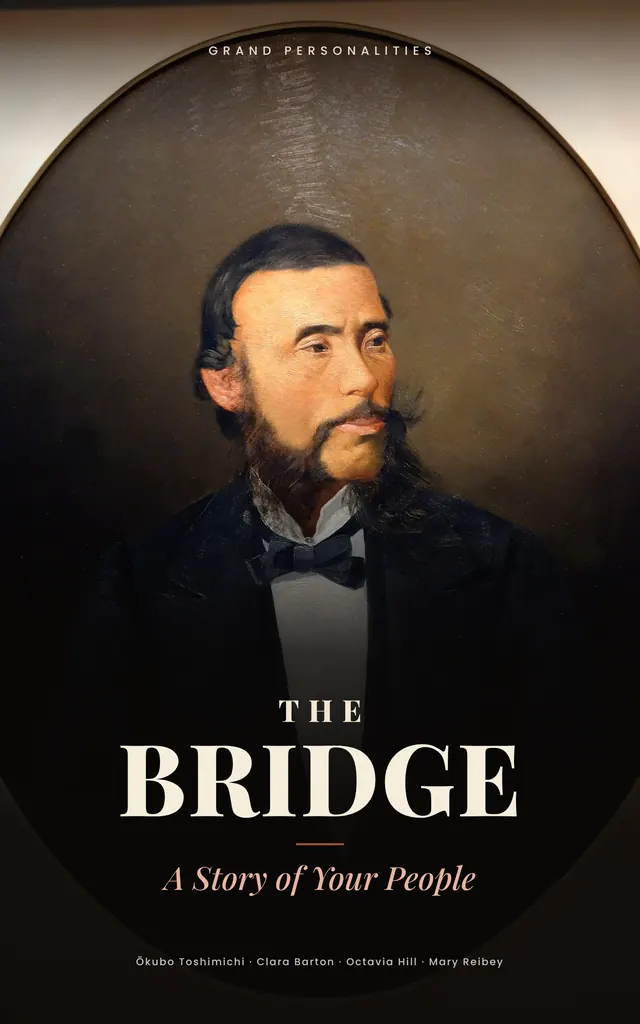
The book
The Bridge: A Story of Your People
His story and thirteen more, from a village in the viceroyalty of Peru in 1780 to a Los Angeles inquest room in 1928, grouped by the situations every Bridge runs into: work, love, friendship, money, the body, purpose and power.
More famous Bridges

Questions people ask
What personality type was Zeng Guofan?
His life fits the Bridge, one of the houses at Grand Personalities: someone who sees the end state, names the order of operations and starts moving people toward it. Closest four-letter code: ENTJ.
What is Zeng Guofan famous for?
He built the Xiang Army, the Hunan force whose capture of Nanjing in July 1864 effectively ended the Taiping rebellion. He is also remembered for his letters to his family, nearly 1,500 of them by one count.
What did Zeng Guofan do after the Taiping Rebellion?
After his forces took Nanjing in 1864, he disbanded most of the Xiang Army and sent the soldiers home to their farms, letting go of the army he had built once its work was done.
Shown: the Bridge house art.